Multipitch Atlas

Vía Normal a la Peña Sola

Peña Sola, Mallos de Agüero · Riglos & Agüero (Mallos) · Spain

Read the cautionsBail with caveatsBolting confidence: high

The 1947 route up the free-standing tower beside the Mallos de Agüero. The first three pitches are athletic, with an aided start and short 6a to 6a+ steps that go at 5 and A0 on close bolts, and the last three are easy and pleasant. A quiet summit a long way from the Riglos crowds.

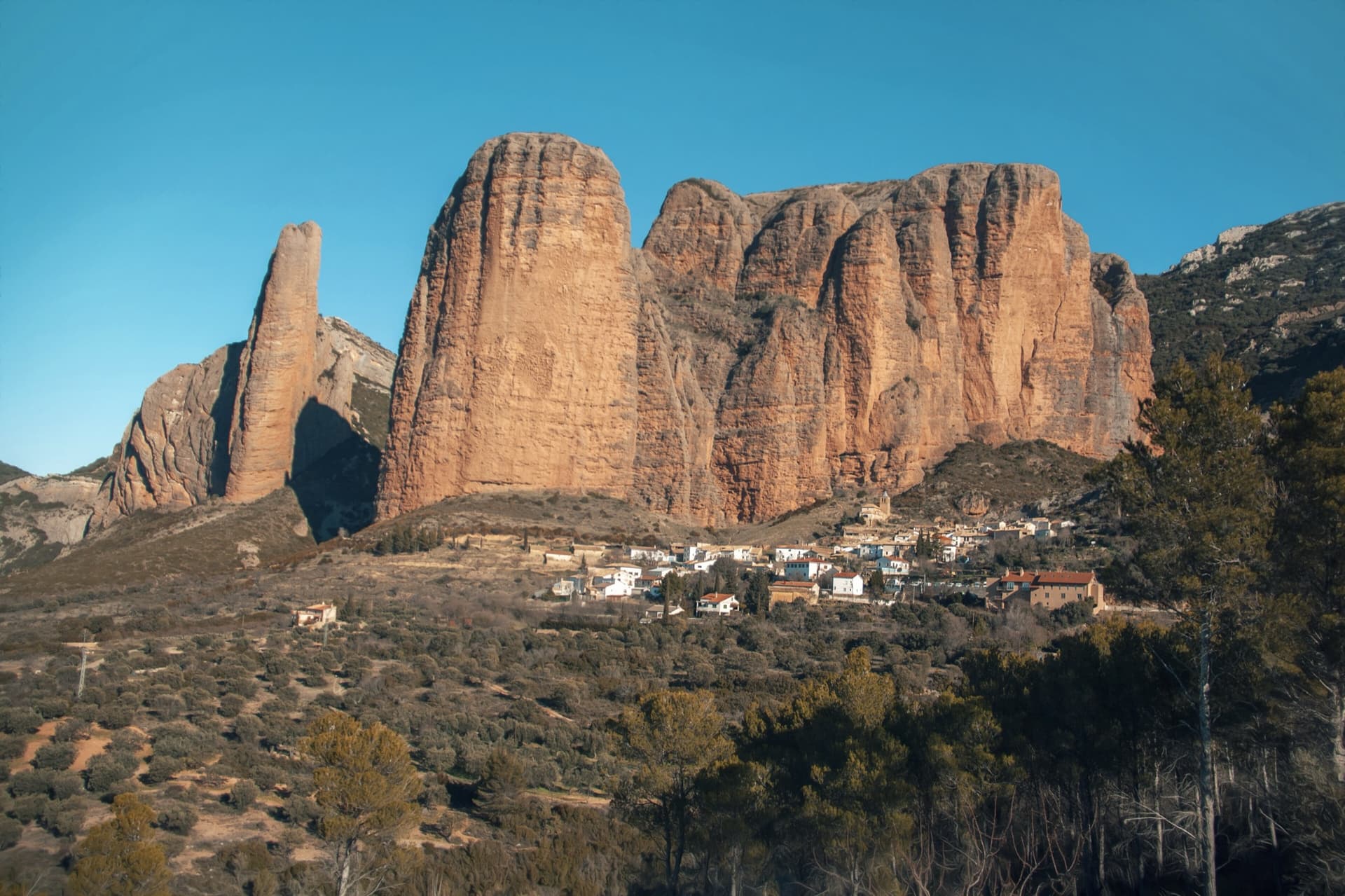
Peña Sola, the detached tower on the left, with the Mallo d'o Castiello beside it above AgüeroPhoto: janic · CC BY-NC-ND 3.0

Photo

Peña Sola, the detached tower on the left, with the Mallo d'o Castiello beside it above AgüeroPhoto: janic · CC BY-NC-ND 3.0
Hardest pitch
6a+
Pitches
6
Length
190 m
Approach
20 min
Aspect
E
East-facing
Rope
2×60 m
Read before you go

Fully bolted and recently checked, but the start is aid on a high first bolt, the first three pitches are stiff for the grade and the abseils are long and wandering.

The route

Overview

Peña Sola is the tower that stands apart from the main mass of the Mallos de Agüero, and its normal route is the classic way to a summit with no easy side. Difficulty decreases with height: an aided start, two more athletic pitches with moves of 6a to 6a+ that can be pulled through on the bolts, then three easy pitches on greying conglomerate. Camptocamp gives it TD, 6a+ free with 5c obligatory and A1 for the start. You abseil the route. The setting is remarkable and you are likely to have it to yourself.

The climbing

Pitch by pitch

Pitches of Vía Normal a la Peña Sola
PitchGradeLengthBoltsNotes
P16a20 m5 boltsA very athletic start: the first bolt is high and the move to it is aid (A1). In March 2025 an old cord hung from it; otherwise use a clip-stick or a shoulder. One move of 6a before a comfortable belay. Five bolts and one peg.
P26a+25 m5 boltsA move of 6a+, or 5 and A0, on close bolts at the start, then trend well right over ledges (grade III) to find the belay.
P36a+35 m8 boltsAn athletic start (6a to 6a+), damp in March 2025. At the peg go left towards the tree. After mid-height extend the runners well, because the pitch ends with an easy horizontal traverse right; you can also take an intermediate belay at the juniper. Eight bolts and one peg.
P44c30 m5 boltsStraight up on easy, pleasant rock to a belay in a niche.
P55a25 m6 boltsTraverse right, then straight up on conglomerate that turns grey. This belay is not rigged for abseil.
P64b25 m6 boltsTraverse right and straight up to a belay just below the summit.

Getting there

Approach

To the parking

From Huesca take the A-132 towards Murillo de Gállego; about 1 km before Murillo turn left on the Z-534 to Agüero and park at the village.

On foot · about 20 min

About 20 to 25 minutes from the village by the path towards Peña Sola. Climb onto a broad platform at the far left of the visible face, which has a 15 to 20 m drop behind it. Follow a faded red fixed line and go round a big boulder on the right to reach belay 0, which has two bolts.

Map of the walk-in

  • Crag

Loading map

The point marks the crag, not the exact start of the route.

Coordinates · crag

42.35920, -0.79598

Point from camptocamp waypoint 233598 (Peña Sola summit, same point as the Mallos d'Agüero crag waypoint)

For your phone or watch

Download GPX

Contains the route point. Opens in most mapping apps and GPS watches.

Points are compiled from published sources, with the precision stated above. They were not surveyed on the ground: check them against a current topo.

Getting down

Descent

Abseil the route. All belays are equipped for abseil except belay 5. With 2×60 m ropes: belay 6 to belay 4 (50 m; pull towards the west, the belay is in a niche), belay 4 to belay 2 (40 m), belay 2 to the ground (30 m). The Spanish text gives 48 to 49 m for the first abseil and advises lowering the first person for safety.

Retreat

Bailing off the route

Bail with caveats

Abseiling the route is the normal descent, so retreat from belays 1 to 4 and from belay 6 is on rigged anchors. Belay 5 is the exception and is not set up for abseil. The abseils are long and do not hang straight, so you need two 60 m ropes and some care to reach the lower belays.

Retreat from
Belays 1, 2, 3, 4 and 6. From belay 5 either climb the last pitch or leave gear.
Point of no return
None; the hard climbing is all in the first three pitches.
Carry
2×60 m ropes. A 2012 report says you may need to clip a directional bolt to reach belay 2 from above.
Basis
Stated in the sourcesCamptocamp lists which belays are rigged and the abseil lengths; the caveat about reaching belay 2 comes from a blog comment.

Safety

Hazards

  • The first bolt is high; reaching it is aid (A1) and awkward if nothing is hanging from it.
  • The abseils wander: a 2012 comment on the a0avista blog says that abseiling from belay 3 leaves you hanging to the right of belay 2 and you must clip a bolt placed for the purpose to reach it. Knot the rope ends.
  • The first abseil is 48 to 50 m, the full length of 50 m ropes; use 60 m ropes.
  • Old bolt studs without hangers remain from an earlier over-bolting that was later removed (blog comments, 2008 to 2012); follow the hangers in place.
  • Conglomerate cobbles can pull out; Agüero rock is described as friable in places.

Sun and weather

Conditions

East and south-east facing, about 700 to 870 m. Camptocamp gives March to June and September to October for Agüero; one party climbed it on an unusually cool August morning with a 7:30 start. The start of pitch 3 can be damp after rain.

Usual season · Mar to Jun, Sep to Oct

Sun on the wall · E-facing

Working out the sunlit hours for this month.

  • January: not yet worked out
  • February: not yet worked out
  • March (usual season): not yet worked out
  • April (usual season): not yet worked out
  • May (usual season): not yet worked out
  • June (usual season): not yet worked out
  • July: not yet worked out
  • August: not yet worked out
  • September (usual season): not yet worked out
  • October (usual season): not yet worked out
  • November: not yet worked out
  • December: not yet worked out

Sun on the wallDaylight, wall in shade● Usual season

Estimated from the wall's aspect only. Ignores surrounding terrain, gullies and the wall's exact shape. Clock times are local to the wall (Central European time), for the 15th of each month.

Monthly climate averages for Riglos & Agüero (Mallos), 1991-2020
MeasureJanFebMar (usual season)Apr (usual season)May (usual season)Jun (usual season)JulAugSep (usual season)Oct (usual season)NovDec
Mean daily high °C9101416202629292418129
Mean daily low °C1135913161612942
Rain days 1 mm or more97910107678998

● marks the usual climbing season. Averages for 1991-2020 at about 612 m. Area climate from Open-Meteo reanalysis. Temperatures are adjusted to the height of the crag; rain comes from a grid cell of about 10 to 25 km, and summer highs on sea cliffs can read a few degrees low. The wall and valley can differ. Data: Open-Meteo, CC BY 4.0.

What to carry

Gear

Quickdraws for 8 bolts per pitch plus belays (no source gives a number; a dozen covers it), with some long ones for pitch 3. Camptocamp suggests an étrier and fifi hook, or slings and an adjustable lanyard, for the aided start. 2×60 m ropes for the abseils. Cams are not needed (camptocamp, and the March 2025 party says the same against an older guidebook).

Checklist

Quickdraws
Number not given in the sources
Rope
2×60 m
Helmet
One each
Abseil device and prusik
The descent or the retreat involves abseiling

Derived from the route data; check it against a current topo

From climbers

Reader reports

Reader reports are not being collected yet. Until they are, check a current topo and the local club or guidebook publisher for recent changes to Vía Normal a la Peña Sola.

Worth knowing

Tips

  • Allow about 3 hours for the climb.
  • Several commenters on the a0avista blog say the old overall grade of D sup undersells it: expect more grade V than old topos show, and aid on pitches 1 and 2 unless you climb 6a+.
  • The blog suggests abseiling the re-equipped Vía Torrijos as a cleaner, more direct line; no source consulted gives its details.

Open questions

Where sources disagree

  • Free grade of the start: camptocamp gives pitch 1 as 6a with an A1 start; blog comments give the route 6a+ or V/A1 overall, and one calls the pitch 2 move A0 or 6b rather than 6a+.
  • First abseil: 50 m in the French camptocamp text, 48 to 49 m in the Spanish text.
  • Belay 0: the Spanish text (2010) says only bolt studs without hangers were found there; the French text, updated in 2023, says it has two bolts.
  • Length: camptocamp gives 190 m of climbing, but its pitch lengths add up to 160 m.

Provenance

Sources

Same area

More in Riglos & Agüero (Mallos)

All routes in Riglos & Agüero (Mallos)
The classic view of Riglos from the south-west: the slender pinnacle of El Puro on the left, the great dome of Mallo Pisón beside it, and the main wall running right to La Visera above the village.

Spain · Riglos & Agüero (Mallos)

Espolón del Adamelo

This is the gentlest way to sample Riglos. Polished pockets and two bulging 'panzas' lead to a 6a crux that can be pulled through on the bolts (A0). The upper spur is easy, and the Pisón towers loom close by.

6a7 pitches175 m

Read the cautions
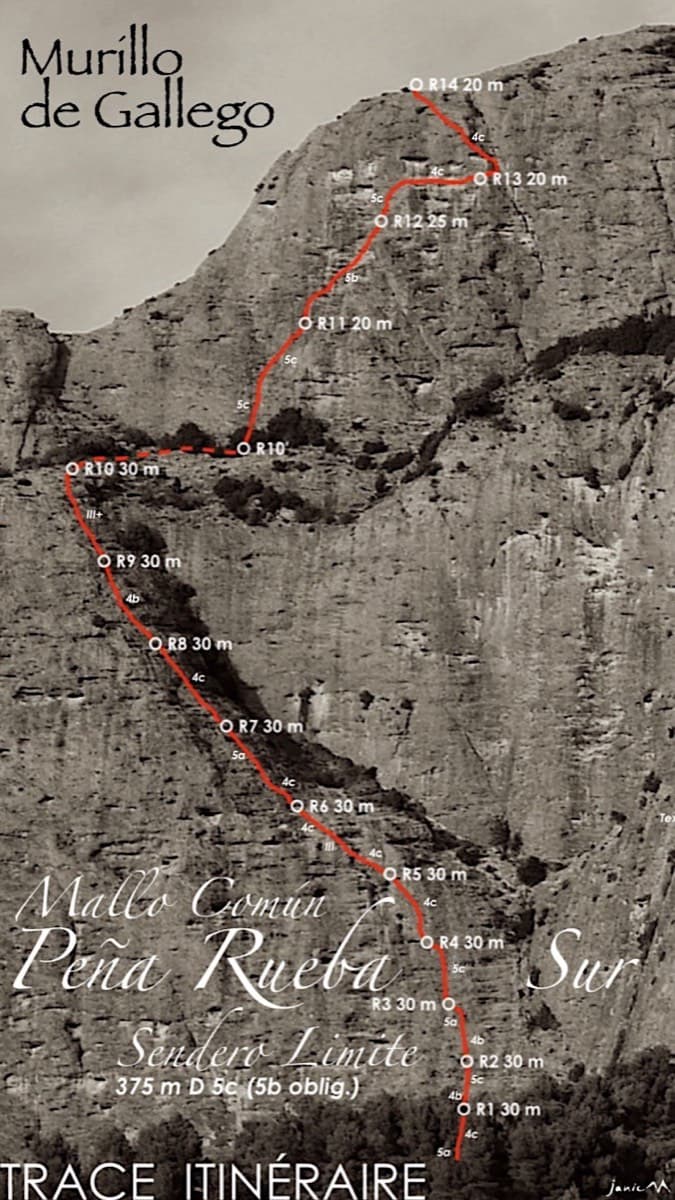
Topo of Sendero Límite on the south face of Peña Rueba (Mallo Común)

Spain · Riglos & Agüero (Mallos)

Sendero Límite

A long beginner's big route on good conglomerate at a moderate angle. Pitches can be linked in pairs with a 60 m rope. A four-pitch headwall with a couple of panzas finishes high above the Gállego valley.

5c14 pitches375 m

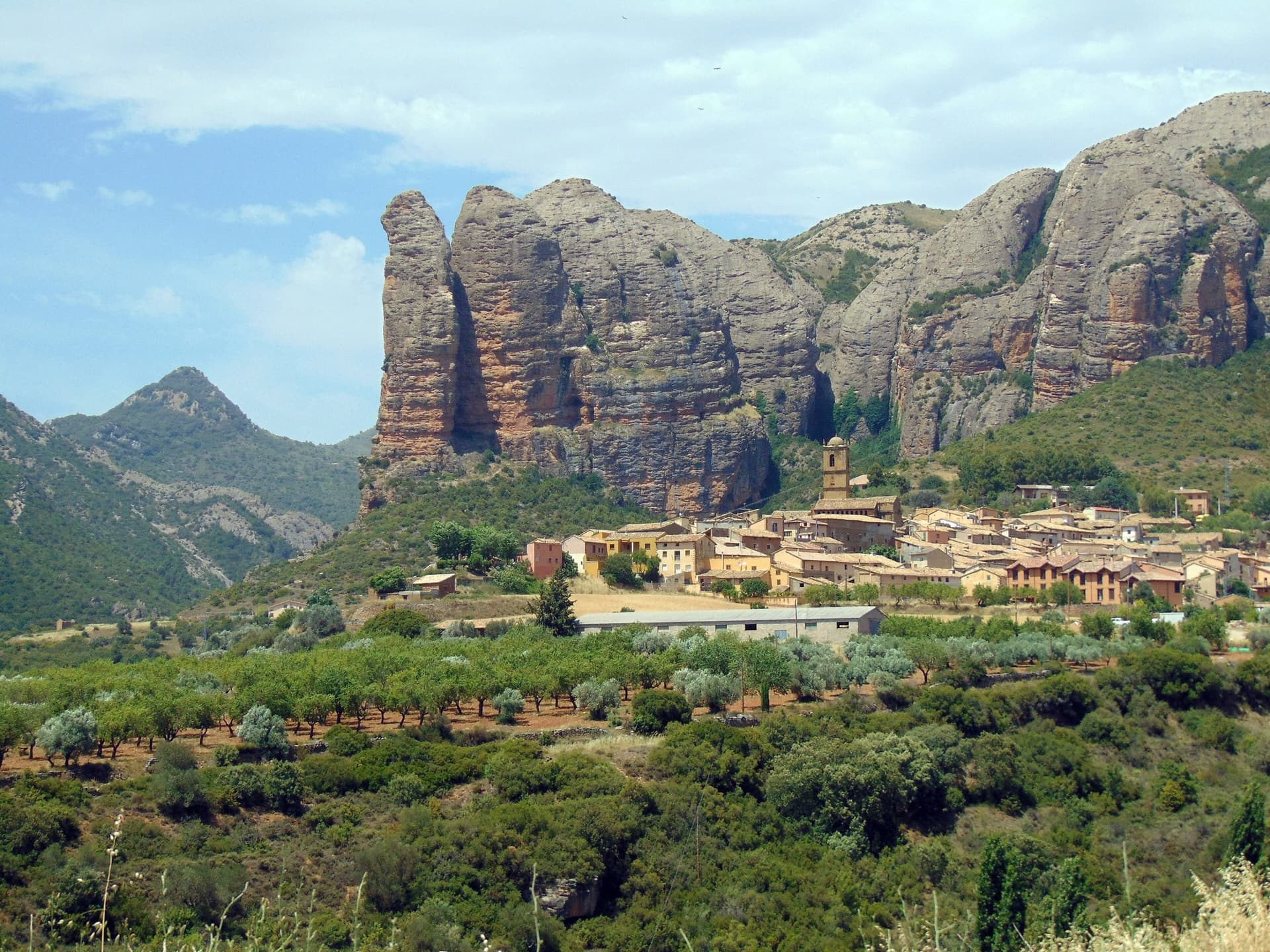
The Mallos de Agüero rising directly behind the village, seen from the south-east, with the detached tower of Peña Sola at the left end; the east-facing walls are towards the right-hand end of the massif.

Spain · Riglos & Agüero (Mallos)

Tierra de Naide

A morning-sun route at the quieter Agüero mallos. Easy slabs separate two fine steep walls, including a superb vertical 5c plaque on pitch 4. Take care with some loose cobbles on the last traverse.

5c5 pitches145 m

Around 6a+ · about 6 pitches

Similar elsewhere

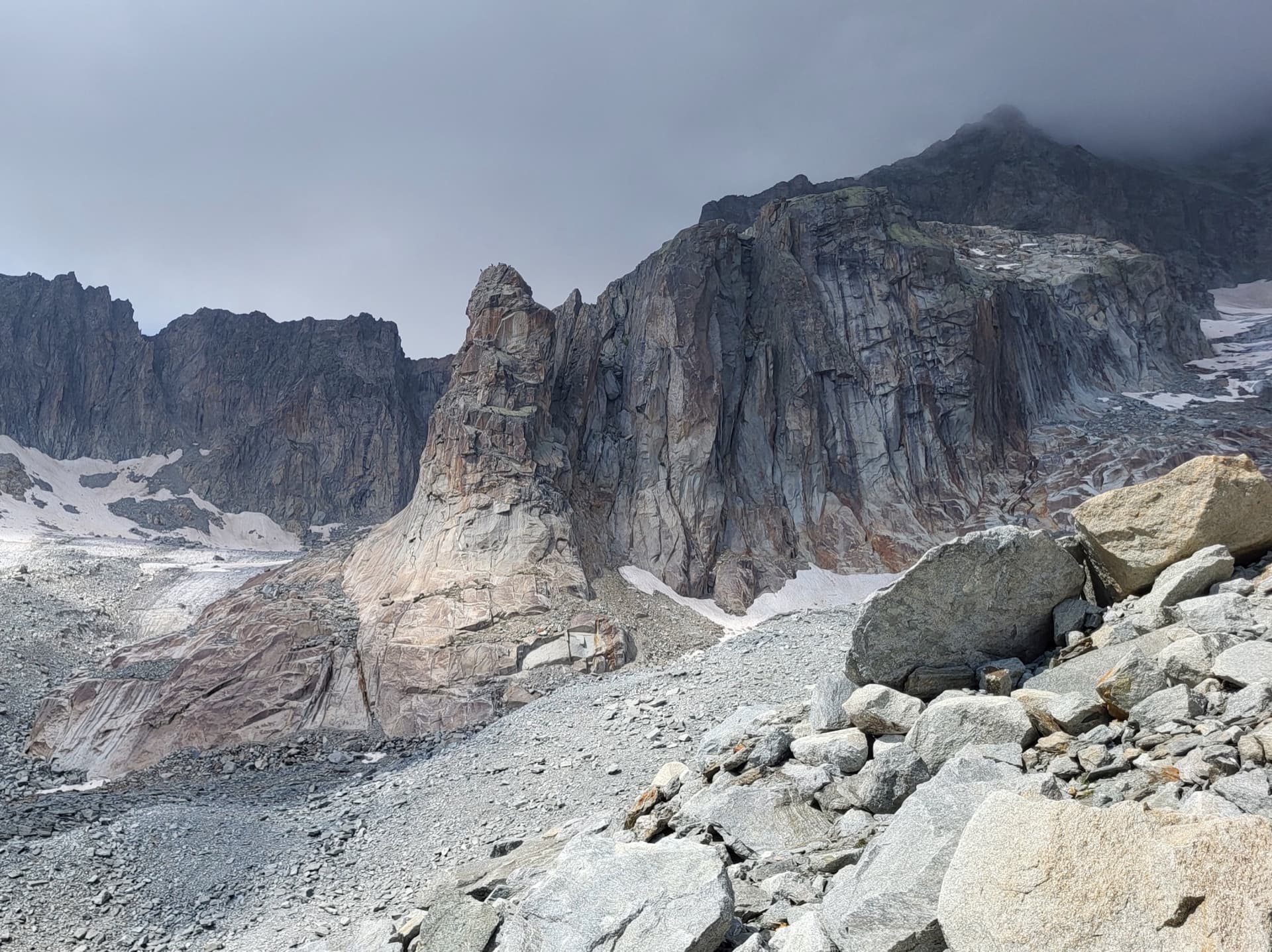
The Hannibalturm, a granite tower standing in front of the walls of the Gross Bielenhorn above the Sidelen glacier.

Switzerland · Furka

Conquest of Paradise

The classic of the Hannibalturm: six short, wandering pitches of slab, quartz veins, cracks and a 6a+ slab crux on perfect high-mountain granite at 2800 m. A bench and a bus-stop sign wait on the summit. Very popular, so expect company.

6a+6 pitches180 m

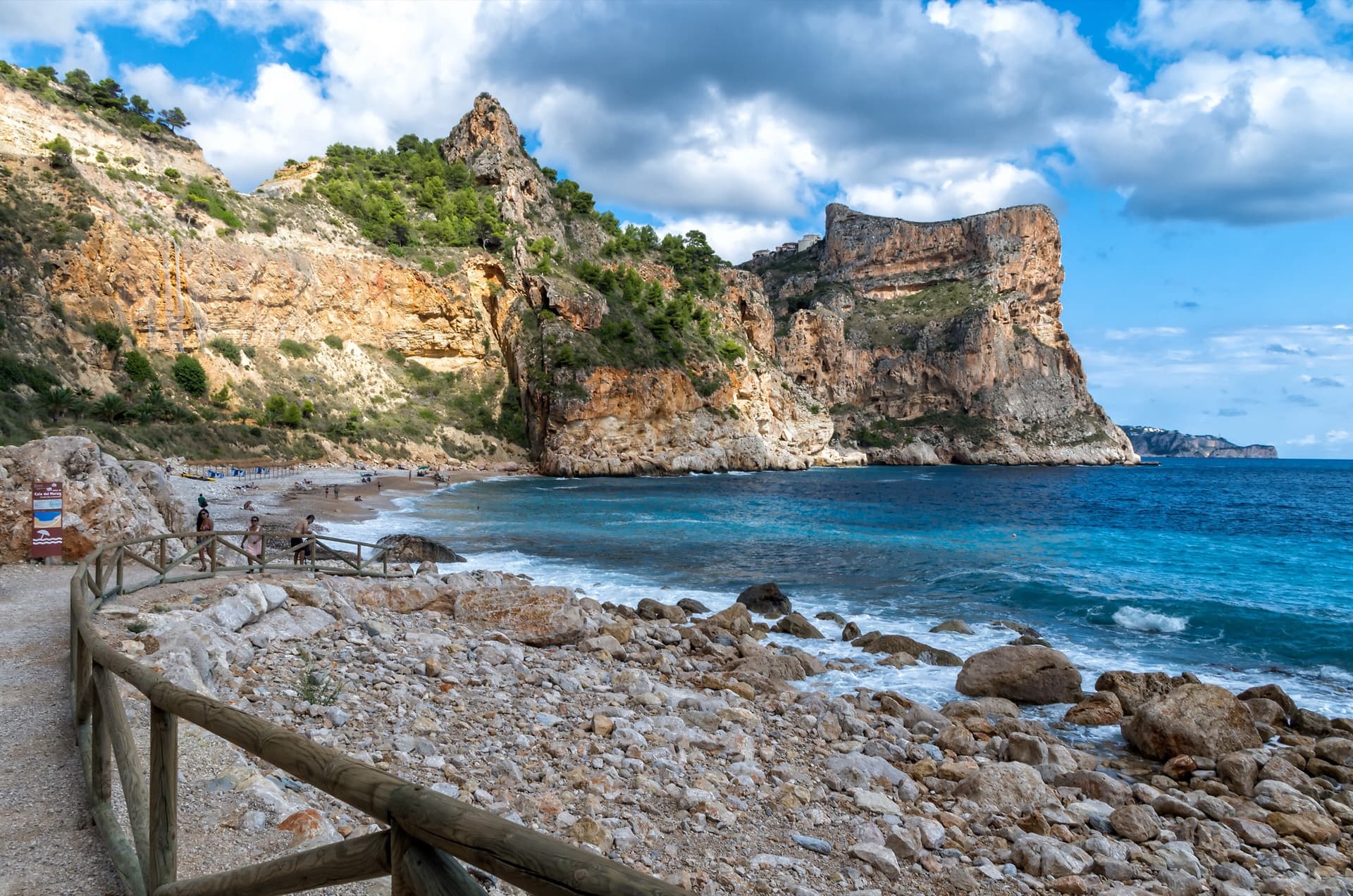
The flat-topped sea cliff of Morro Falquí closing the south end of Cala del Moraig, Benitatxell. Sonjannika climbs on this headland; the line cannot be pointed to from here.

Spain · Costa Blanca (Morro Falquí)

Sonjannika

A superb sea-cliff multipitch. P4 makes an impressive exposed exit from a cave with 100 m of air below, and the 6a+ P5 has a chimney and fingery slab. Balancy, airy and great for introducing someone to multipitch.

6a+6 pitches170 m

Read the cautions

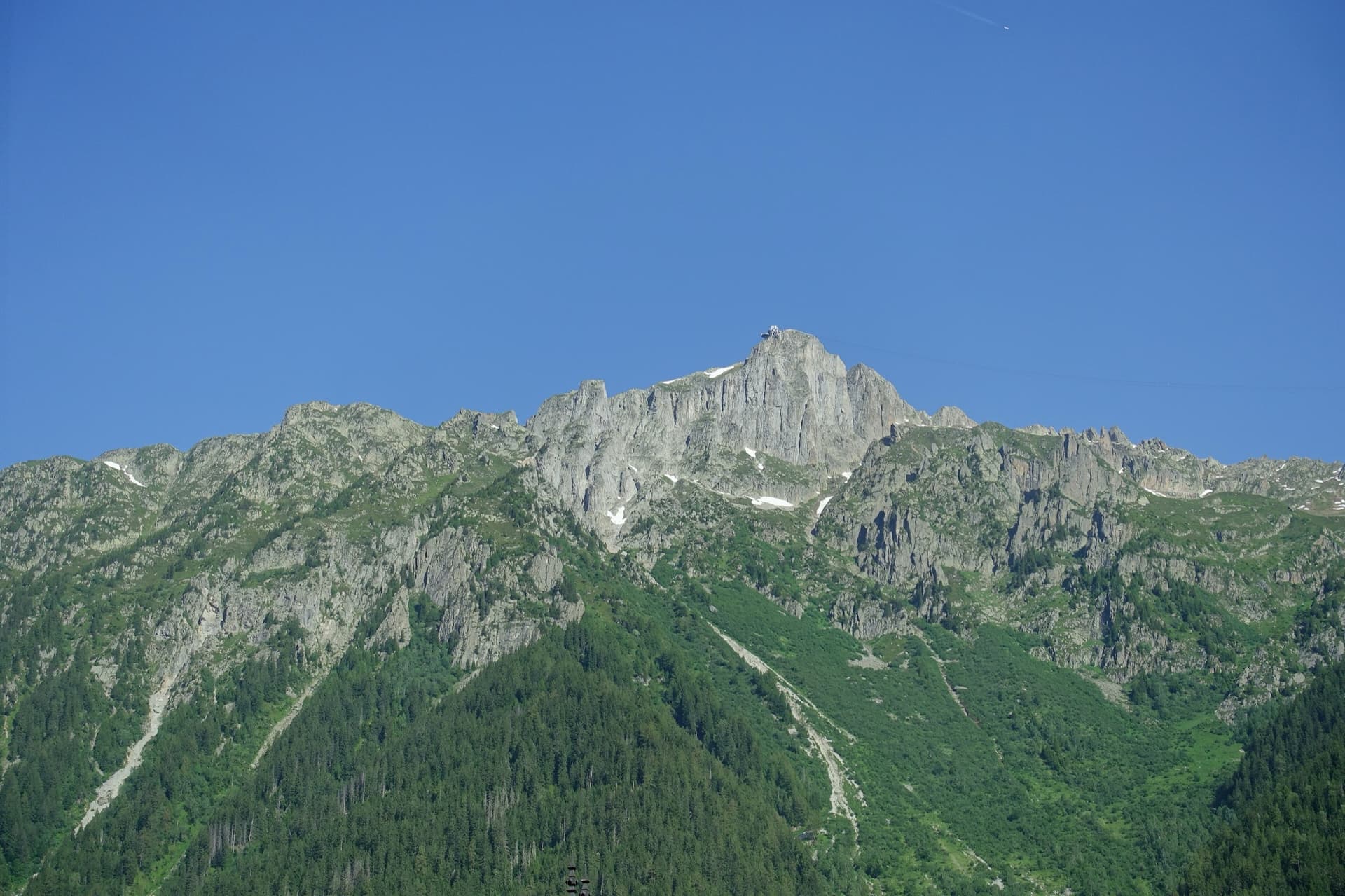
The summit of Le Brévent and the rock face beneath its cable-car station, seen from the Chamonix valley; the Voie Frison-Roche climbs this south-east face, the exact line is not marked.

France · Chamonix valley

Voie Frison-Roche

The great classic of the Aiguilles Rouges: six varied pitches of gneiss, ten minutes downhill from the Brévent cable car and finishing at its top station, with Mont Blanc opposite. The crux is a short, physical corner crack and the last pitch is a long, clean corner. It is extremely popular.

6a+6 pitches200 m

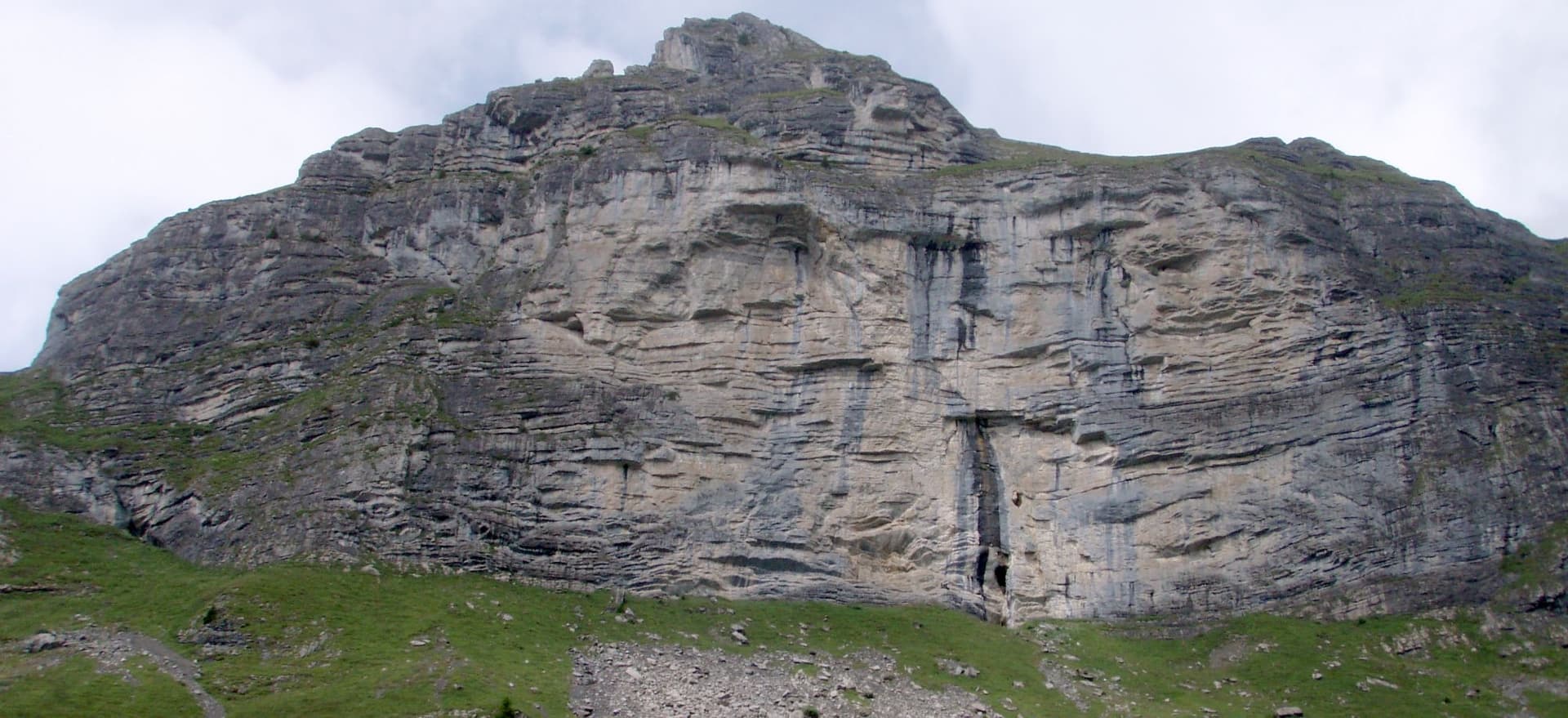
The Hintisberg wall from the alp; Blüemlipfad is on the left-hand sector

Switzerland · Bernese Oberland

Blüemlipfad

Six fairly short pitches on the left-hand sector of Hintisberg, left of the big overhangs. The first three are moderate and on less good rock; the upper three are steeper, with the 6a+ crux on small edges on pitch 4, and finish on a grassy top with the whole Bernese Oberland in view. Grades are on the stiff side.

6a+6 pitches180 m

Compiled from published sources and last verified October 2026. Bolts, anchors and access change. Climbing is dangerous and you are responsible for your own decisions: check a current topo and read the disclaimer.