Multipitch Atlas

Acromion

Magdalena Superior south-west side (Gorros) · Montserrat · Spain

Bail with caveatsBolting confidence: high

An easy, atmospheric way up the Magdalena Superior with one hard pitch: a traverse to the edge of a big roof and a ladder of bolts up a steep spur, 6b free or 5b with aid. The other three pitches are grade 3 and 4 on generous cobbles. Bring an étrier or a long sling if 6b is beyond you.

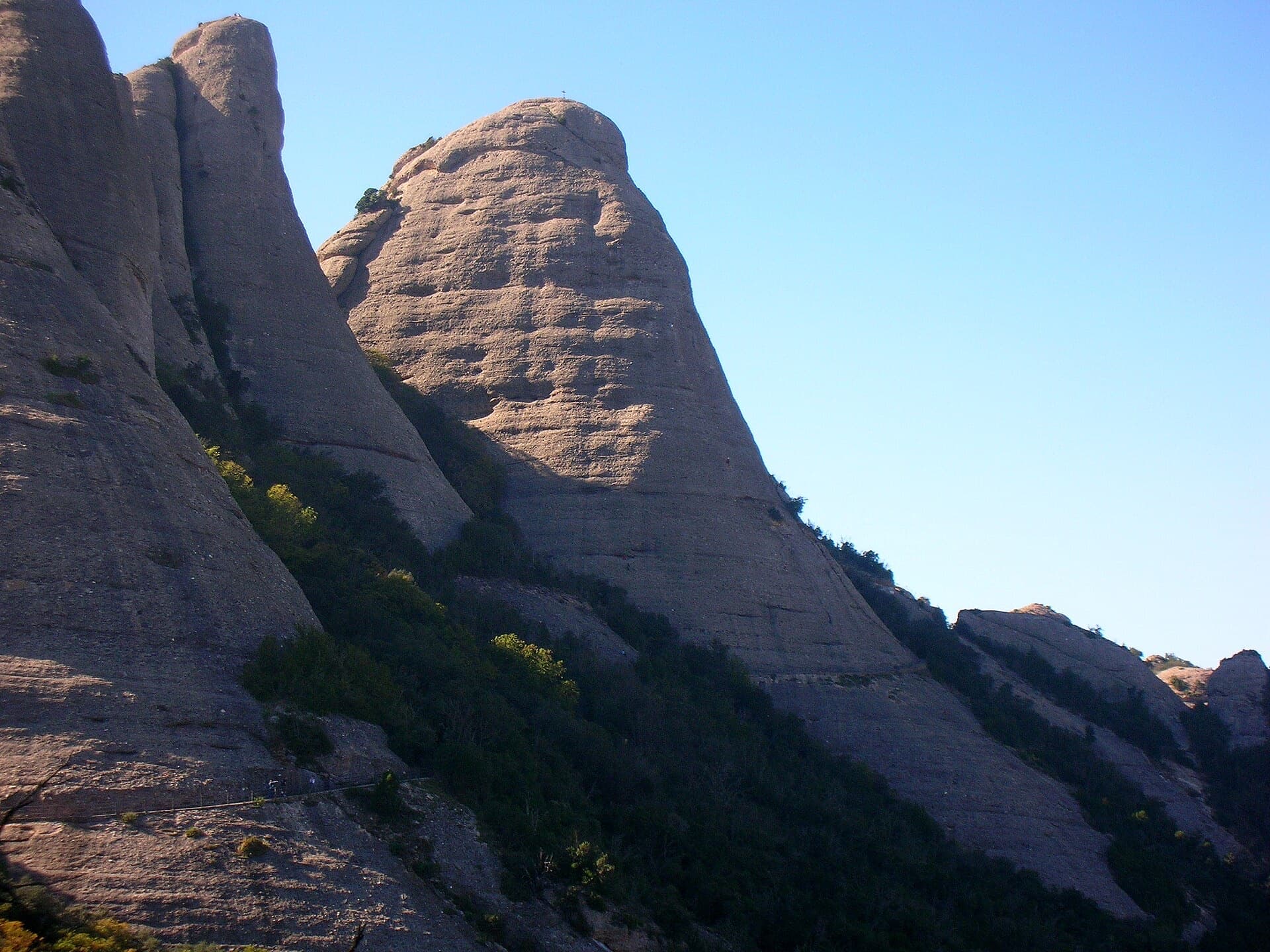
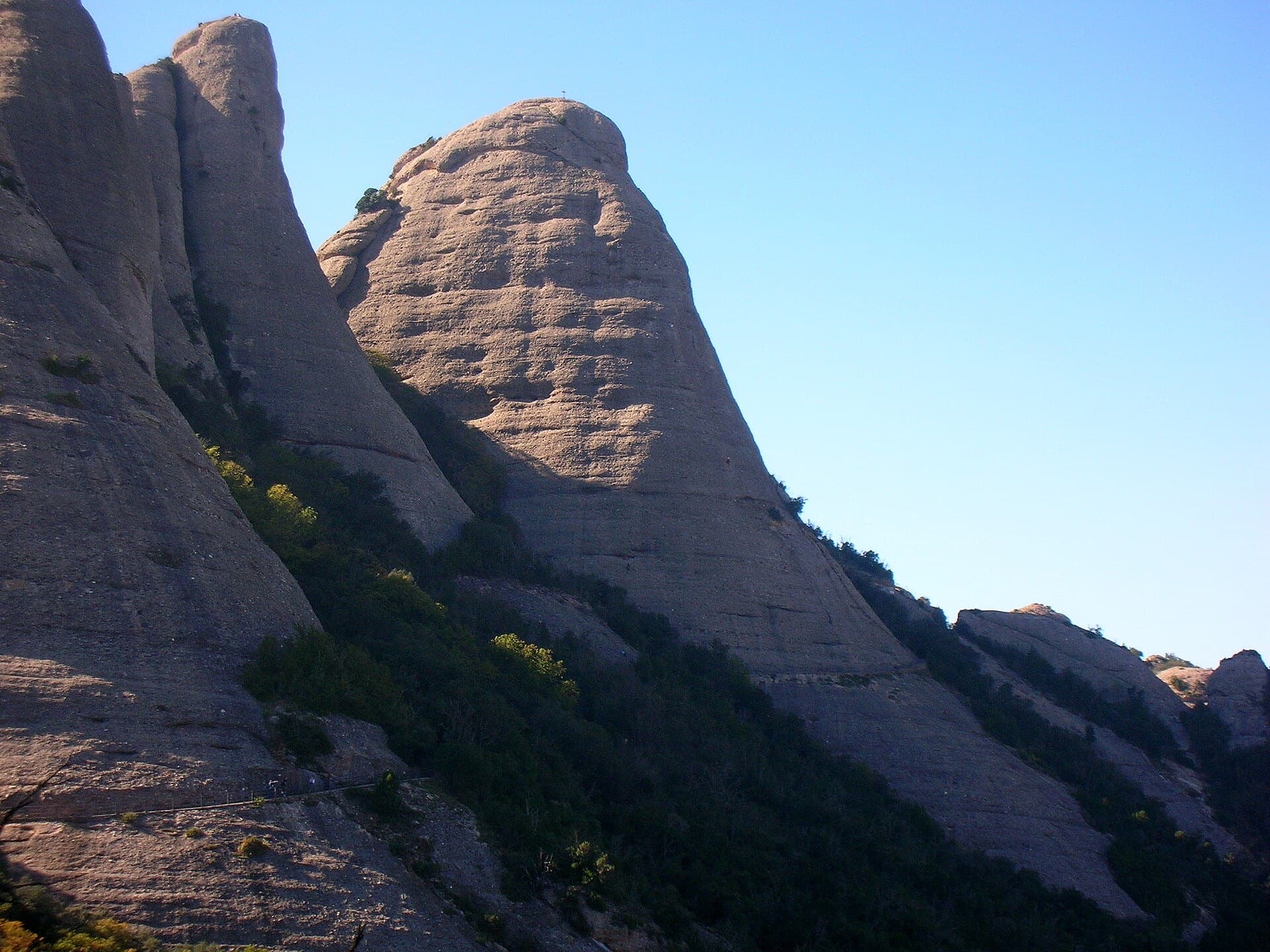
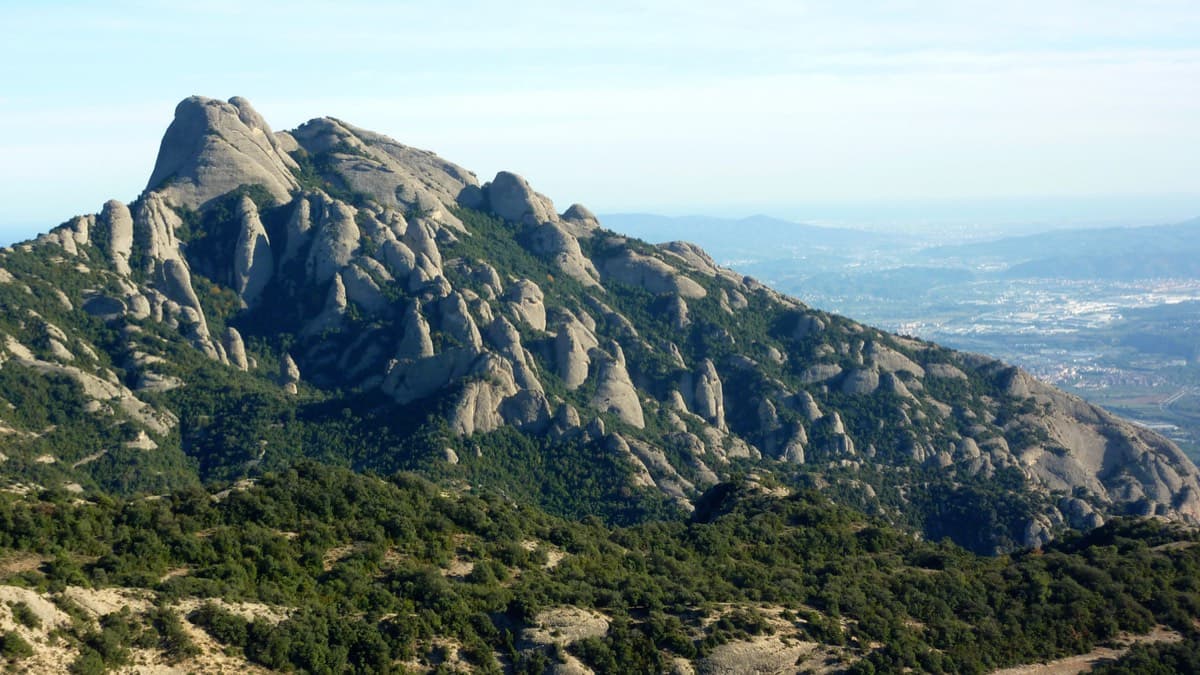
The Magdalena Superior seen from the summit of the Gorra Frígia in July 2011. Acromion climbs the tower's south-west side; the line is not marked.Photo: EliziR · CC BY-SA 3.0

Photo

The Magdalena Superior seen from the summit of the Gorra Frígia in July 2011. Acromion climbs the tower's south-west side; the line is not marked.Photo: EliziR · CC BY-SA 3.0
Hardest pitch
6b
Pitches
4
Length
115 m
Approach
30 min
Aspect
SW
South-west-facing
Rope
2×35 m

The route

Overview

A four-pitch route on the sunny side of the Magdalena Superior, the tower between the Gorra Frígia and the Magdalena Inferior. Three of the pitches are easy climbing on big cobbles. The second pitch is the reason to come: it traverses towards the left edge of a big roof and climbs a slightly overhanging spur on a ladder of bolts, 6b for strong parties and straightforward aid for everyone else. A climber who repeated it in 2023 notes that the exit from the aid is easy because the bolts are close and you can keep using a sling until the climbing looks simple. A 2021 party found the rock excellent and the equipment abundant.

The climbing

Pitch by pitch

Pitches of Acromion
PitchGradeLengthBoltsNotes
P13b30 m5 boltsStraight up the inclined pillar on good cobbles to a belay a few metres below a big roof. Do not follow the bolts that go into the roof.
P26b30 m14 boltsTraverse up and left towards the left flank of the roof (4b, then 5b) and climb the slightly overhanging spur on the ladder of bolts: 6b free, or A0 with 5b obligatory. Then the easy pillar (4b/4c) to the belay.
P34c30 m9 boltsStraight up a wall of generous cobbles to a harder step up and left (4c), then easily to the ridge of the Magdalena Superior and a ring belay on the ground, which is also an abseil station.
P44b25 m4 boltsCross between two trees, downclimbing slightly, to the final wall. Climb it trending left, then follow the ridge right to a belay a few metres below the summit. The abseil station is a few metres to the right.

Getting there

Approach

To the parking

Montserrat monastery, reached by road from Monistrol (BP-1121) or by FGC train from Barcelona (Manresa line) connecting with the rack railway or the cable car. Camptocamp suggests parking just above the hairpin at the monastery toll, which it describes as free, and walking up through the car parks; a 2016 party paid €6.50 for the day in the monastery car park, which fills early at weekends. The Sant Joan funicular from the monastery saves about 350 m of ascent; camptocamp quotes €15 return and €9.50 one way for its upper section.

On foot · about 30 min

About 1 h 30 on foot from the monastery car parks by Santa Anna and the PR C-19, much less with the funicular; a 2021 party walked down to the start in a few minutes from the Sant Joan side. From the Sant Jeroni path at the foot of the Gorra Marinera, go along the wall towards the Gorra Frígia and take the Escales de Jacob (Jacob's stairs) on the left. Pass along the south face of the Magdalena Inferior, slip behind the Magdalena Superior and descend a narrow gully. The start is on the right before you reach the bottom of the wall, in a small clearing, marked by a bolt stud without a hanger. The other way in is over the col between the Gorra Frígia and the Magdalena Superior and down to the south side.

Map of the walk-in

  • Crag
  • Parking

Loading map

The point marks the crag, not the exact start of the route.

Coordinates · crag

41.58932, 1.82646

Point from camptocamp waypoint 525443 (Magdalena Superior summit)

For your phone or watch

Download GPX

Contains the route point and parking. Opens in most mapping apps and GPS watches.

Points are compiled from published sources, with the precision stated above. They were not surveyed on the ground: check them against a current topo.

Getting down

Descent

Abseil the east face by the normal route: a first abseil of about 15 m to the R3 station, then 25 m to the ground. A 2021 party did it in a single 50 m abseil. Walk to the Escales de Jacob, the narrow stepped passage between the Gorra Marinera and the Magdalena Inferior, and down to the Camí Nou de Sant Jeroni.

Retreat

Bailing off the route

Bail with caveats

Retreat is not described. From R1 a 30 m abseil returns to the start, which needs the two ropes you carry for the descent. After the roof pitch the belay is above overhanging ground reached by a traverse, so going down from R2 is awkward and finishing is easier: the last two pitches are grade 4, and R3 is itself an abseil station on the descent line.

Retreat from
R1 by abseil (inferred); R3 is an equipped abseil station on the east side.
Point of no return
The top of the bolt ladder on pitch 2 (inferred from the traverse and overhang).
Carry
Two 35 m ropes or one 60 m rope.
Basis
Part stated, part inferredCamptocamp states that R3 is equipped for abseiling and gives pitch lengths; the rest is inferred from the shape of pitch 2.

Partly inferred from the route facts

Safety

Hazards

  • A 2017 account says the bolts on the ladder are not quite as close as you would like for aiding: short climbers may need a sling to reach.
  • Pitch 4 has only four bolts in 25 m of grade 3 to 4 ground.
  • The start is hidden in a gully behind the tower and is marked only by a bare bolt stud.

Sun and weather

Conditions

West to south-west facing at about 1100 m, so it gets the afternoon sun and suits cooler months; logged in November. It is on the opposite side of the tower from the shady north-face routes such as 98 Octanos.

Usual season · Mar to May, Oct to Nov

Sun on the wall · SW-facing

Working out the sunlit hours for this month.

  • January: not yet worked out
  • February: not yet worked out
  • March (usual season): not yet worked out
  • April (usual season): not yet worked out
  • May (usual season): not yet worked out
  • June: not yet worked out
  • July: not yet worked out
  • August: not yet worked out
  • September: not yet worked out
  • October (usual season): not yet worked out
  • November (usual season): not yet worked out
  • December: not yet worked out

Sun on the wallDaylight, wall in shade● Usual season

Estimated from the wall's aspect only. Ignores surrounding terrain, gullies and the wall's exact shape. Clock times are local to the wall (Central European time), for the 15th of each month.

Monthly climate averages for Montserrat, 1991-2020
MeasureJanFebMar (usual season)Apr (usual season)May (usual season)JunJulAugSepOct (usual season)Nov (usual season)Dec
Mean daily high °C681113172124231915107
Mean daily low °C−3−30361013141071−2
Rain days 1 mm or more667109779121076

● marks the usual climbing season. Averages for 1991-2020 at about 1072 m. Area climate from Open-Meteo reanalysis. Temperatures are adjusted to the height of the crag; rain comes from a grid cell of about 10 to 25 km, and summer highs on sea cliffs can read a few degrees low. The wall and valley can differ. Data: Open-Meteo, CC BY 4.0.

What to carry

Gear

14 quickdraws plus a long extender, and two 35 m ropes or a single rope of 50 m or more for the two short abseils. An étrier or long sling for the bolt ladder if you will aid it. Helmet.

Checklist

Quickdraws
14
Rope
2×35 m
Helmet
One each
Abseil device and prusik
The descent or the retreat involves abseiling

Derived from the route data; check it against a current topo

From climbers

Reader reports

Reader reports are not being collected yet. Until they are, check a current topo and the local club or guidebook publisher for recent changes to Acromion.

Worth knowing

Tips

  • Easily combined with another short route the same day: one party climbed it after the Miranda de Sant Joan in the morning.
  • The Via Normal of the Magdalena Superior is just right of pitch 4 and is the abseil line.

Open questions

Where sources disagree

  • Length: 100 m in camptocamp's height field, about 115 m from its pitch lengths.
  • Pitch 1 is 3b on camptocamp and III in the blog; pitch 2 is 6b or 5b A0 on camptocamp and 'V with aid' in the blog.

Provenance

Sources

Same area

More in Montserrat

All routes in Montserrat
West side of the Gorros sector, Montserrat

Spain · Montserrat

Integral d'en Pitu i la Nuri

A modern linkup over two pinnacles on excellent conglomerate. Overhanging 6a and 6a+ walls alternate with easy 'potato-field' slabs. The new bolting makes it one of the most reassuring long lines in the massif.

6a+5 pitches185 m
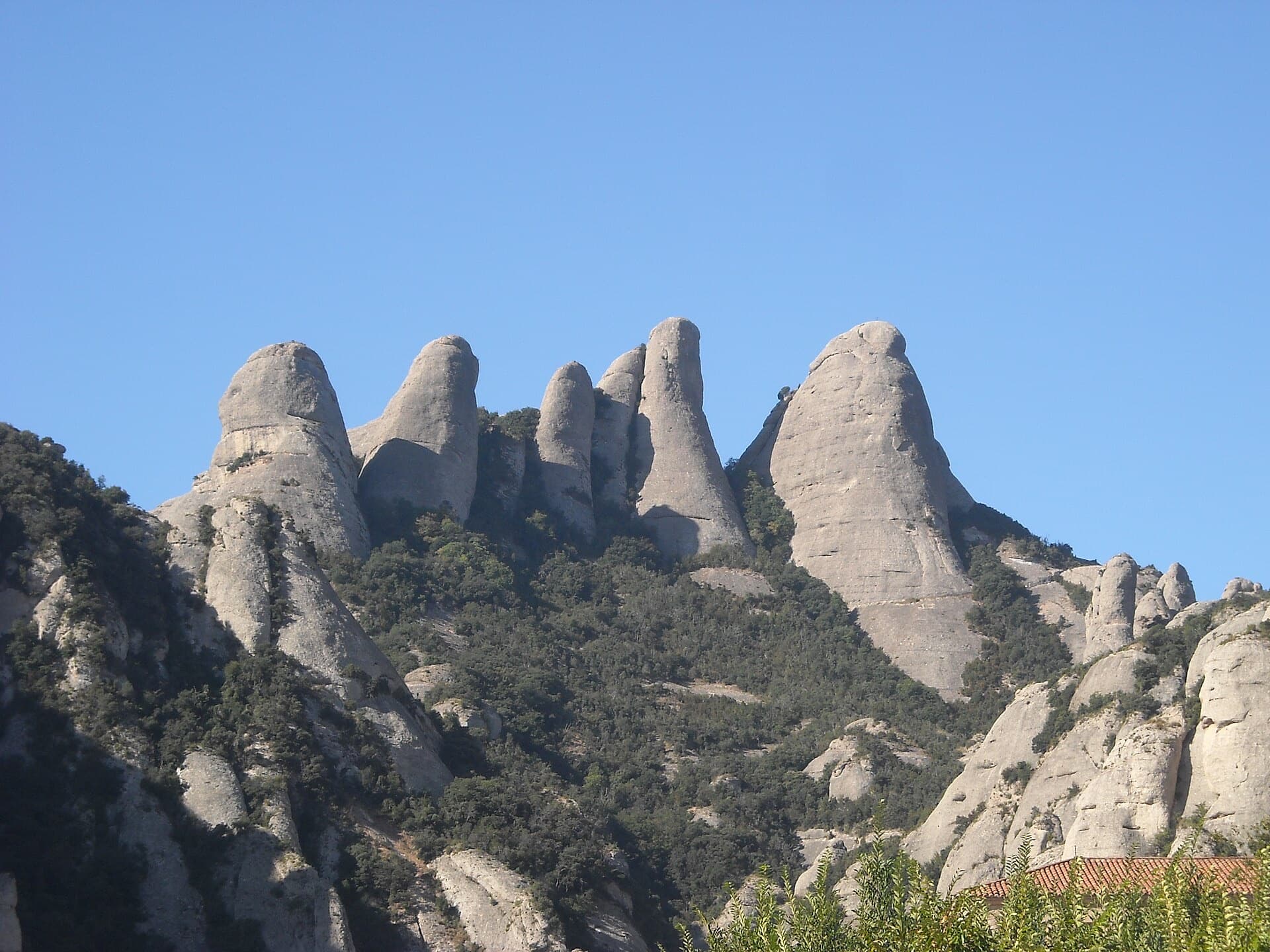
The Gorros of Montserrat from the monastery side: left to right the Gorra Marinera, the Magdalenes and the Gorra Frígia. Via Sargantanes climbs the Gorra Marinera, the left-hand tower.

Spain · Montserrat

Via Sargantanes

A popular first Montserrat multipitch close to the monastery. Steep pebble walls at 5b are split by easy slabs, finishing on an airy summit cap.

5b6 pitches145 m

Read the cautions

The Gorra Frígia, the Phrygian-cap tower of the Gorros, seen from the Camí Nou de Sant Jeroni, which passes the foot of its north-east side where Via del Carles starts. The line itself is not marked.

Spain · Montserrat

Via del Carles

A straightforward line up the 'Phrygian cap' visible from the monastery. Only the short vertical step on pitch 3 is sustained. It is a good route for learning Montserrat pebble technique and has a summit cross with a big view. The approach takes about 10 min from the Sant Joan funicular top.

5c5 pitches140 m

The Gorra Frígia seen from the Camí Nou de Sant Jeroni on the northern side of the Gorros, Montserrat. Via Stromberg climbs the north face; the line is not marked.

Spain · Montserrat

Via Stromberg

A shady north-face outing that suits warm days. Steady 5c pebble climbing leads to a short overhang crux (6a, or 5c/A0) and the summit cross.

6a4 pitches120 m

Around 6b · about 4 pitches

Similar elsewhere

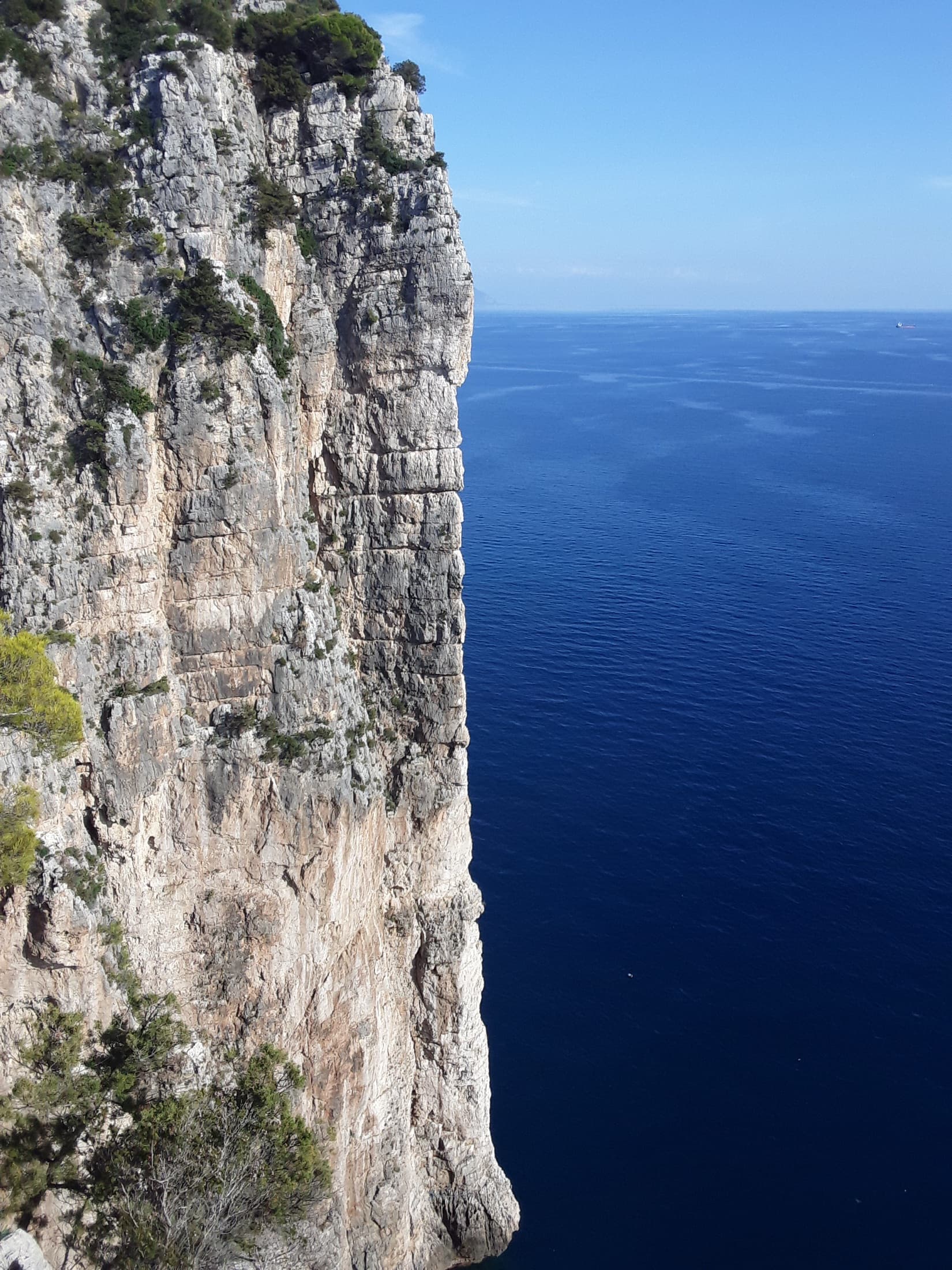
The vertical limestone spur of La Croce del Sud dropping straight into the Tyrrhenian Sea at the Montagna Spaccata, Gaeta.

Italy · Gaeta & Sperlonga

La Croce del Sud

The showpiece of the Montagna Spaccata: four steep, exposed pitches up a knife-edge spur that drops straight into the sea, reached by abseil. Sustained around 6a+ on good holds, with an overhang at 6b to finish.

6b4 pitches120 m

Read the cautionsCommitting

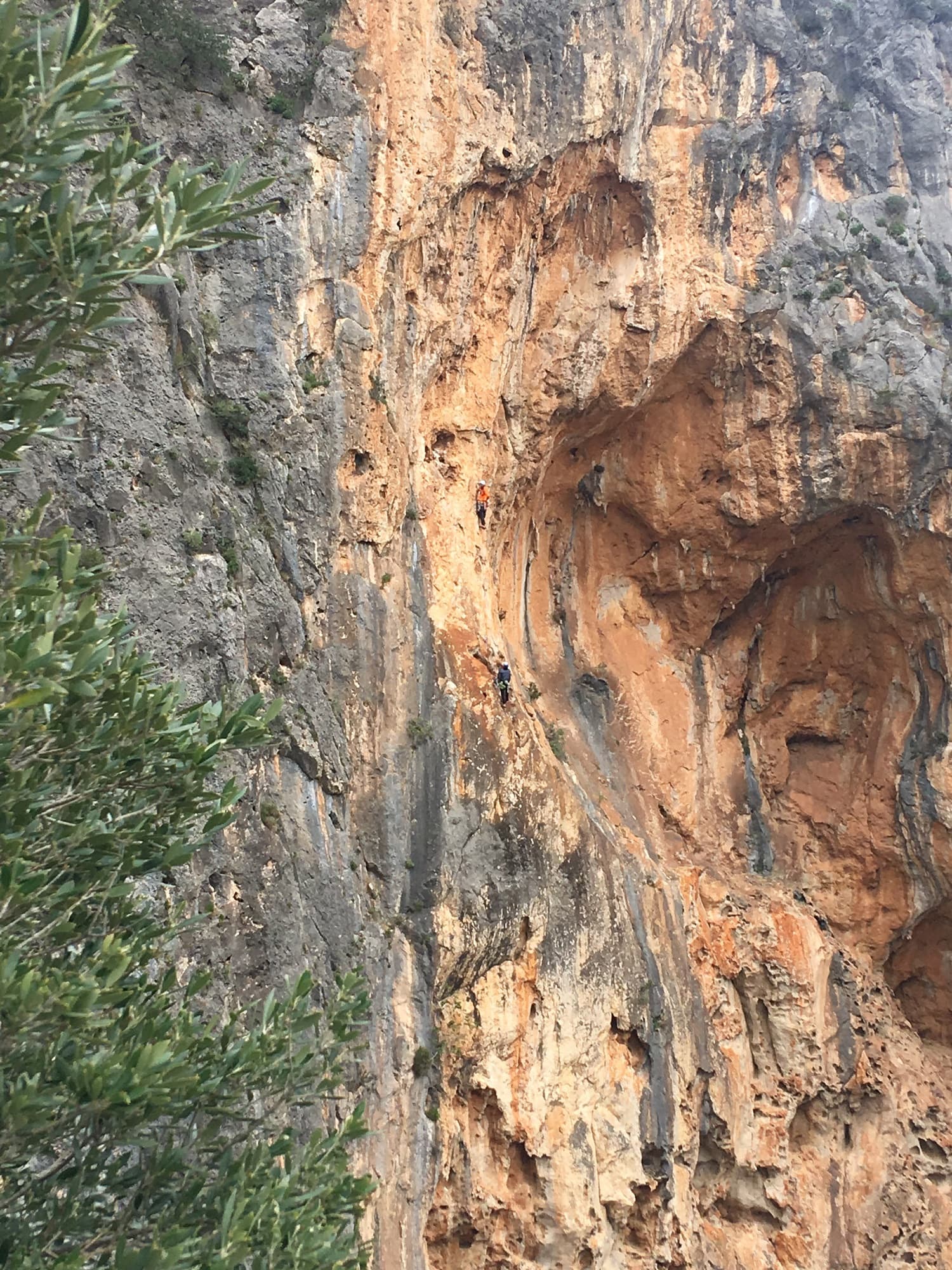
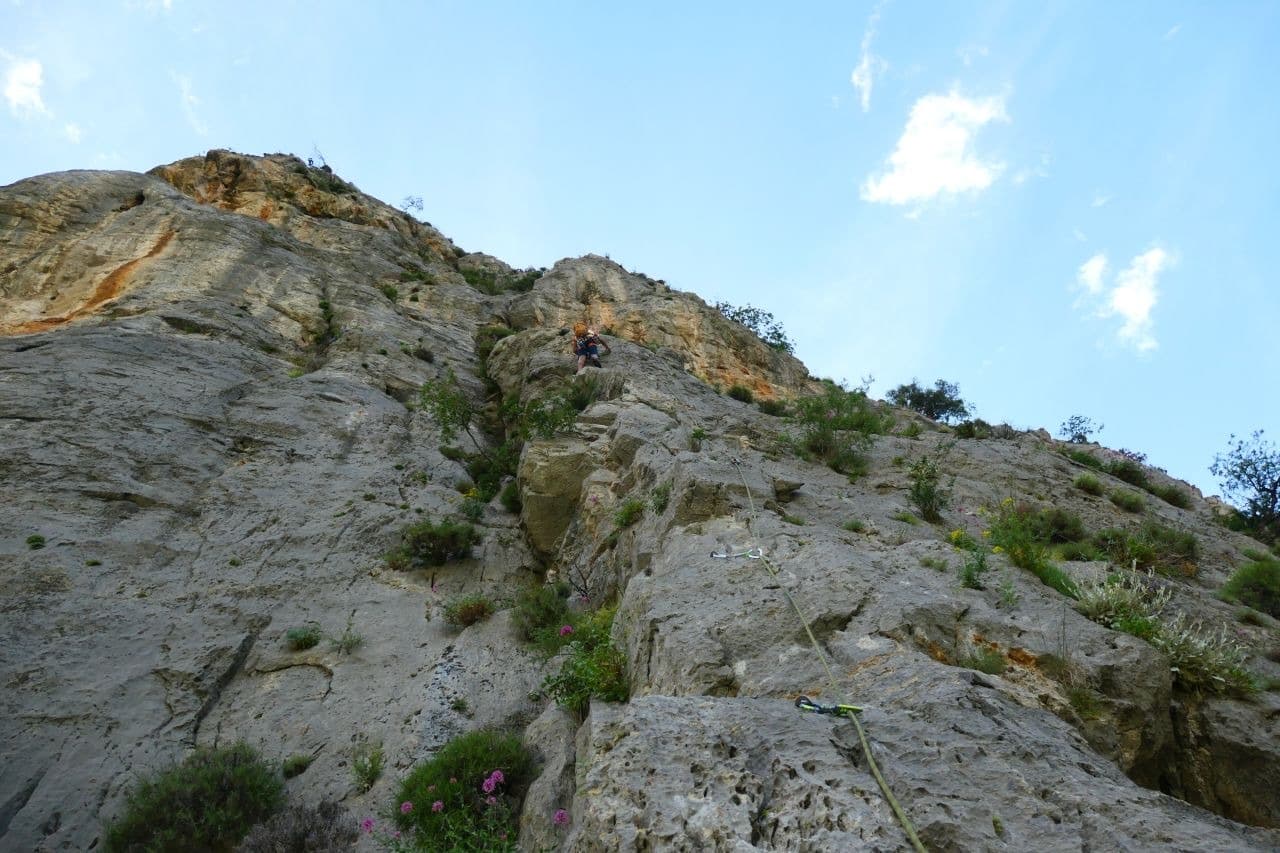
A party on one of the bolted multipitch routes on the orange walls right of the Albahida ridge at Sa Gubia, photographed from Albahida in April 2019. The route they are on is not identified.

Spain · Mallorca (Sa Gubia)

Vía de los Bomberos

The best line of clean rock up the huge left wall of the Sa Gubia amphitheatre, and a Rockfax top-50 route. Four long pitches, sustained at 6a to 6b but never desperate, starting up a big white tufa, with fine positions at the stances. The route stops below the ridge and you abseil.

6b4 pitches135 m

Looking up Lía on the Sentinelle buttress, Manikia

Greece · Manikia (Evia)

Lía

Four long pitches up the right-hand pillar of the Sentinelle buttress on excellent rock: a pillar, a pocketed wall, an overhanging crack with a stiff exit, and a final pillar. Easy to find, well bolted and finished off with a playful via ferrata descent.

6b4 pitches150 m

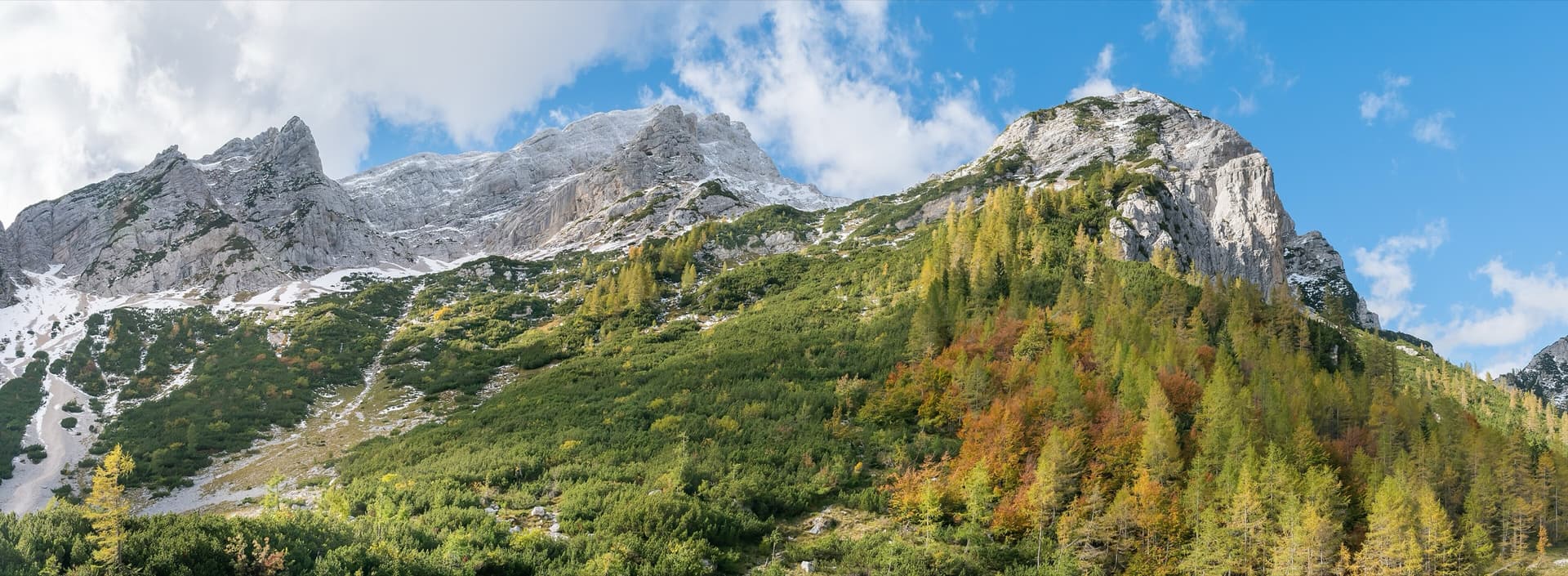
Mala Mojstrovka (left) and Nad Šitom glava (right) from the Vršič Pass in autumn; the routes are on the pale rock wall of Nad Šitom glava above the larches.

Slovenia · Vršič Pass (Julian Alps)

Mandolinca

A compact modern sport multipitch by Tomo and Dragica Česen, front-loaded with its longest and hardest pitch. It is close to the road and good for a half-day.

6b4 pitches90 m

Compiled from published sources and last verified October 2026. Bolts, anchors and access change. Climbing is dangerous and you are responsible for your own decisions: check a current topo and read the disclaimer.