Multipitch Atlas

Robin des Baouques

Le Surplomb de la Carrière · Sainte-Victoire · France

Read the cautionsEasy to bailBolting confidence: medium

Four pitches on perfect grey rock at the left edge of the Surplomb de la Carrière: two friction slabs, then a surprisingly juggy roof and a long, thin slab at 6b+. Probably the easiest bolted route on this wall, but a serious one, with dry grades and 6b+ obligatory.

The Surplomb de la Carrière; Robin des Baouques climbs the grey slabs on its left sidePhoto: Carcharoth · CC BY-SA 3.0

Photo

The Surplomb de la Carrière; Robin des Baouques climbs the grey slabs on its left sidePhoto: Carcharoth · CC BY-SA 3.0
Hardest pitch
6b+
Pitches
4
Length
120 m
Approach
40 min
Aspect
SW
South-west-facing
Rope
2×50 m
Read before you go

Sound bolts and excellent rock, but the spacing leaves obligatory 6b+ moves above the bolt and the last metres have loose blocks.

The route

Overview

Robin des Baouques starts with Steppe Aromatique on the grey slabs left of the conspicuous shaded crack, then branches right into the edge of the big bulge that gives the crag its name. The first two pitches are low-angled friction that is harder than it looks; the third crosses a small roof on big holds and continues up a long, continuous slab; the fourth is a steep wall with another technical slab crux. The rock is rough, new and excellent apart from loose blocks in the last 15 m. Vertical Pirate rates it a little easier than its neighbour but more serious, because of the spacing.

The climbing

Pitch by pitch

Pitches of Robin des Baouques
PitchGradeNotes
P16aFriction slab that wakes you up, with some climbing between the bolts. Shared with Steppe Aromatique, which leaves left at the belay.
P26a+The same style but steeper, with one marked, obligatory move, then a traverse right to a belay under a small roof on the facing wall. Short; can be linked with pitch 1 (50 m in all).
P36b+Over the roof on surprisingly good holds, a thin slab passage, then easing. Very long and continuous; the best pitch.
P46b+Harder than it looks: a steep wall and a technical slab crux, with 6 bolts in under 20 m. Loose blocks and hollow rock near the end.

Getting there

Approach

To the parking

From Aix-en-Provence take the D17 through Le Tholonet towards Puyloubier. Pass Saint-Antonin-sur-Bayon and the Deux Aiguilles car park on the right, and about 500 m further park at the Parking de la Carrière, on the left of the road; there are roadside spaces on the left if the 'Marbrière' car park on the right is closed. Bus 110 (Aix to Puyloubier) runs along this road; camptocamp rates public transport to this car park as good. Aix has all services.

On foot · about 40 min

Follow the track from the car park to the brown-marked path and walk east below the Roque Vaoutarde. Leave the path a few metres after its first hairpin on a narrow but clear track, which winds up to rounded slabs and a scree-filled gully. Drop slightly, climb to the head of this gully, then traverse left more or less on the level above a second gully and head for the face by sight. Camptocamp links a GPS track. Allow 40 minutes, 30 once you know the way. The route name is written at the foot.

Map of the walk-in

  • Crag
  • Parking

Loading map

The point marks the crag, not the exact start of the route.

Coordinates · crag

43.52814, 5.59658

Parking

43.51930, 5.59470

Parking de la Carrière on the D17 (camptocamp waypoint 115383)

Point from camptocamp waypoint 317117 (Sainte Victoire - Le Surplomb de la Carrière)

For your phone or watch

Download GPX

Contains the route point and parking. Opens in most mapping apps and GPS watches.

Points are compiled from published sources, with the precision stated above. They were not surveyed on the ground: check them against a current topo.

Getting down

Descent

From the end of pitch 4 a small track leads 10 m up and left to the last belay of Steppe Aromatique, two linked bolts with a maillon. Abseil from there down Robin des Baouques in three abseils of about 40 m. The first abseil is reported to snag easily. You can also walk down: go straight up for 30 m to a small col at the end of the Arête du Contradicteur, descend the gully and pass round the overhang on the right.

Retreat

Bailing off the route

Easy to bail

The route is the abseil line for this part of the wall: three abseils of about 40 m. Retreat from a lower belay follows the same line.

Retreat from
The belays on the route, which serve as the abseil stations.
Point of no return
None reported.
Carry
Two 50 m ropes. The belay after pitch 2 is offset right under a roof, so watch the swing.
Basis
Part stated, part inferredBoth sources give abseiling the route as the descent; the station details come from the neighbouring route's page, and the note on the offset belay is inferred.

Partly inferred from the route facts

Safety

Hazards

  • Spacing: reports from 2018 and 2023 and the Vertical Pirate guide all say the hard moves are often above the bolt. The obligatory grade is 6b+.
  • Loose blocks and hollow rock in the last 15 m of pitch 4.
  • The approach is not obvious and crosses scree and rounded slabs.
  • From 1 June to 30 September access to the massif depends on prefectural fire-risk orders, which can close it day by day; check before you set out.

Sun and weather

Conditions

South-facing limestone between roughly 400 and 950 m, a winter and mid-season venue: camptocamp lists January to May and September to December for this side of the mountain. Summer is too hot, and from 1 June to 30 September access to the massif depends on prefectural fire-risk orders, which can close it day by day; check before you set out. The sector also catches the wind: one party walked down for fear of jamming the abseil ropes.

Usual season · Jan to May, Oct to Dec

Sun on the wall · SW-facing

Working out the sunlit hours for this month.

  • January (usual season): not yet worked out
  • February (usual season): not yet worked out
  • March (usual season): not yet worked out
  • April (usual season): not yet worked out
  • May (usual season): not yet worked out
  • June: not yet worked out
  • July: not yet worked out
  • August: not yet worked out
  • September: not yet worked out
  • October (usual season): not yet worked out
  • November (usual season): not yet worked out
  • December (usual season): not yet worked out

Sun on the wallDaylight, wall in shade● Usual season

Estimated from the wall's aspect only. Ignores surrounding terrain, gullies and the wall's exact shape. Clock times are local to the wall (Central European time), for the 15th of each month.

Monthly climate averages for Sainte-Victoire, 1991-2020
MeasureJan (usual season)Feb (usual season)Mar (usual season)Apr (usual season)May (usual season)JunJulAugSepOct (usual season)Nov (usual season)Dec (usual season)
Mean daily high °C9101316202528282318129
Mean daily low °C−0−025914161612941
Rain days 1 mm or more7669853479107

● marks the usual climbing season. Averages for 1991-2020 at about 499 m. Area climate from Open-Meteo reanalysis. Temperatures are adjusted to the height of the crag; rain comes from a grid cell of about 10 to 25 km, and summer highs on sea cliffs can read a few degrees low. The wall and valley can differ. Data: Open-Meteo, CC BY 4.0.

What to carry

Gear

Quickdraw numbers are not published. Two 50 m ropes for the three 40 m abseils. Helmet.

Checklist

Quickdraws
Number not given in the sources
Rope
2×50 m
Helmet
One each
Abseil device and prusik
The descent or the retreat involves abseiling

Derived from the route data; check it against a current topo

From climbers

Reader reports

Reader reports are not being collected yet. Until they are, check a current topo and the local club or guidebook publisher for recent changes to Robin des Baouques.

Worth knowing

Tips

  • Near the top of pitch 4 you can move left to the fourth belay of Steppe Aromatique and finish up its last pitch (6c): this avoids the loose blocks and lands you directly at the abseil station.
  • Most parties climb this and Steppe Aromatique in the same session: about 1 h 15 to 2 hours for Robin.
  • Pitches 1 and 2 link in 50 m.

Open questions

Where sources disagree

  • Protection: 'very well equipped' on camptocamp; 'fairly spaced, though well thought out' on Vertical Pirate; trip reports side with the second.
  • Pitch 4: 6b+ on camptocamp, 6b/6b+ on Vertical Pirate.
  • Aspect: south-west on the route page, south on the crag page.
  • Pitch lengths are not published; the abseil length comes from the neighbouring route's page.

Provenance

Sources

Same area

More in Sainte-Victoire

All routes in Sainte-Victoire
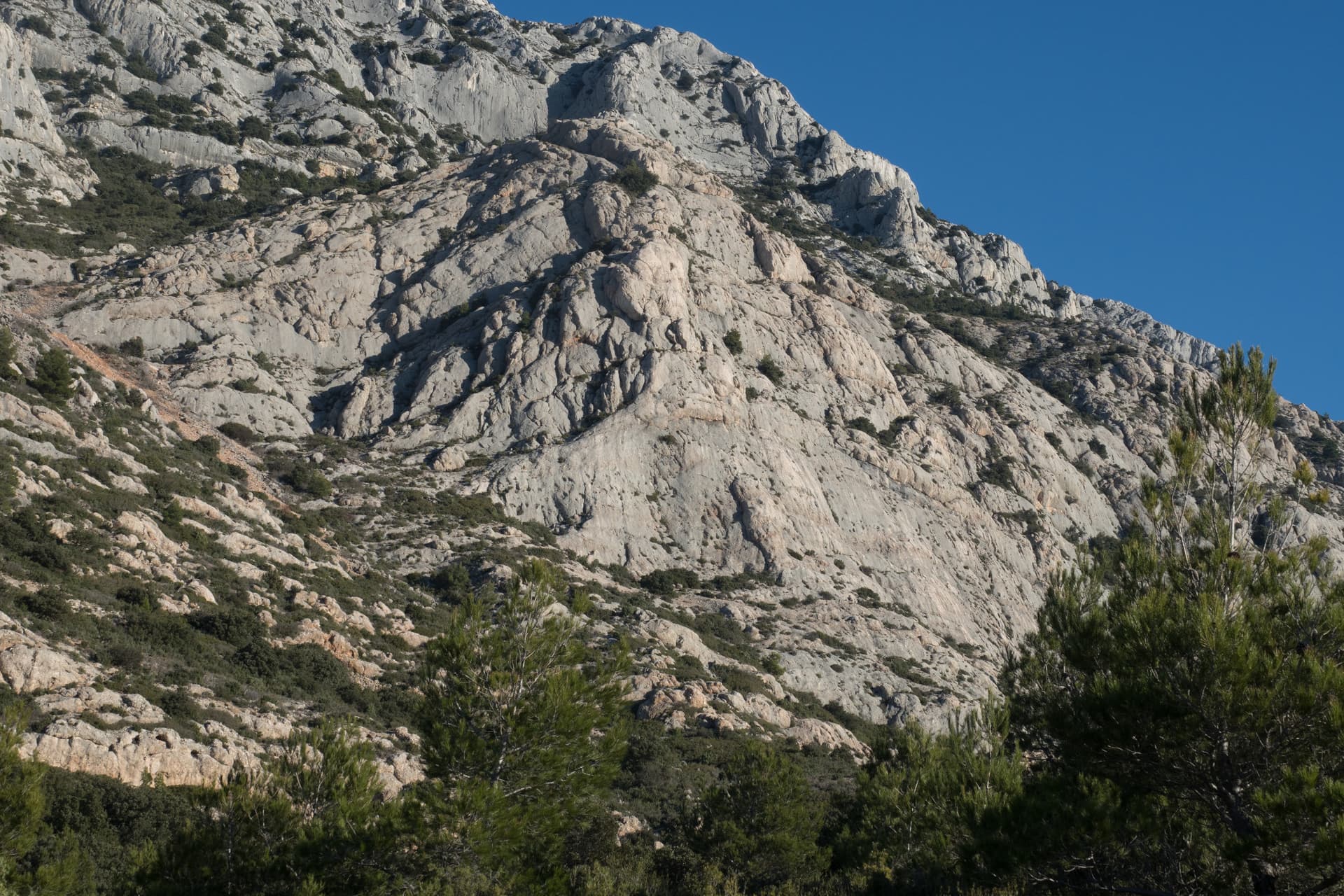
Le Socle de la Carrière, the pale limestone plinth at the foot of the south face of Sainte-Victoire.

France · Sainte-Victoire

La Marbrière

A sunny winter route on Sainte-Victoire's south-side socle. The highlight is a beautiful marbled slab on L5, and a stiff move off the last belay can be aided on a sling. Bring long slings to manage rope drag around the trees.

5c+7 pitches180 m
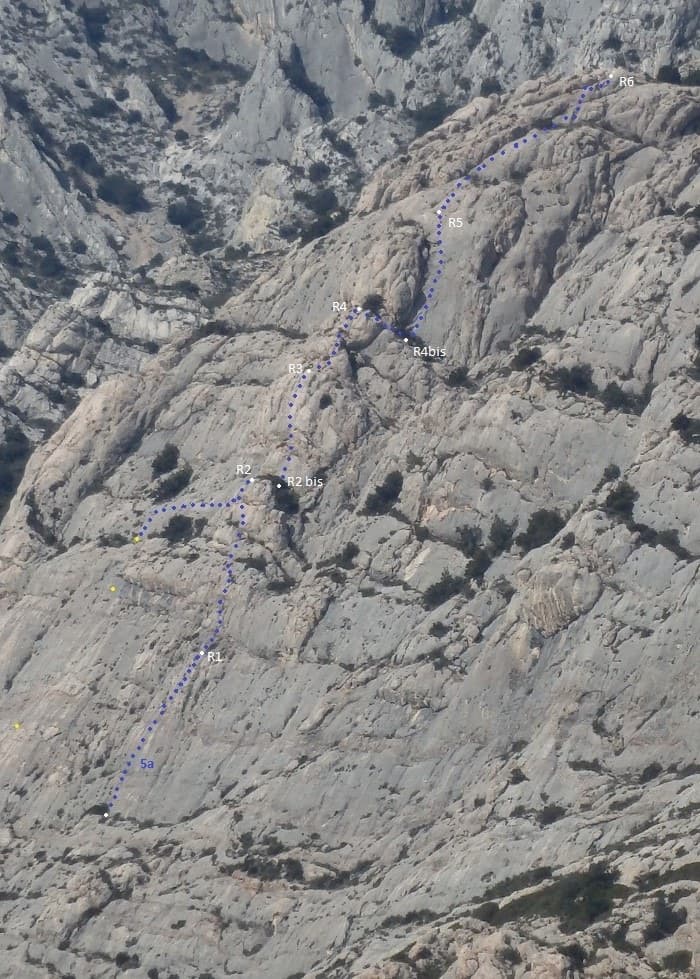
Line of Tambour Magique (dotted) with belays R1 to R6 on the Socle de la Carrière

France · Sainte-Victoire

Tambour Magique

A six-pitch outing at 5a to 5b on the compact 'marble' breccia of the Socle de la Carrière, running alongside La Marbrière. Short climbing sections on fine rock alternate with stony terraces. Bolting is friendlier than the local tradition, which makes it a good first route on the mountain.

5b6 pitches170 m

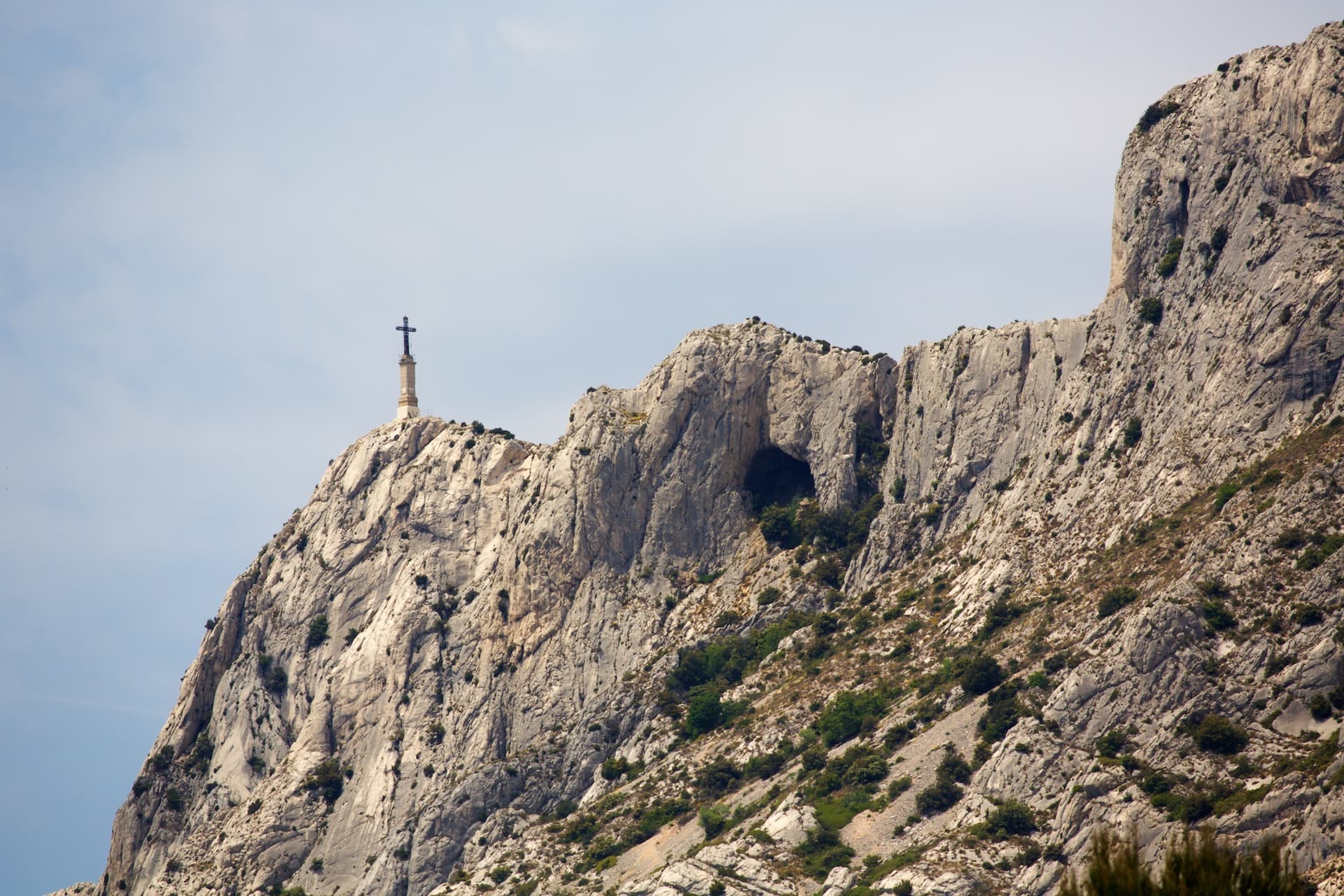
The Croix de Provence and the upper cliffs of Sainte-Victoire; La Commande finishes at the priory near the cross

France · Sainte-Victoire

La Commande

The long bolted route of Sainte-Victoire: 400 m from the foot of the mountain to the priory beside the Croix de Provence, in thirteen pitches up to 6b. Conglomerate walls low down, superb grey slabs higher up, and short walks between the tiers. Sustained around 6a, with a hard traverse on the second pitch.

6b13 pitches400 m

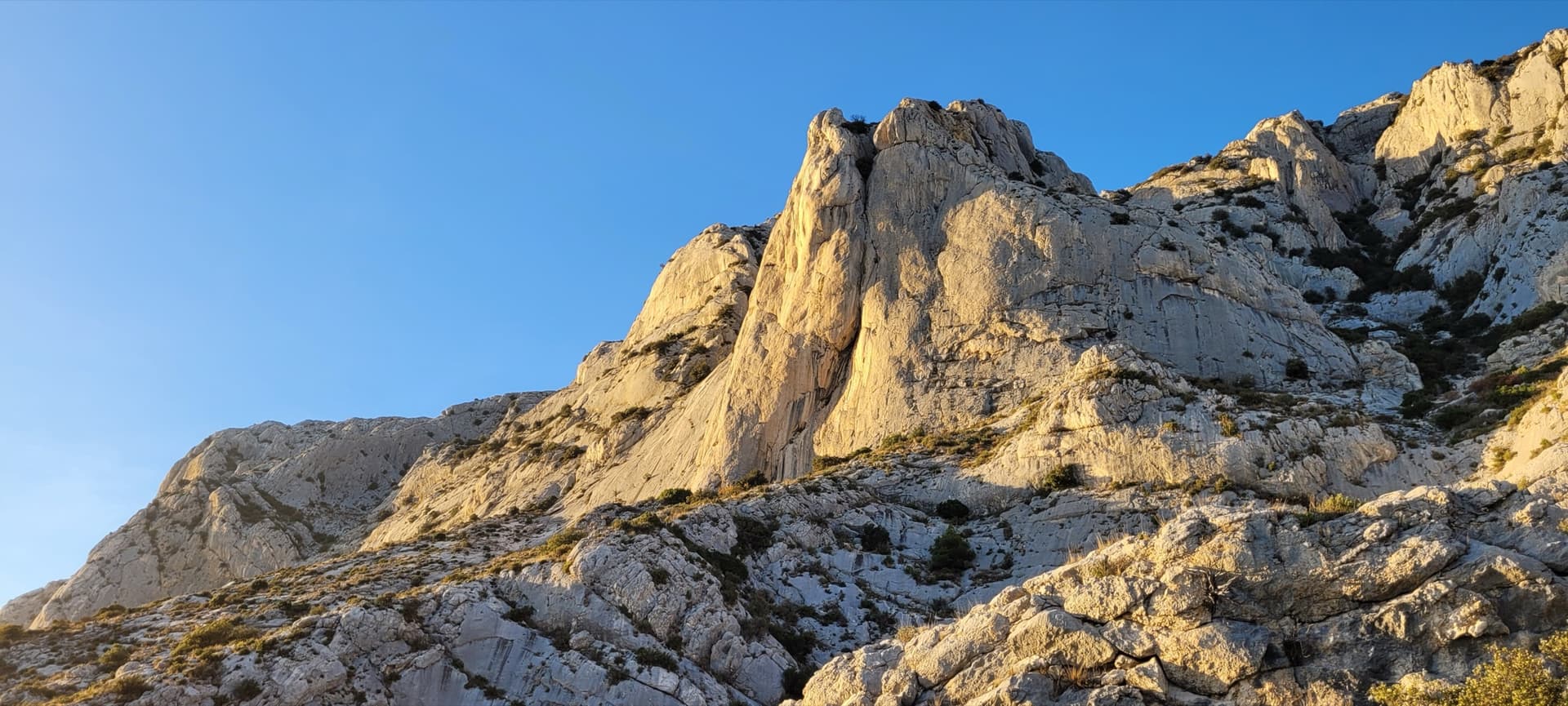
The Surplomb de la Carrière in evening light

France · Sainte-Victoire

Steppe Aromatique

Five pitches of demanding slab climbing on flawless grey rock at the left side of the Surplomb de la Carrière: two pitches of 6c, one of 6b+ with a finger crack, and a pocketed final wall. Closely bolted where it is hard, with an obligatory grade of 6a+.

6c5 pitches120 m

Around 6b+ · about 4 pitches

Similar elsewhere

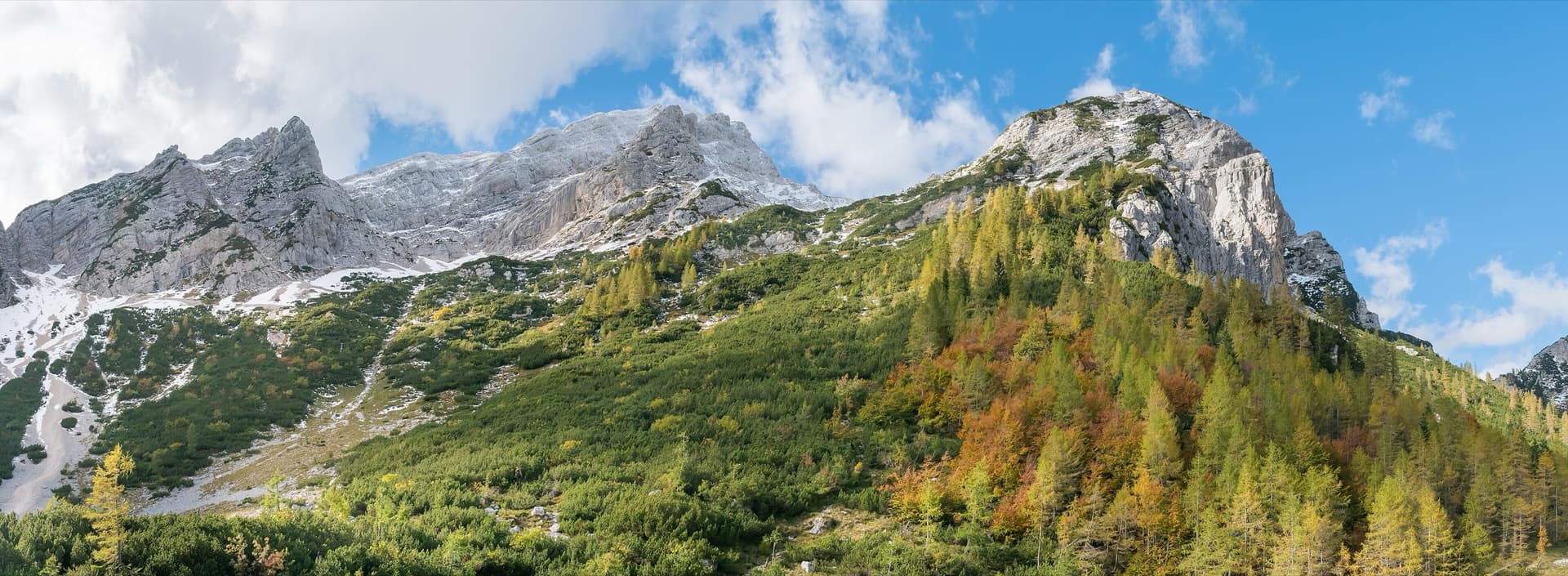
Mala Mojstrovka (left) and Nad Šitom glava (right) from the Vršič Pass in autumn; the routes are on the pale rock wall of Nad Šitom glava above the larches.

Slovenia · Vršič Pass (Julian Alps)

Črni panter

Sustained slab climbing up a striking black streak, clearly visible from the pass, on surprisingly good rock for this face. The crux is a move from slab into a corner on P2.

6b+4 pitches105 m

Read the cautions

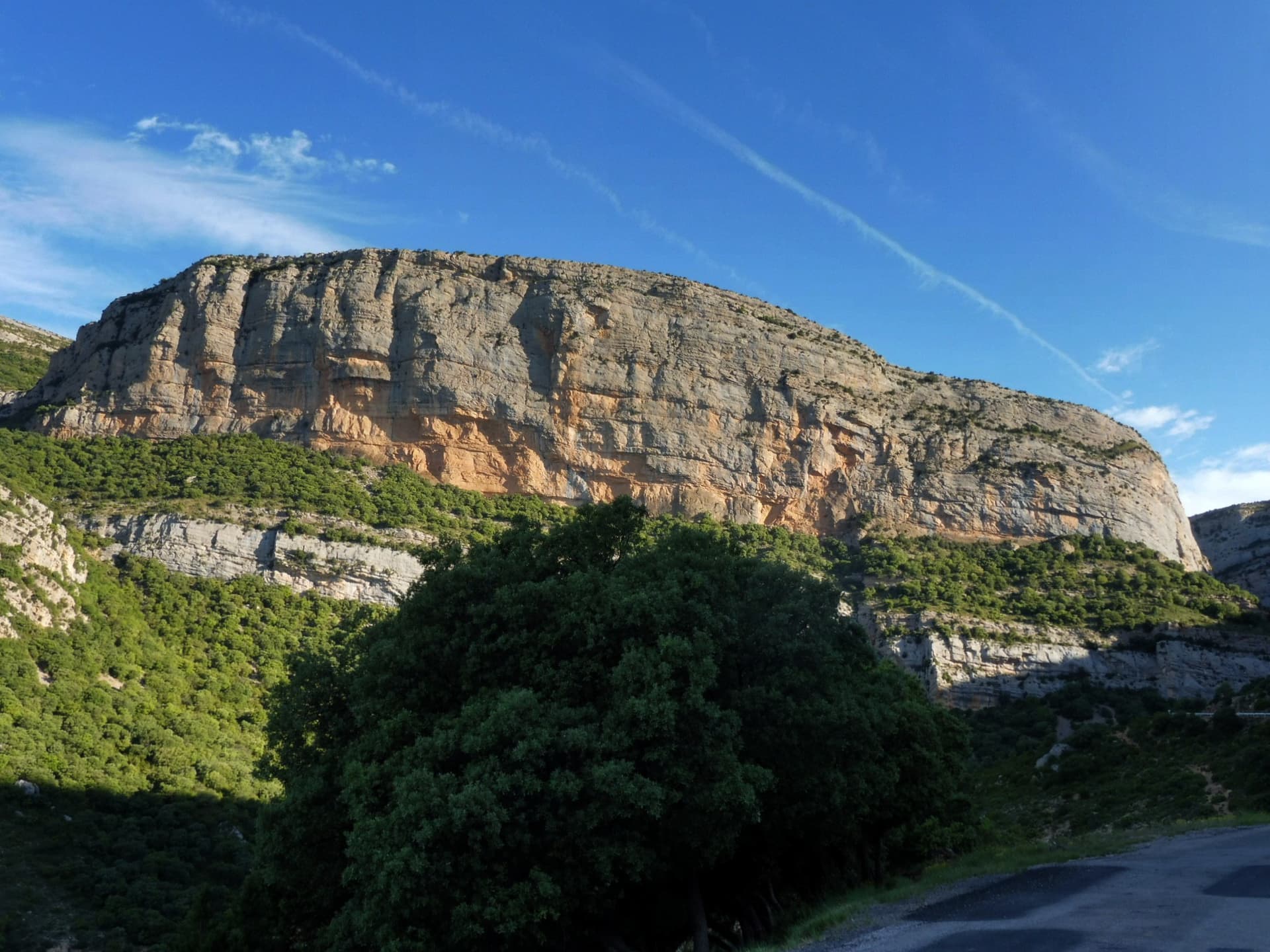
The south-east face of the Roca dels Arcs above the road from Vilanova de Meià, in the Montsec de Rúbies.

Spain · Vilanova de Meià (Roca dels Arcs)

El Somni de Quimfer

Four long, steep pitches on the left side of the Roca dels Arcs, sustained at 6a on good holds and not yet polished above the first pitch. The third pitch is the event: a reachy bulge to start, 30 m of gently overhanging strata, and a hard boulder move off a ledge to finish that most people grade 6c. That last move can be avoided by belaying on the neighbouring route.

6b+4 pitches160 m

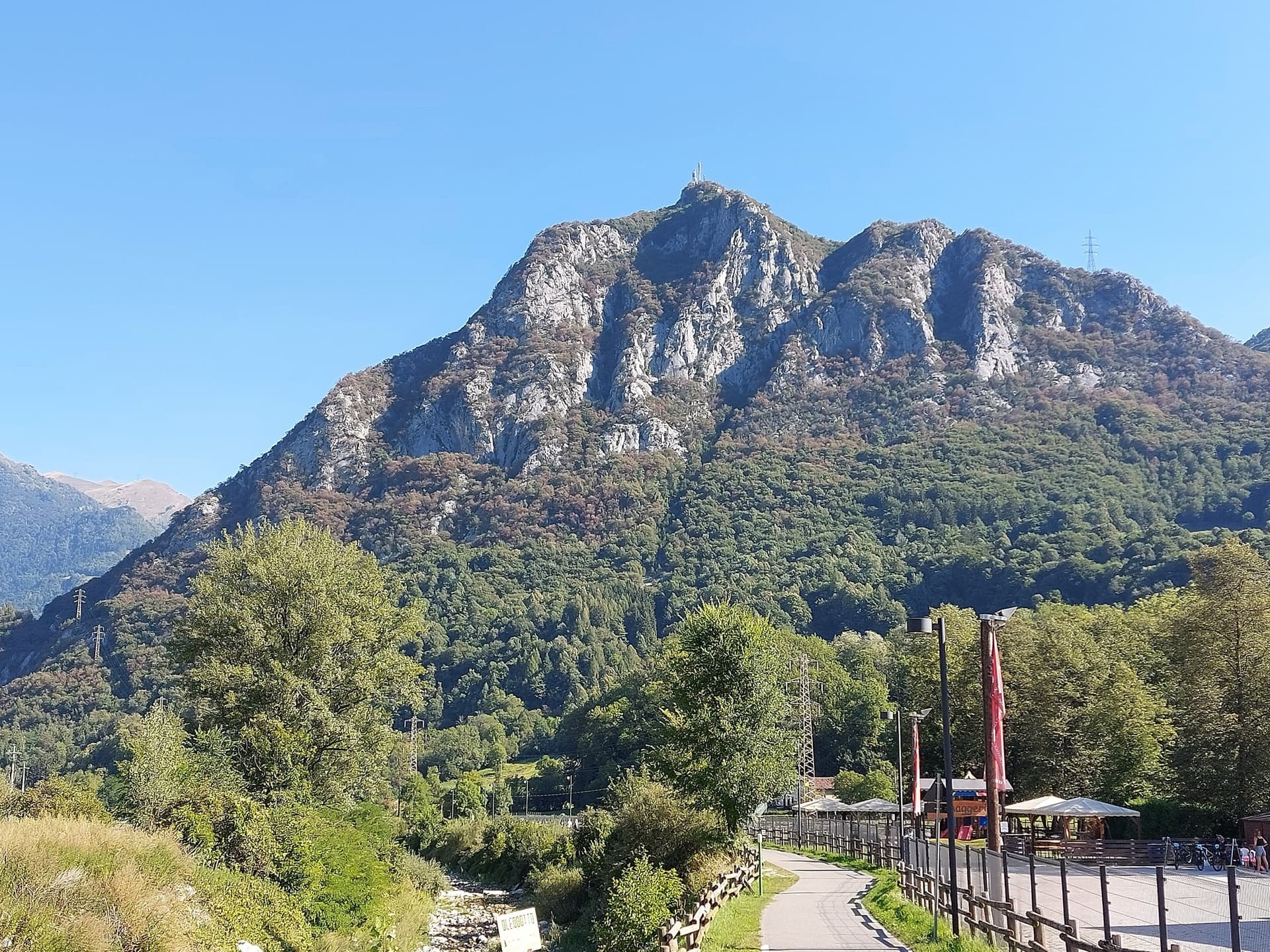
The Zucco dell'Angelone above the Valsassina, seen from Pasturo, with the antenna on its summit. The climbing spurs are the pale limestone ribs on the sunny side of the mountain above Barzio; individual spurs and routes are not marked.

Italy · Lecco & Valsassina

Foto di Gruppo con Signorine

Three friendly pitches up a striking arched flake and compact slabs, then a short wall with one hard, reachy move that most people pull through. A 1980 route by the Savonittos and Alessandro Gogna, and the usual first half of a link-up with Gli Schiavi della Pietra on the spur above.

6b+4 pitches90 m

Read the cautions

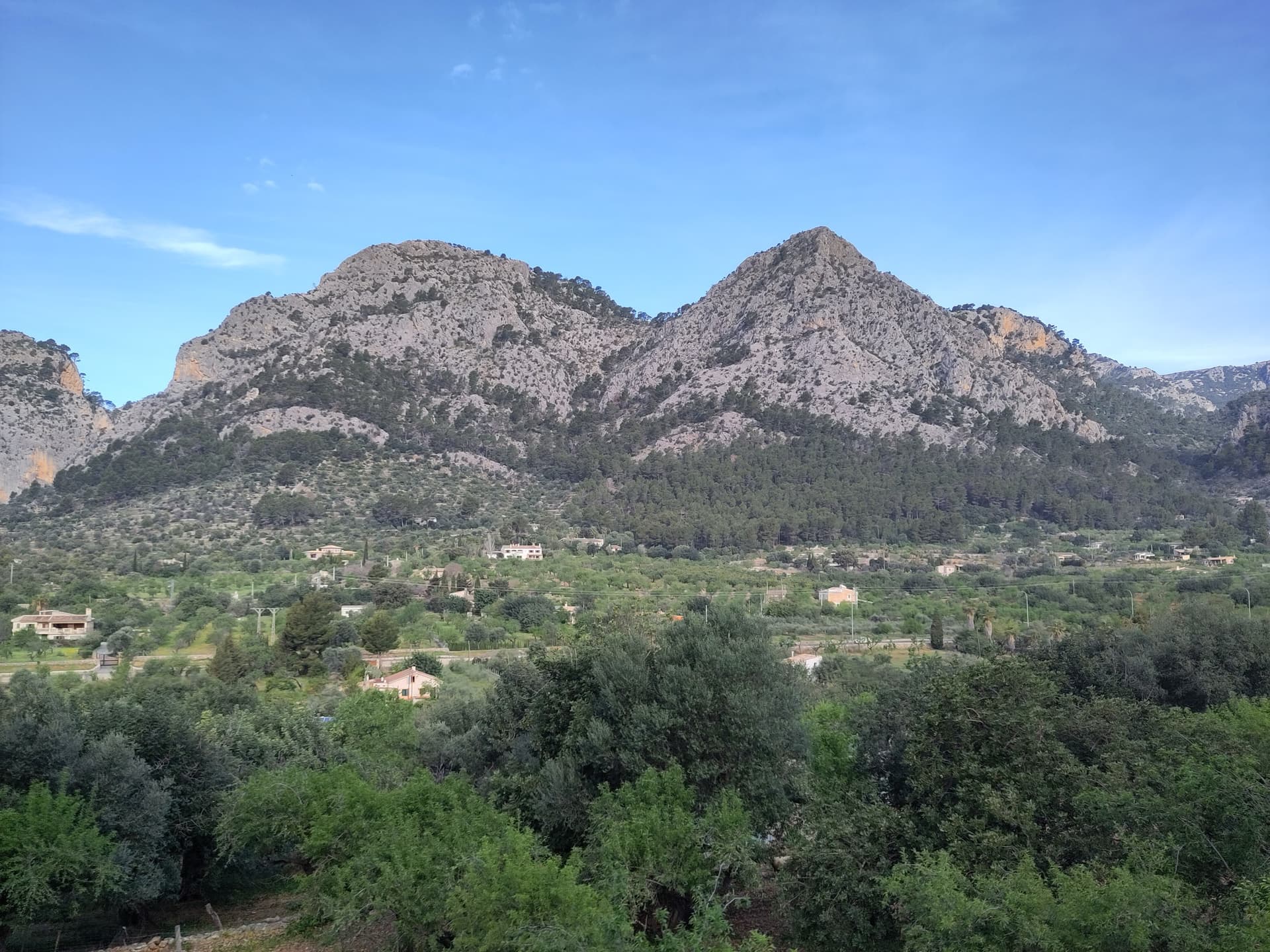
The Puig de Son Nasi (left) and the pointed Puig de s'Alqueria, the Sa Gubia peak, seen from the Sóller railway to the east. The climbing walls are out of sight in the gorge on the far side.

Spain · Mallorca (Sa Gubia)

Mongol Express

A big line up the full height of the Bomberos wall: a 40 m tufa pitch that is a popular climb in its own right, easy broken ground, a steeper 6a, and a long, steep, technical 6b+ wall to finish. The top pitch cannot be aided past its crux, so this is a route for a solid 6b+ leader.

6b+4 pitches155 m

Read the cautions

Compiled from published sources and last verified October 2026. Bolts, anchors and access change. Climbing is dangerous and you are responsible for your own decisions: check a current topo and read the disclaimer.