Multipitch Atlas

Voie des trois surplombs

Gendarme d'Orny · Orny (Champex, Mont Blanc massif) · Switzerland

Read the cautionsBail with caveatsBolting confidence: high

A short, easy outing on beautifully sculpted granite half an hour from the Cabane d'Orny. Pitches 2 and 3 are the good ones, steep for the grade; the last two are more broken. Mind the first few metres, where the first bolt is high.

The south face of the Gendarme d'Orny seen from the hut. The marked line is the neighbouring route Papa paye; the Voie des trois surplombs starts just to its right and shares the lower cornerPhoto: Gus Morton · CC BY-SA 3.0

Photo

The south face of the Gendarme d'Orny seen from the hut. The marked line is the neighbouring route Papa paye; the Voie des trois surplombs starts just to its right and shares the lower cornerPhoto: Gus Morton · CC BY-SA 3.0
Hardest pitch
5a
Pitches
5
Length
160 m
Approach
30 min
Aspect
S
South-facing
Rope
1×50 m
Read before you go

Re-equipped and well protected except for a high first bolt on pitch 1, where a fall would hit the ground.

The route

Overview

The Gendarme d'Orny is the rock tower east of the Aiguille de la Cabane, clearly visible from the hut. The Voie des trois surplombs is its easiest line and the right-most route on the face: five pitches, none harder than 5a. It was fully re-equipped in 2015, and the warden recommends it as a short route for an uncertain day. Parties take between an hour and a half and a little over two hours.

The climbing

Pitch by pitch

Pitches of Voie des trois surplombs
PitchGradeNotes
P14cThe first five metres wake you up: the first bolt is high (about 5 m, by a 2018 estimate) and the second and third are also spaced. After that the pitch is well protected.
P25aSteep, sculpted granite; one of the two best pitches.
P35aMore of the same, with a move or two that needs reading.
P44bEasier, more broken ground to a belay under a roof at the foot of a corner. The Entremont topo draws this belay too far right.
P54bA last easy pitch to the top. On the warden's advice some parties finish up the last pitch of Papa paye instead, a 4c corner that is not bolted.

Getting there

Approach

To the parking

From Martigny take the train to Orsières and the bus (or drive) to Champex-Lac (1498 m). The La Breya chairlift carries you to Grands Plans at about 2190 m, from where a mountain path leads to the Cabane d'Orny (2811 m) in roughly two hours. The chairlift runs in summer only and stops for a midday break, so check the timetable and the last ride down. Without the lift the walk from Champex takes about four and a half hours; there is also a longer path from Praz-de-Fort. Most parties sleep at the hut, which should be booked ahead.

On foot · about 30 min

From the Cabane d'Orny traverse below the Aiguille de la Cabane, past the starts of Tichodrome and Namasté, on a faint track to the foot of the Gendarme: 30 minutes. You pass Papa paye encore (6a) and Papa paye (5b) first; this is the right-most route, with an orange dot and the route name at its foot. Coming up from the chairlift you can cut up behind the ruins of the old hut, by the first lake, instead of going to the hut.

Map of the walk-in

  • Crag
  • Parking

Loading map

The point marks the crag, not the exact start of the route.

Coordinates · crag

46.00514, 7.06966

Parking

46.02158, 7.10303

Top station of the La Breya chairlift at Grands Plans (camptocamp access waypoint 1205077); the trailhead for the hut path. The lift starts in Champex-Lac.

Point from camptocamp summit waypoint 228739 (Gendarme d'Orny)

For your phone or watch

Download GPX

Contains the route point and parking. Opens in most mapping apps and GPS watches.

Points are compiled from published sources, with the precision stated above. They were not surveyed on the ground: check them against a current topo.

Getting down

Descent

On foot. From the top move along the ridge, roped at first, then bear right; a cairn marks the way. Descend the scree gully to the foot of the route. Camptocamp advises against abseiling because the first abseil station was removed and the remaining summit anchor is badly placed, with a risk of jamming the rope. You can also continue along the easy grade 2 ridge to the Aiguille de la Cabane in about an hour and use its descent.

Retreat

Bailing off the route

Bail with caveats

Camptocamp lists an abseil line (belay 4 to belay 2, then belay 2 to the ground) but advises against abseiling from the summit. A retreat from belay 4 or below should therefore work on the equipped belays; from the top, walk off.

Retreat from
From belay 4 or belay 2 by abseil; from the summit on foot.
Point of no return
None: the walk-off from the top is short.
Carry
The abseils span two pitches each and their lengths are not published, so two ropes are the safe assumption. Belays had cord and a maillon in 2012; carry spare cord.
Basis
Part stated, part inferredThe abseil sequence is stated on camptocamp; rope length needed is inferred because pitch lengths are not published.

Partly inferred from the route facts

Safety

Hazards

  • High first bolt on pitch 1, with a bad landing: reported in 2018 and again in 2019, both after the 2015 re-equipping.
  • The descent gully is loose scree and exposed to stonefall from other parties.
  • The 'Schweiz Plaisir West' topo describes six pitches; its fifth belay does not exist on the ground.
  • High-mountain weather at 2900 m.

Sun and weather

Conditions

South-facing granite between about 2800 m and 3000 m, climbable roughly from July to September while the hut and the chairlift are open. Snow patches can linger on the approach scree and in the descent gully early in the season. It is cold out of the sun and in wind even in August, and the rock dries quickly after rain but lichen stays slippery.

Usual season · Jul to Sep

Sun on the wall · S-facing

Working out the sunlit hours for this month.

  • January: not yet worked out
  • February: not yet worked out
  • March: not yet worked out
  • April: not yet worked out
  • May: not yet worked out
  • June: not yet worked out
  • July (usual season): not yet worked out
  • August (usual season): not yet worked out
  • September (usual season): not yet worked out
  • October: not yet worked out
  • November: not yet worked out
  • December: not yet worked out

Sun on the wallDaylight, wall in shade● Usual season

Estimated from the wall's aspect only. Ignores surrounding terrain, gullies and the wall's exact shape. Clock times are local to the wall (Central European time), for the 15th of each month.

Monthly climate averages for Orny (Champex, Mont Blanc massif), 1991-2020
MeasureJanFebMarAprMayJunJul (usual season)Aug (usual season)Sep (usual season)OctNovDec
Mean daily high °C−11−9−5−227101062−5−10
Mean daily low °C−18−17−14−10−6−211−3−7−13−17
Rain days 1 mm or more131214141818181614131414

● marks the usual climbing season. Averages for 1991-2020 at about 2847 m. Area climate from Open-Meteo reanalysis. Temperatures are adjusted to the height of the crag; rain comes from a grid cell of about 10 to 25 km, and summer highs on sea cliffs can read a few degrees low. The wall and valley can differ. Data: Open-Meteo, CC BY 4.0.

What to carry

Gear

Quickdraws (no source gives a number; 8 to 10 are quoted for the neighbouring Papa paye), a 50 m rope and a helmet. Camptocamp mentions one or two cams 'for reassurance'; one 2018 leader placed a medium cam before the first bolt.

Checklist

Quickdraws
Number not given in the sources
Rope
1×50 m
Helmet
One each
Abseil device and prusik
The descent or the retreat involves abseiling
Maillons or spare karabiners
To leave behind if you retreat
Cord
Mentioned for retreat

Derived from the route data; check it against a current topo

From climbers

Reader reports

Reader reports are not being collected yet. Until they are, check a current topo and the local club or guidebook publisher for recent changes to Voie des trois surplombs.

Worth knowing

Tips

  • A good route for the afternoon you arrive at the hut or the morning you leave.
  • If the start worries you, a medium cam protects the moves before the first bolt.

Open questions

Where sources disagree

  • Number of pitches: five on the ground and on camptocamp, six in 'Schweiz Plaisir West'.
  • First ascensionists are uncertain.
  • No source gives pitch lengths or bolt counts; 160 m is camptocamp's height of the difficulties.

Provenance

Sources

Same area

More in Orny (Champex, Mont Blanc massif)

All routes in Orny (Champex, Mont Blanc massif)
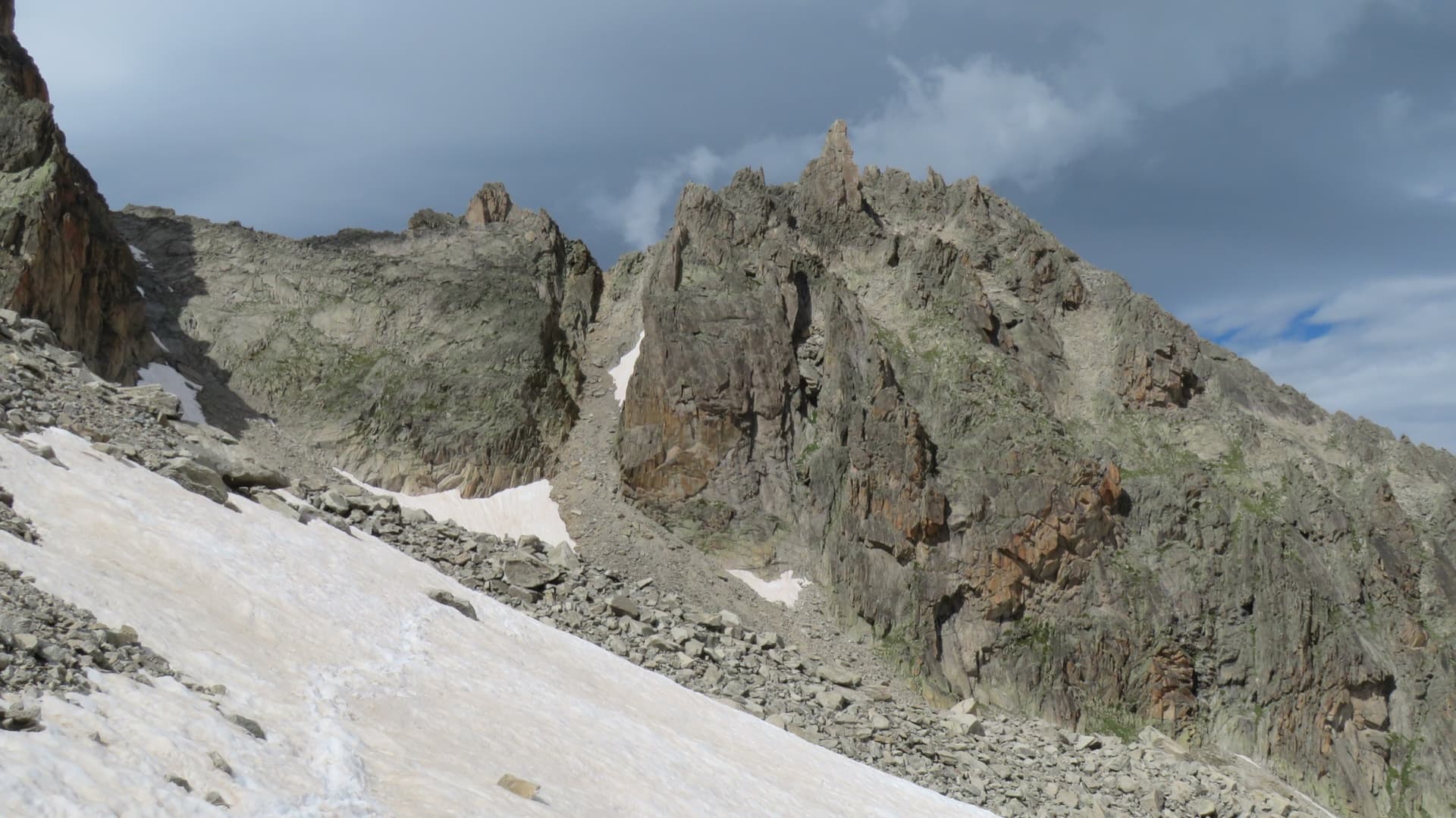
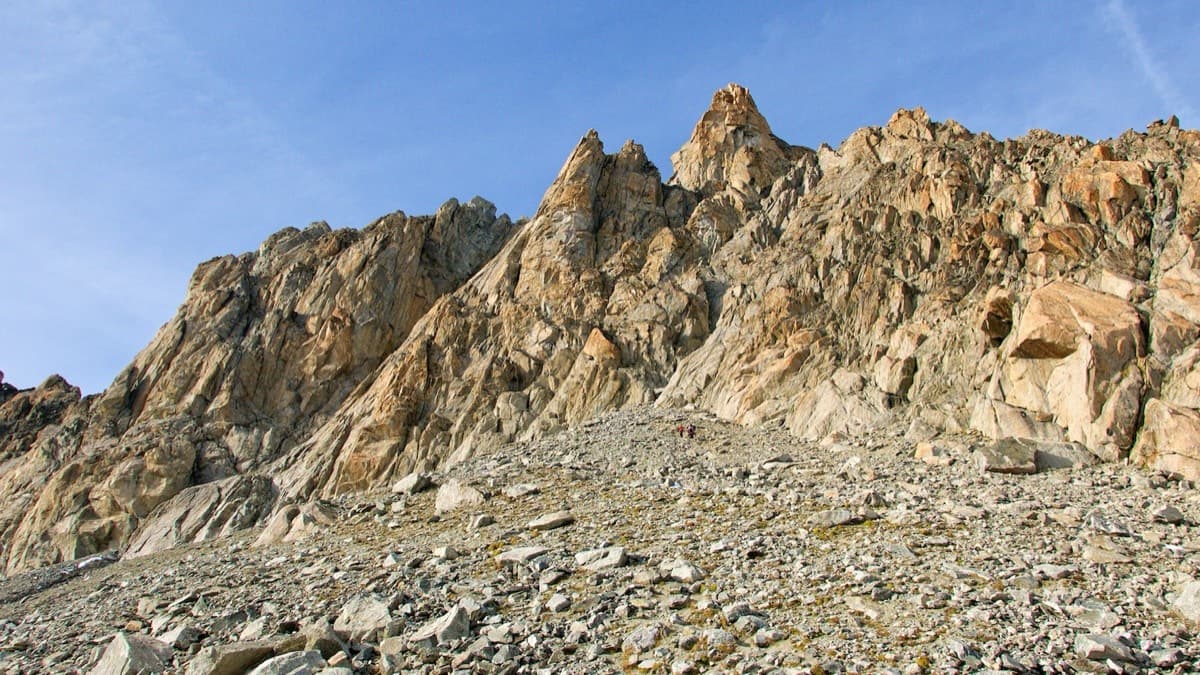
The south side of the Aiguille d'Orny above the scree slope of the approach

Switzerland · Orny (Champex, Mont Blanc massif)

La Moquette

Nine pitches up a granite spur and the final tower of the Aiguille d'Orny to a 3150 m summit, on rough, cracked rock with superb friction. Two moves of 5b, the rest 4b and 4c, closely bolted since 2016 and easy enough to climb in boots. The three steep pitches on the summit tower are the highlight.

5b9 pitches250 m
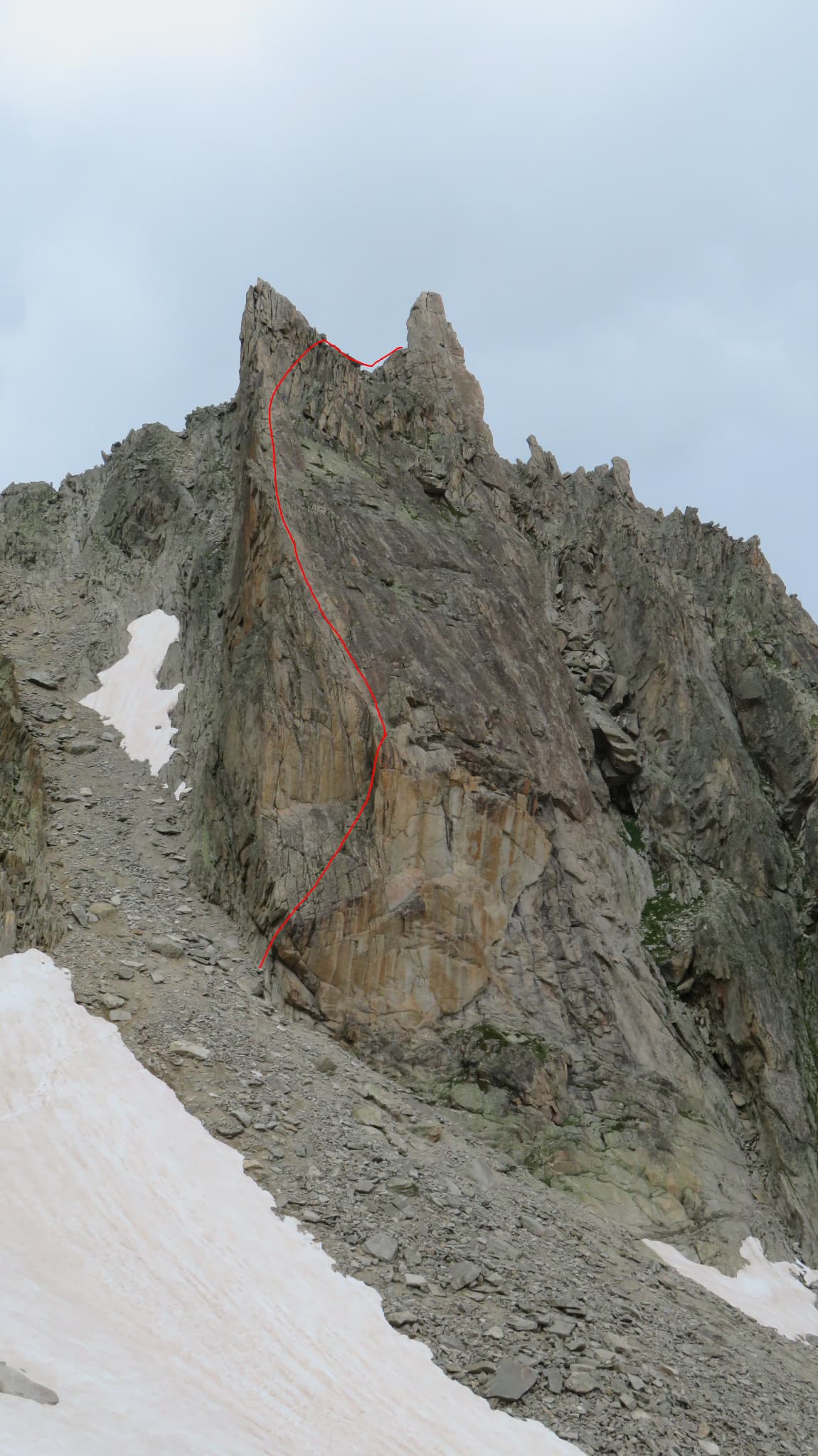
The Aiguille de la Cabane from the hut side, with the line of Bon accueil drawn on the pillar

Switzerland · Orny (Champex, Mont Blanc massif)

Bon accueil

The friendliest long route at the Cabane d'Orny: four short pitches up the lower spur, a walk right along a ledge, then two steeper pitches up the red summit bastion. The first pitch is the crux, a physical corner that many find hard for 5b, and it can be avoided by an easier bolted start. Fine rough granite and a summit at almost 3000 m.

5b6 pitches130 m

The Aiguille de la Cabane above the Orny hut path: the lower spur, the ledge and the summit bastion

Switzerland · Orny (Champex, Mont Blanc massif)

Tichodrome

Slab and flake climbing on superb granite ten minutes from the hut, finishing with a 35 m pitch of cracks and knobs on the orange summit bastion. The 6a is the last pitch and is steady rather than cruxy. The lower pitches are easier and a little more spaced.

6a6 pitches180 m

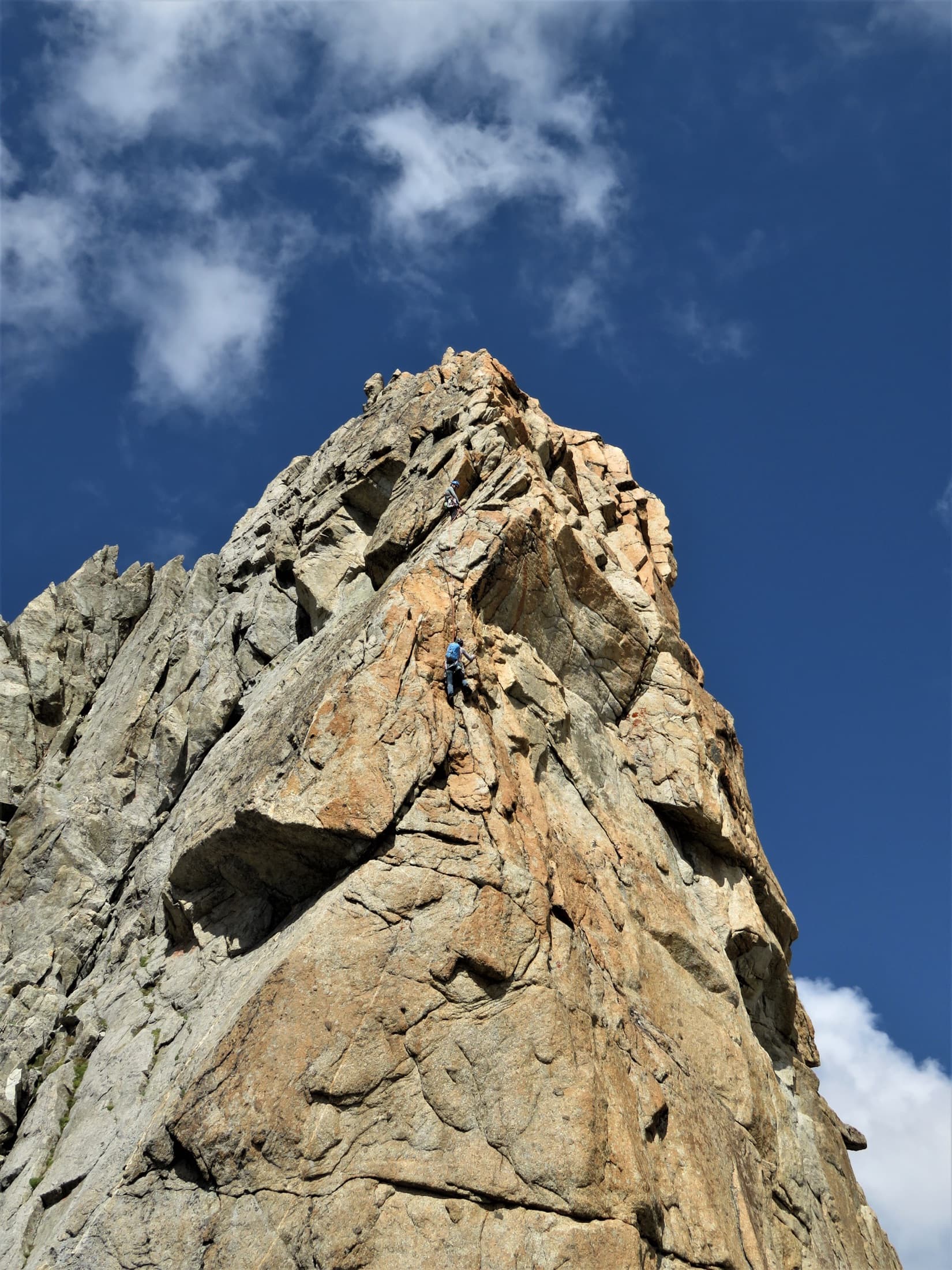
A climber on the last two pitches of Gérémiade, below the summit of the Aiguille d'Orny

Switzerland · Orny (Champex, Mont Blanc massif)

Gérémiade

The popular 6a on the Aiguille d'Orny: nine pitches of corners, slabs, layback flakes and a steep cracked wall, finishing on the airy summit arête at 3150 m. Three pitches reach 6a, all closely bolted. The upper pitches are vertical on big holds and are the highlight.

6a9 pitches270 m

Around 5a · about 5 pitches

Similar elsewhere

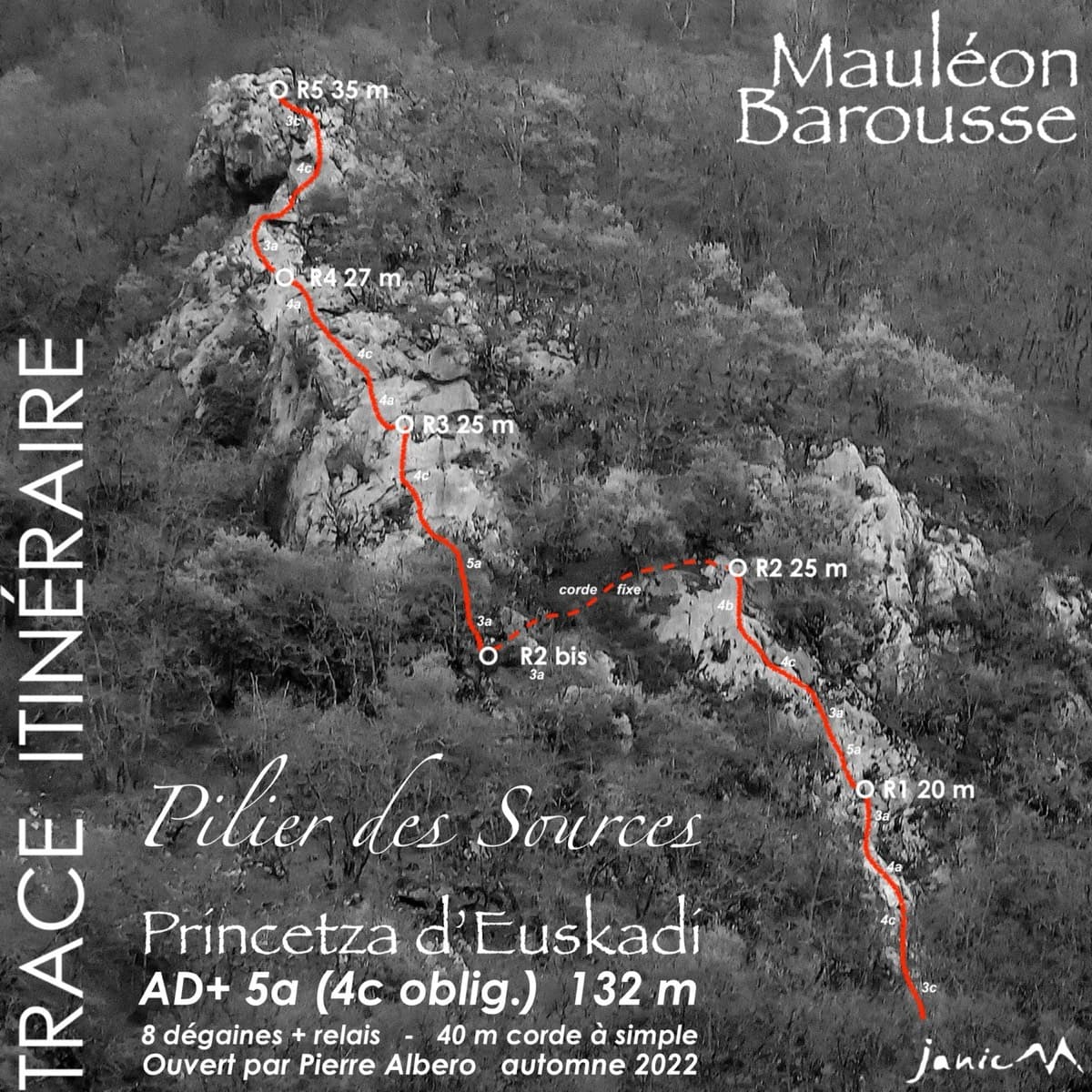
Photo-topo of Princetza d'Euskadi on the Pilier des Sources, Mauléon-Barousse, with belays and pitch lengths

France · Barousse (Central Pyrenees)

Princetza d'Euskadi

A short, friendly pillar of wonderfully rough, sculpted limestone above a Pyrenean village, bolted in 2022 as a first multipitch. Five pitches of grade 3 and 4 with single moves of 5a (4c obligatory), fifteen minutes from the car. Ideal for learning rope work; experienced parties move together and are up in an hour.

5a5 pitches132 m

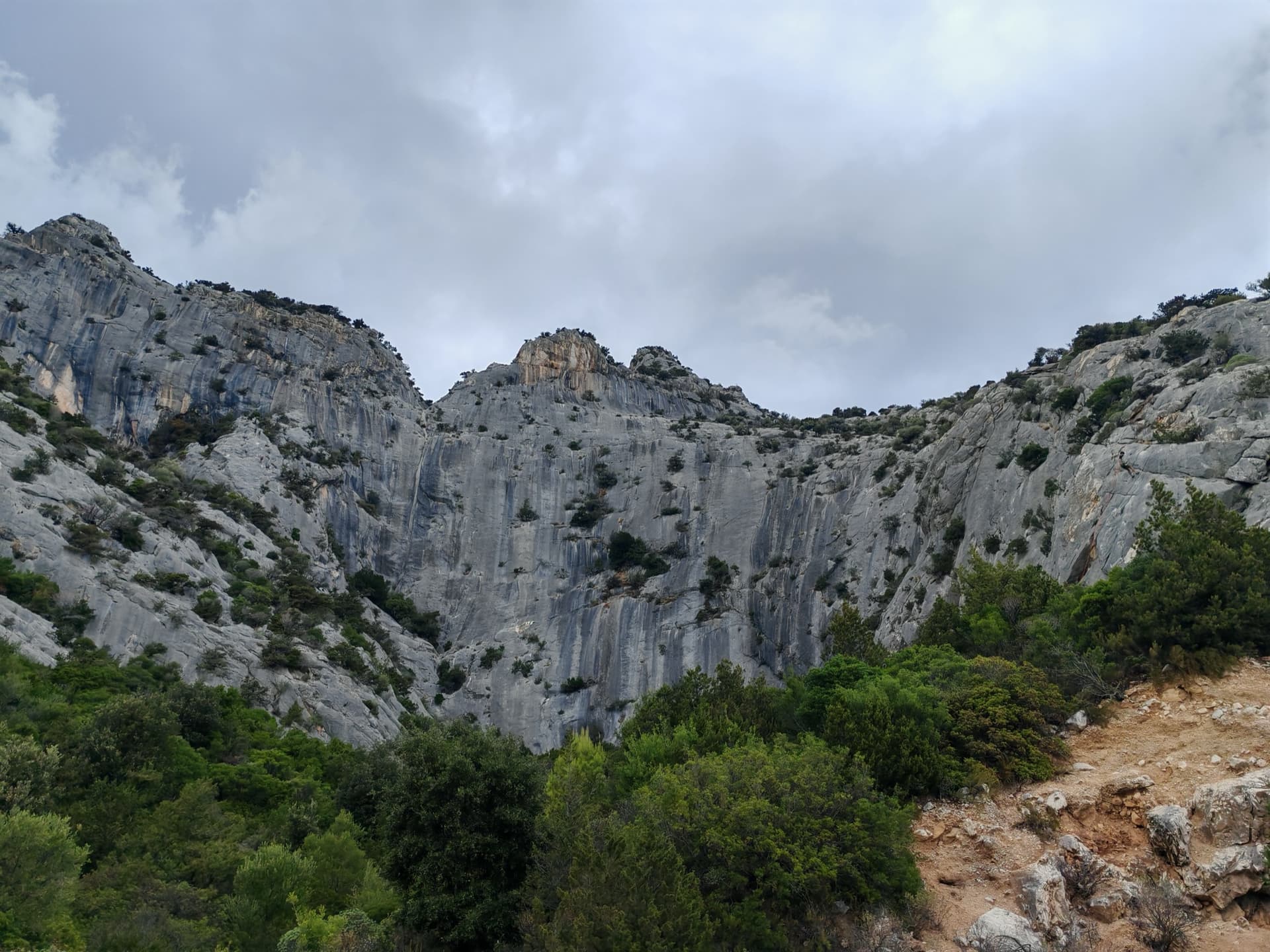
The grey limestone amphitheatre of La Poltrona above Cala Gonone, seen from the approach path.

Italy · Sardinia

Lilith

An easy and popular line on the big amphitheatre above Cala Gonone: three 4c pitches of juggy steps and easy-angled slabs, a short walk left through bushes, then a 35 m wall of heavily sculpted rock at 5a. Expect queues.

5a4 pitches120 m

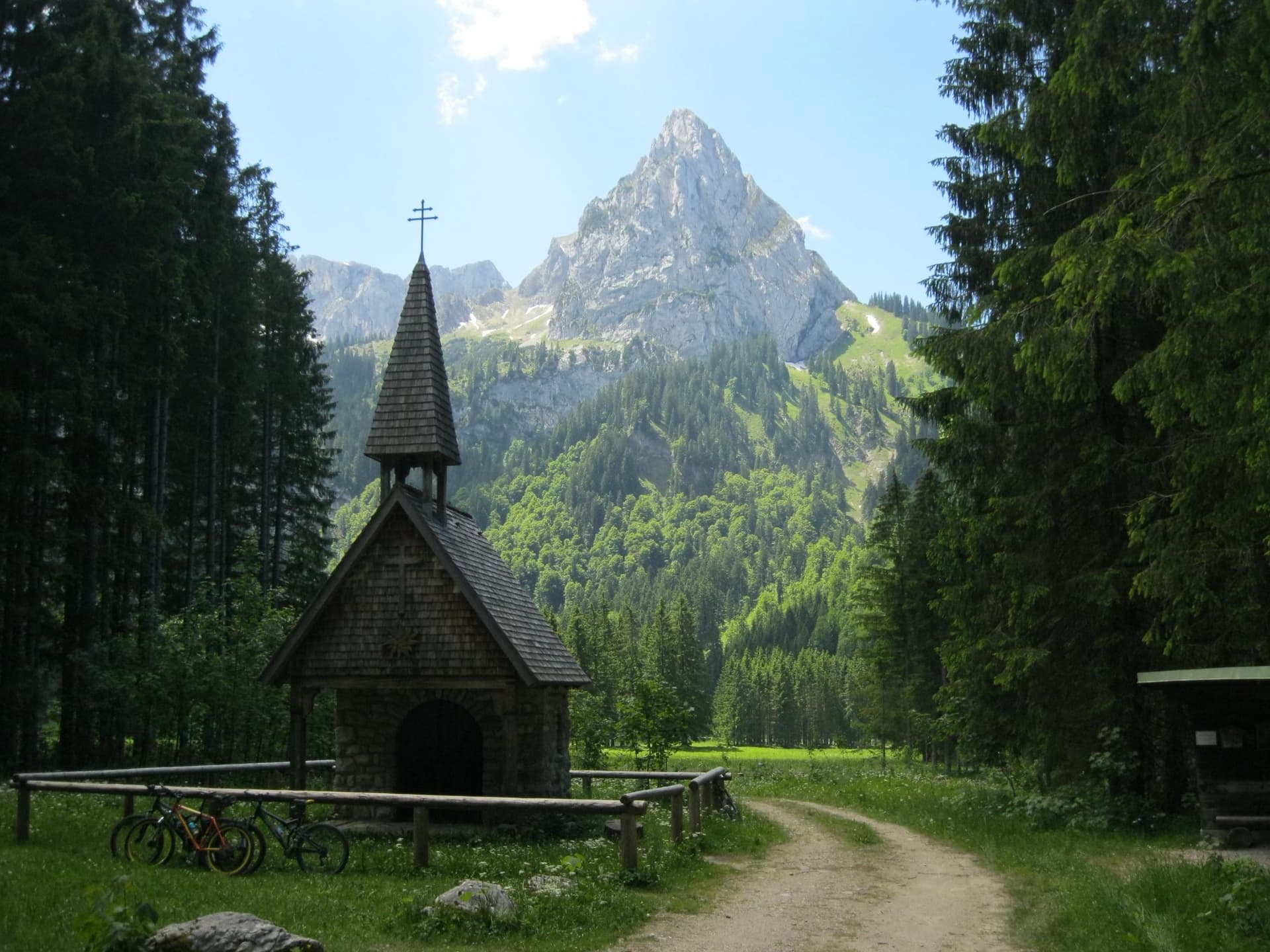
The Geiselstein from the Wankerfleck chapel, where the approach starts; the south face is on the far side

Germany · Ammergauer Alpen

Südverschneidung

The classic way up the Geiselstein, the 'Matterhorn of the Ammergau Alps'. After two scrappy pitches it follows a slabby corner system up the middle of the sunny south face: steep, exposed and on good rock, at about UIAA IV with one polished move of V at the start of the corner. The descent by the normal route needs as much care as the climb.

5a7 pitches260 m

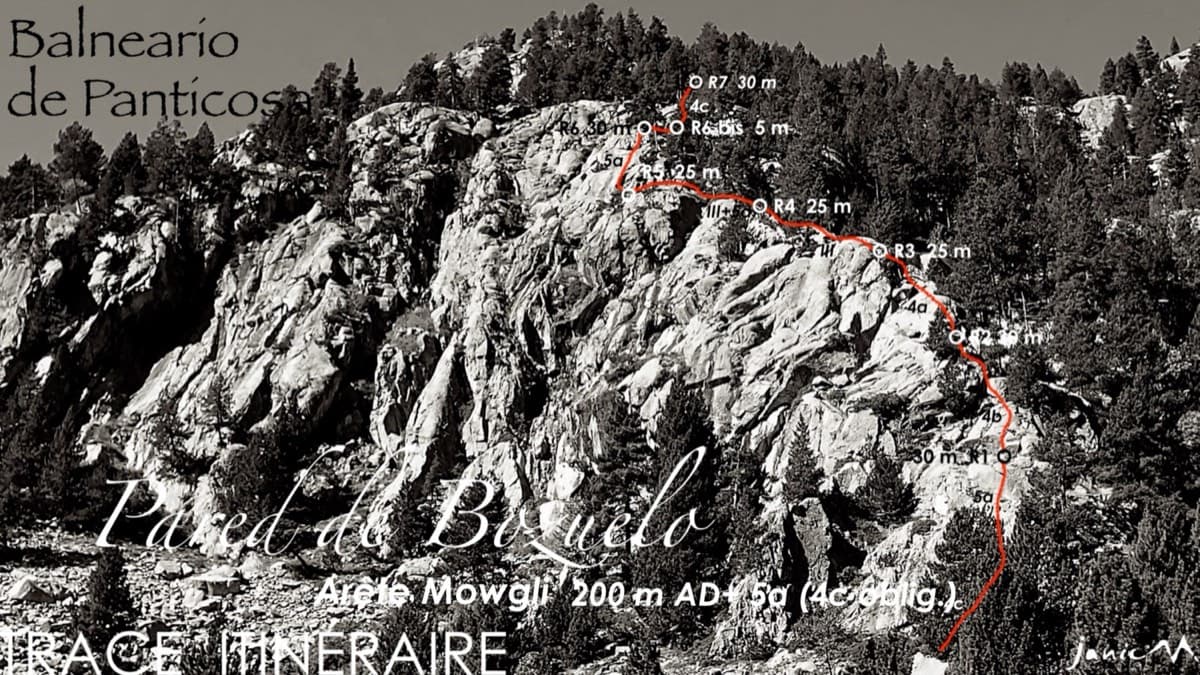
Line of the Arista Mowgli on the Pared de Bozuelo above Baños de Panticosa, with belays marked

Spain · Aragonese Pyrenees (Tena & Canfranc valleys)

Arista Mowgli

An easy granite ridge above the Bozuelo meadows, low-angled and never exposed. Two smooth friction slabs at 5a, on pitches 1 and 6, are the only real difficulties; the rest is steps and short walls at grade 3 to 4. Ideal for a first multipitch, and you can step off rightwards onto ledges almost anywhere.

5a7 pitches200 m

Compiled from published sources and last verified October 2026. Bolts, anchors and access change. Climbing is dangerous and you are responsible for your own decisions: check a current topo and read the disclaimer.