France · Ailefroide
Palavar-les-Flots
Ailefroide's best-known easy long route: a consistent run of 4th-grade slab and pillar climbing with two harder steps (5b+ on L4, a 5c friction move on L8). It is very popular, so start early.
5c12 pitches310 m
Paroi de la Fissure · Ailefroide · France
Bail with caveatsBolting confidence: high
An even 5c on the big wall directly behind the Ailefroide campsite: a steep corner to start, slabs in the middle and a fine layback near the top. It takes the left side of the face that holds the famous Fissure, and is a little quieter than the other classics of the grade.
The route
The Paroi de la Fissure is the dark granite wall across the torrent from the Ailefroide campsite. À tire d'ailefroide climbs its left side in eight long pitches. Pitch 1 is the steepest and feels the hardest; pitches 3 and 4 are easier slab; the upper half is sustained 5c with a rising traverse and a memorable layback on the last pitch. The route was rebolted in 2016 and has been maintained since, and it has its own abseil line so that descending parties stay out of the way. Although it faces north it gets the sun for much of a summer morning.
The climbing
| Pitch | Grade | Length | Bolts | Notes |
|---|---|---|---|---|
| P1 | 5c | 35 m | 11 bolts | A small mantel, then a steep corner. Parties find this the steepest and hardest pitch; one leader took a fall on pitch 2. |
| P2 | 5c | 35 m | 11 bolts | Easy to start, steeper to finish. |
| P3 | 5a | 40 m | 8 bolts | Slab, a 3 m step (5a), then easy-angled slab (4b). Other sources grade this pitch 4c. |
| P4 | 5a | 45 m | 9 bolts | Easy-angled slab (4b), then a rounded little pillar on the right (5a). |
| P5 | 5c | 35 m | 11 bolts | Rising traverse left with a few surprising moves at the start. Very good. |
| P6 | 5c | 40 m | – | No description published. theCrag and the photo-topo give 5b+. |
| P7 | 5c | 40 m | – | No description published. theCrag and the photo-topo give 5b+. |
| P8 | 5c | 45 m | – | A superb layback, then a big slab. Belay at the first abseil station or on a tree. |
Getting there
Ailefroide (1500 m) is at the head of the Vallouise valley: from Briançon go to L'Argentière-la-Bessée (railway station on the Marseille, Gap, Briançon line), then Vallouise, Pelvoux and Ailefroide. A seasonal bus runs between Briançon and the Pré de Madame Carle. The road is closed in winter at Pelvoux-les-Claux. Ailefroide has a large campsite and every route here is reached on foot from it.
From the Ailefroide campsite cross the Celse Nière torrent by the bridge. The wall is to the right of a wide gorge and is recognised by the big crack that gives it its name. The route starts on the left of that face. Recent parties call the approach simple and quick; no source gives a time, and camptocamp records only 50 m of height gain.
Loading map
The point marks the base of the route.
Parking
Ailefroide (camptocamp waypoint 106735)
Point from camptocamp route 53916 geometry, within about 150 m of the crag waypoint 39018 and of theCrag's point for the route
Contains the route point and parking. Opens in most mapping apps and GPS watches.
Points are compiled from published sources, with the precision stated above. They were not surveyed on the ground: check them against a current topo.
Coordinates: 44.88105, 6.44724 (route base) · Parking: 44.88434, 6.45069
Getting down
By abseil: the route's own belays are equipped from the second belay up, but to stay clear of parties below use the separate line of six abseils on chained stations. The first is the top belay; the next three are west of the route; the fifth is 5 m west of belay 3 and the sixth 2 m east of belay 2. You land in the gorge among single-pitch routes, and the last abseil comes over an overhang so you cannot see who is below. On foot: go up to a small level path and follow it left (east); a steep, sometimes exposed path with cables and fixed ropes crosses the gorge and brings you back to the foot of the wall in about 30 min.
Retreat
Bail with caveats
Retreat by abseil is well documented. Camptocamp says the route's belays are equipped for abseil from the second belay, and parties in 2025 and 2026 came down from the fourth belay in rain. One of them left a sling and karabiner at the fourth belay to reach the lower stations of the separate abseil line.
Safety
Sun and weather
North facing at 1550 to 1770 m, but in the sun in the morning in summer: from the second belay the sun stays until about 15:00 or 16:00 between mid-May and the end of July, and it is in your eyes around midday. A June 2026 party found it in full sun from mid-morning and hot; another found it all in shade in the afternoon. Afternoon storms build quickly here.
Sun on the wall · N-facing
Working out the sunlit hours for this month.
Sun on the wallDaylight, wall in shade● Usual season
Estimated from the wall's aspect only. Ignores surrounding terrain, gullies and the wall's exact shape. Clock times are local to the wall (Central European time), for the 15th of each month.
| Measure | Jan | Feb | Mar | Apr | May | Jun (usual season) | Jul (usual season) | Aug (usual season) | Sep (usual season) | Oct | Nov | Dec |
|---|---|---|---|---|---|---|---|---|---|---|---|---|
| Mean daily high °C | −0 | 1 | 5 | 7 | 12 | 18 | 21 | 22 | 17 | 12 | 5 | 0 |
| Mean daily low °C | −7 | −7 | −4 | −0 | 3 | 8 | 11 | 11 | 7 | 3 | −3 | −6 |
| Rain days 1 mm or more | 11 | 10 | 11 | 12 | 14 | 17 | 15 | 13 | 12 | 11 | 12 | 12 |
● marks the usual climbing season. Averages for 1991-2020 at about 1496 m. Area climate from Open-Meteo reanalysis. Temperatures are adjusted to the height of the crag; rain comes from a grid cell of about 10 to 25 km, and summer highs on sea cliffs can read a few degrees low. The wall and valley can differ. Data: Open-Meteo, CC BY 4.0.
What to carry
12 quickdraws according to camptocamp; a 2026 party found more bolts than listed and suggests two or three extra if you want to clip them all. Two 50 m ropes to abseil, or a single 50 m rope if you walk down. Helmet.
Derived from the route data; check it against a current topo
From climbers
Reader reports are not being collected yet. Until they are, check a current topo and the local club or guidebook publisher for recent changes to À tire d'ailefroide.
Worth knowing
Open questions
Provenance
Same area
France · Ailefroide
Ailefroide's best-known easy long route: a consistent run of 4th-grade slab and pillar climbing with two harder steps (5b+ on L4, a 5c friction move on L8). It is very popular, so start early.
5c12 pitches310 m
France · Ailefroide
A long, sunny outing up a series of granite steps, consistently in the 5th grade, finishing with a great view over La Draye. Grassy ramps separate the tiers, so the climbing never feels exposed.
5c14 pitches450 m
France · Ailefroide
One of the best-known slab routes at Ailefroide: eleven pitches up the big inclined plane on the foothills of the Pelvoux, directly above the village. The style never changes, slab from bottom to top, mostly 5b with two pitches of 5c. The approach gully, damaged by a rockfall in 2013, is the serious part of the day.
5c11 pitches300 m
Read the cautions
France · Ailefroide
The beginners' multipitch of Ailefroide: seven short pitches of easy-angled granite slab with two steeper steps, bolted close enough for a first lead. It is very popular, so the belays have been doubled. The descent ends with a spectacular 50 m free-hanging abseil.
5b7 pitches200 m
Around 5c · about 8 pitches
Italy · Bolzano & South Tyrol
A friendly, well-bolted line up the red porphyry below the Gasthof Noafer, just above Bolzano. Three pitches of steep slab and corner lead to a long shoulder, two easy pitches cross it, and two more fine slab pitches finish at the cliff top. Mostly grade 5 with one 5c pitch, the third, which is the best of the route.
5c7 pitches250 m
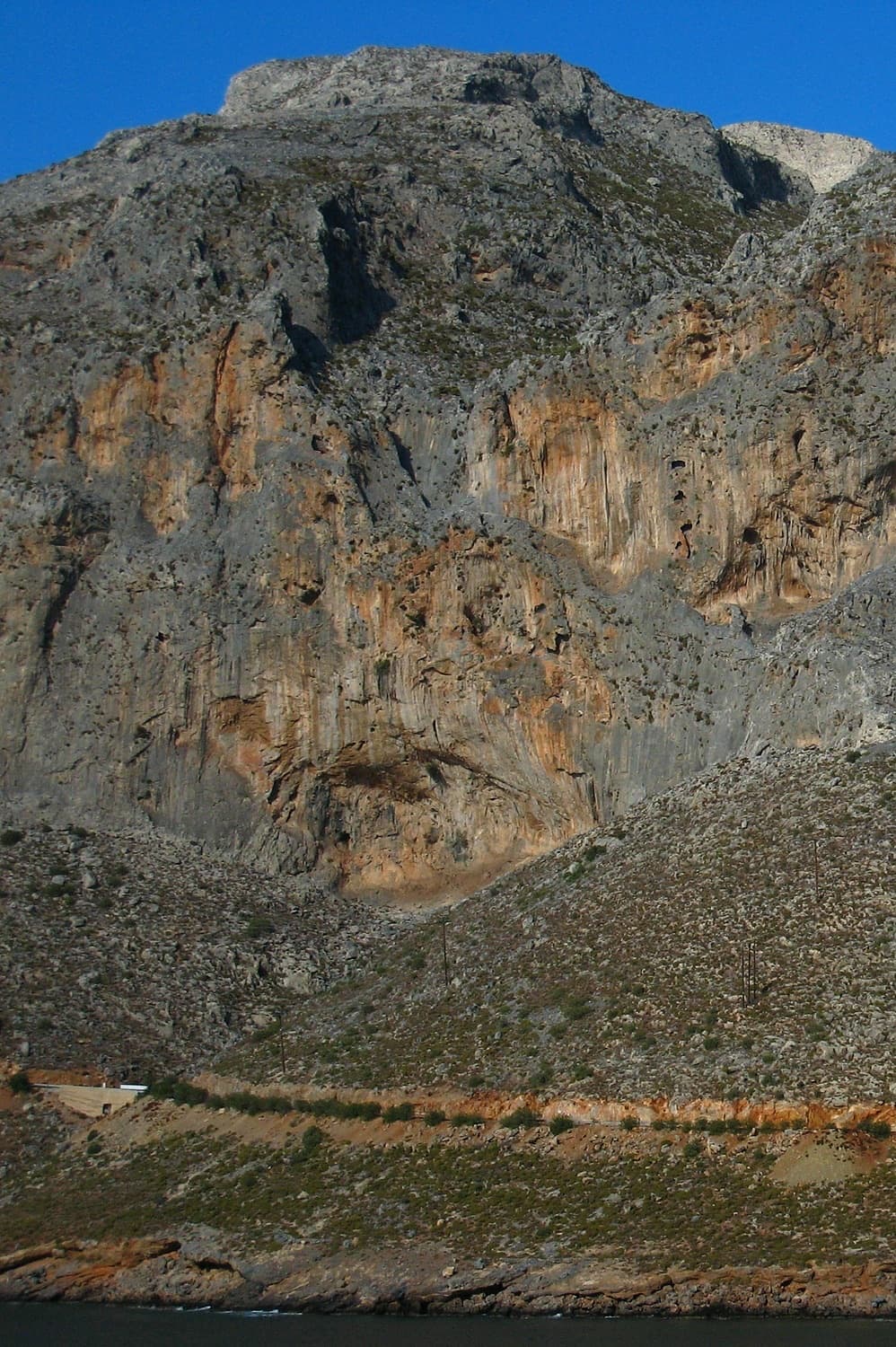
Greece · Kalymnos & Telendos
The friendly long route of Kalymnos: seven short pitches that spiral up the face and slabs right of the crest of a buttress above Arginonta bay, never harder than 5c. A good first pitch, an easy second and a scramble lead to three better pitches on the upper wall. Some parties find the rock scrappy in places, so wear a helmet.
5c7 pitches150 m
Read the cautions
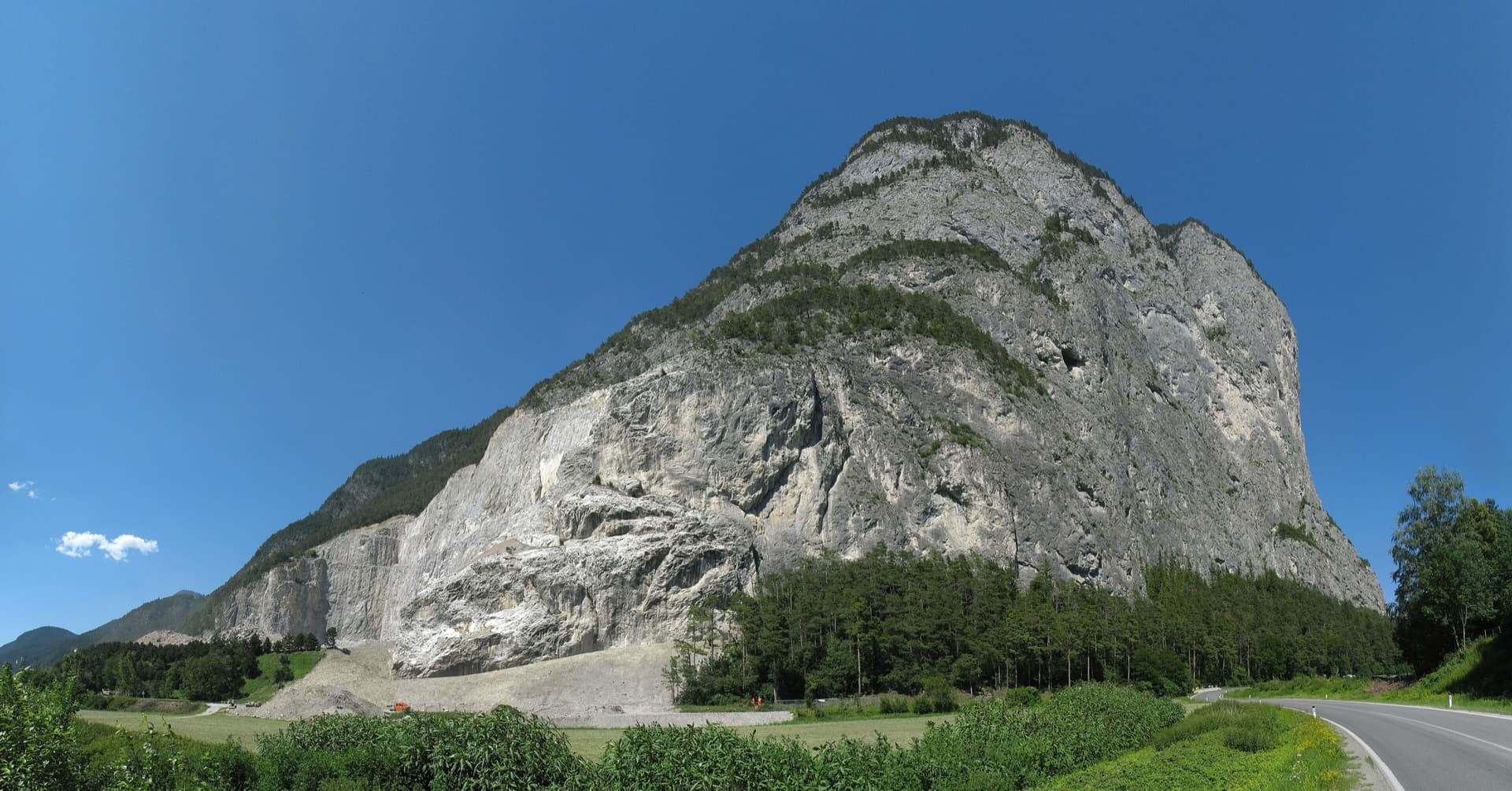
Austria · Karwendel (Innsbruck Nordkette)
A popular plaisir route up the slabs of the Martinswand plinth: seven pitches, mostly UIAA 4, with only about three harder metres in a short steep corner on pitch 5. Often combined with a route on the wall above.
5c7 pitches225 m
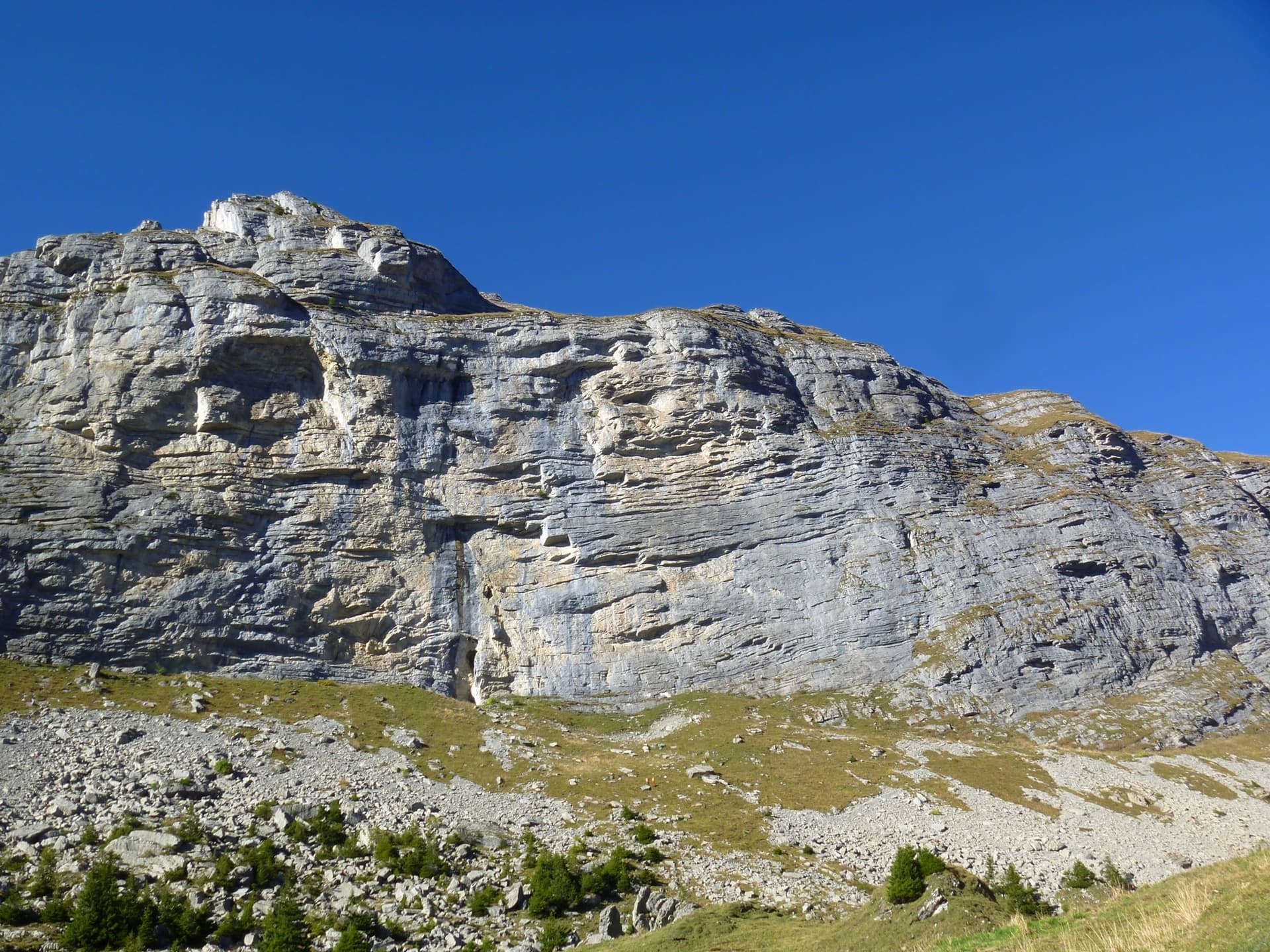
Switzerland · Bernese Oberland
The easiest long route at Hintisberg, seven pitches on the right side of the wall with the Eiger north face directly behind you. Varied limestone that improves with height: the last two pitches, both 5c, are the best and the hardest. Often quieter than Reisefieber next door.
5c7 pitches180 m
Compiled from published sources and last verified October 2026. Bolts, anchors and access change. Climbing is dangerous and you are responsible for your own decisions: check a current topo and read the disclaimer.