Multipitch Atlas

Spelling need not be exact.

Däumling Ostkante

Däumling · Dachstein (Gosaukamm) · Austria

Read the cautionsBail with caveats

The classic of the Gosaukamm: 14 pitches of slabs, corners and edges on superb rough limestone up the elegant east pillar of the Däumling, rebolted in 2013. Mostly UIAA 5 to 6 with several 6+ passages, ending with a polished overhang (the Ringwulst) at UIAA 7- (6a+) that goes at A0 on the bolts. Alpine setting, long day, abseil descent.

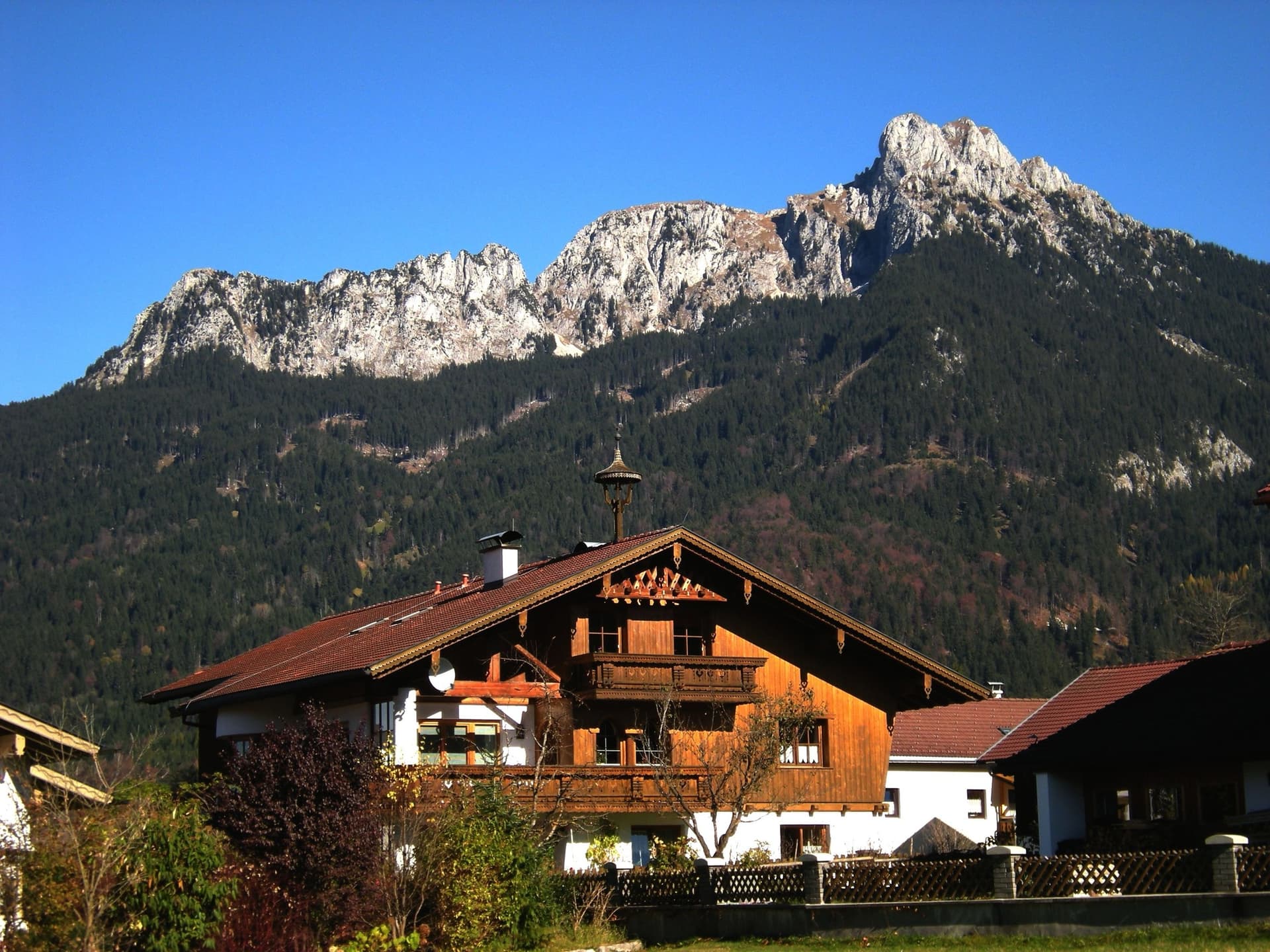
The Däumling pillar in the Gosaukamm seen from the SteiglkogelPhoto: RRady · CC BY-SA 3.0

Photo

Hardest pitch
6a+
Pitches
14
Length
375 m
Approach
90 min
Aspect
E
East-facing
Rope
2×50 m or 2×60 m
Rock
limestone
Season
Jul to Sep
Bolting confidence
Medium
Last verified
October 2026 · Compiled from published sources
Read before you go

Rebolted in 2013 and climbable on quickdraws, but it is a long alpine route with spaced bolts on the easier pitches, old pegs, a polished A0 crux and an abseil descent where ropes can snag.

Overview

The east edge of the Däumling, a slender pillar in front of the Niederes Großwandeck, was first climbed in 1932 and is the best-known classic of the Gosaukamm. The line takes the easiest way up the exposed pillar, mostly just left of the edge, on slabs and corners in excellent rough limestone, and gets steadily harder and more interesting towards the top. In 2013 the hut's climbing team rebolted it completely, placing every bolt on lead, so it now feels close to a plaisir route, although you still have to climb between bolts on the easier pitches. The crux is the last hard pitch, the Ringwulst, a short polished overhang graded UIAA 7- (6a+) that most parties climb at A0 on the bolts; a sling to stand in helps. It is a full alpine day: most parties stay at the Hofpürglhütte.
Worth knowing

  • Stay at the Hofpürglhütte: as a day trip from the valley the 3-hour approach makes it a very long day.
  • Several belays can be skipped to save time; the hut topo is reported accurate, especially for finding the start.
  • Take a sling to stand in for the A0 moves on the Ringwulst.
  • The Niederes Großwandeck next door has alternatives if the Däumling is busy.

Pitch by pitch

No topo we can show. See: Hofpürglhütte – Kletterführer Gosaukamm (2016).

Pitches of Däumling Ostkante
PitchGradeLengthBoltsNotes
P1340 m3 boltsGrade 3 up the grassy ramp.
P24c15 m3 boltsUIAA 4+/5-.
P35c40 m6 boltsUIAA 6. A slab and an overhanging crack.
P44c15 m3 boltsUIAA 4+, past the small tower (Türmchen).
P55c+15 m–UIAA 6/6+. A layback (Piaz) section.
P65c25 m5 boltsUIAA 6. Overhanging corner.
P74c40 m5 boltsUIAA 4+/5-. A fine corner.
P85a35 m–UIAA 5/5+, to the small grass ledge (Rasenplätzchen).
P96a35 m5 boltsUIAA 6+. The slab pitch (Plattenstelle).
P106a+30 m4 boltsUIAA 7-. 'Open crack'.
P115b40 m–UIAA 5+/6-. An intermediate belay is possible.
P126a+10 m4 boltsUIAA 7-, or 6 A0. The Ringwulst: a short, polished overhang, the crux. Bolts and old pegs; most parties pull through at A0 and a sling to stand in helps.
P135a20 m3 boltsUIAA 5/5+.
P144c15 m1 boltsUIAA 4+, to the summit.

Approach

To the parking

Drive to Filzmoos (Salzburg), then up the Mandling valley and over the Marchegg saddle on the toll road to the Aualm, where the road ends at the Hofpürglhütte goods lift; park there. One party advises parking before the toll gate and cycling, since cars can only go a short way past the next barrier. From the Aualm the Hofpürglhütte (1703 m) is about an hour on foot; from Filzmoos allow 1.75 hours. From the north, the Gosausee car park at the Gosaukammbahn valley station is the alternative start, 2.5 to 3.5 hours to the route.

On foot · about 90 min

From the Hofpürglhütte follow the marked path up to the Steiglpass (2012 m, about 45 min). Leave the path here and go left (north-west) on cairns and faint tracks, rising about 100 m in a traverse over a shoulder on the east ridge of the Armkarwand (about point 2145), then descend north into the Unteres Armkar and cross to the foot of the Däumling's south face; about 1 to 1.5 hours from the hut. From the Gosausee the Steiglweg via the Scharwandalm leads to a memorial plaque at about 1700 m in about 1.75 hours, then about 30 min off-path to the north-west. To start, traverse the south face on a path towards the east edge; the route begins down and to the right on an easy grassy ramp rising right, with the first bolt visible. The original start is somewhat loose; the direct start (K. Hoi, 1982) is an alternative.

Map of the walk-in

Coordinates · crag

47.50148, 13.51735

Parking

47.47490, 13.51420

Aualm car park at the end of the toll road from Filzmoos (bergsteigen.com marker)

Point from camptocamp summit waypoint 666718 (Däumling); bergsteigen.com approximate start marker 47.5026, 13.52 is about 220 m away

For your phone or watch

Download GPX

Contains the route point and parking.

Points from published sources, not surveyed.

Descent

From the summit (2322 m) go down south-west on faint tracks over broken ground towards the top of the south edge, where the marked abseil line starts (red paint marks lead to the first anchor). The line follows the south pillar in about 7 abseils of up to 40 m on glued-in or concreted rings; the first is short (about 20 to 25 m) and you land at the foot of the face a little above the start. A 2015 party who carried on past the first anchor ran out of rope in mid-air and finished down Blue Velvet's cramped belays, so stop at the short first anchor. The allgaeu-plaisir party had their ropes snag repeatedly on this line and recommends abseiling instead down Da Hausa Lehra, the bolted sport route left of the east edge (as you face it), which has big rings at the belays; the hut topo also says it can be abseiled. With 50 m double ropes you can often skip a belay; otherwise a 60 m single rope is needed. The old line down the south chimneys is not recommended. Allow about 45 minutes, then reverse the approach to the hut.

Bailing off the route

Bail with caveats

No source describes retreating from part-way up the Ostkante itself. Its belays are bolted, and the fully bolted Da Hausa Lehra runs close by with big abseil rings and is reported abseilable, so retreat by abseil should be possible from the lower and middle sections. The route traverses at times, so a straight abseil down your own line may not work; double ropes make it easier.

Retreat from
Bolted belays of the route, or the nearby belays of Da Hausa Lehra (inferred).
Point of no return
None documented; near the top the Ringwulst can be aided at A0, and the summit abseil line is then the quickest way down.
Carry
Double ropes, slings and maillons in case a belay is not set up for abseil.
Basis
Inferred from the route factsSources describe only the summit abseil lines; retreat from part-way is inferred from the bolted belays and the parallel abseilable route.

In an emergency · Austria

140Mountain rescue (Bergrettung)

  • 112European emergency number

Position of the crag

47.50148, 13.51735

Marks the crag, not the route: give route and pitch.

Say what happened, how many are hurt, and where you are. Checked October 2026 (source).

Hazards

  • Alpine terrain at 1900 to 2300 m: thunderstorms, cold in the afternoon shade, and a long retreat to the hut.
  • Old rusty pegs remain beside the bolts; do not rely on them.
  • Bolts are spaced on the easier pitches (for example 3 bolts in 40 m on pitch 1 and 5 bolts in 40 m on pitch 7), so you must climb confidently between them.
  • The Ringwulst crux is polished; a 2021 party placed a nut there and noted two bolts protruding from the rock.
  • Abseil descent: the first abseil is short and easy to overshoot, and ropes snag on the official line; parties walking from the summit to the abseil can knock stones down the south face.
  • At junctions do not drift onto Da Hausa Lehra (7b), which shares the start and runs left of the edge with bolts every 2 m.
  • Crowded on fine days; the original start is loose.
  • A memorial on the approach recalls the climbers who have died on the face.

Gear

12 to 16 quickdraws (sources vary: hut topo 10, allgaeu-plaisir 12, bergsteigen.com 16), double ropes (2×50 m or 2×60 m; the hut topo also allows a 60 m single rope for the abseils), slings, a sling to stand in for the Ringwulst, abseil kit and a helmet. Recent parties climbed without nuts or cams; the hut topo still lists a set of nuts, and some leaders carry a few for the easier, more spaced pitches.

Checklist

Quickdraws
12
Rope
2×50 m or 2×60 m
Helmet
One each
Abseil device and prusik
For abseiling
Slings
Mentioned for retreat
Maillons or spare karabiners
To leave behind if you retreat

Conditions

Plan B nearby

  • EasierAtemlos5c+6 pitchesfaces S19 km away
  • HarderSeenot6b7 pitchesfaces S30 km away
  • ShorterWöitroas6a+9 pitchesfaces S19 km away

Straight-line distances, up to 30 km.

Reader reports

No reports yet.

Report a problem with this route

Say what and where. Reports are checked before they appear; no name or email is stored.

Bolts and history

Bolting
Completely rebolted in 2013 by Hannes Höll, Gebhard Rettenwender and Heinz Sudra, all bolts placed on lead; belays are bolted and the abseil lines have glued-in rings. Old pegs remain between the bolts, and on the easier pitches the bolts are spaced (3 to 5 bolts in 35 to 40 m). camptocamp and later parties say nuts and cams can stay at home, but the hut's own topo still lists a set of nuts.
History
First climbed on 10 and 11 September 1932 by S. Lichtenegger and L. Macherhammer; direct start by K. Hoi on 12 August 1982. Rebolted in 2013 by Hannes Höll, Gebhard Rettenwender and Heinz Sudra, with all bolts drilled from climbing positions on lead.
Guidebook
'Kletterführer Gosaukamm - Hofpürglhütte' (Hofpürglhütte / Austrian Alpine Club, 2016, free PDF with pitch topo); Panico 'Best of Salzburger Land' vol. 2; the route is also in 'Im extremen Fels'.

Where sources disagree

  • Grade: the 2016 hut topo, drawn by the rebolters, gives 6a+ (UIAA 7-) for the Ringwulst and for pitch 10; camptocamp also gives 6a+ free, 5c obligatory with A0. UIAA 7- is often converted to 6a+/6b, and the pre-check estimated about 6b+; the card follows the hut topo's 6a+.
  • Obligatory grade: allgaeu-plaisir says UIAA 6+ obligatory, bergsteigen.com 5+, camptocamp 5c.
  • Nuts and cams: camptocamp (2015 outing: 'friends and nuts can stay at home'), allgaeu-plaisir ('good climbers need neither') and a 2016 report (climbed without) say quickdraws suffice; the hut topo and the 2004 bergsteigen.com text list a set of nuts.
  • Length: the hut topo's pitch lengths add up to 375 m; bergsteigen.com gives 500 m and camptocamp 400 m of height.
  • Aspect: bergsteigen.com gives east, camptocamp south-east.
  • Descent: camptocamp, bergsteigen.com and the hut topo describe the official south-side abseil line (about 7 × 40 m); allgaeu-plaisir recommends Da Hausa Lehra instead because ropes snag on the official line.
  • Quickdraws: hut topo 10, allgaeu-plaisir 12, bergsteigen.com 16.

Sources

Around 6a+ · about 14 pitches

Similar elsewhere

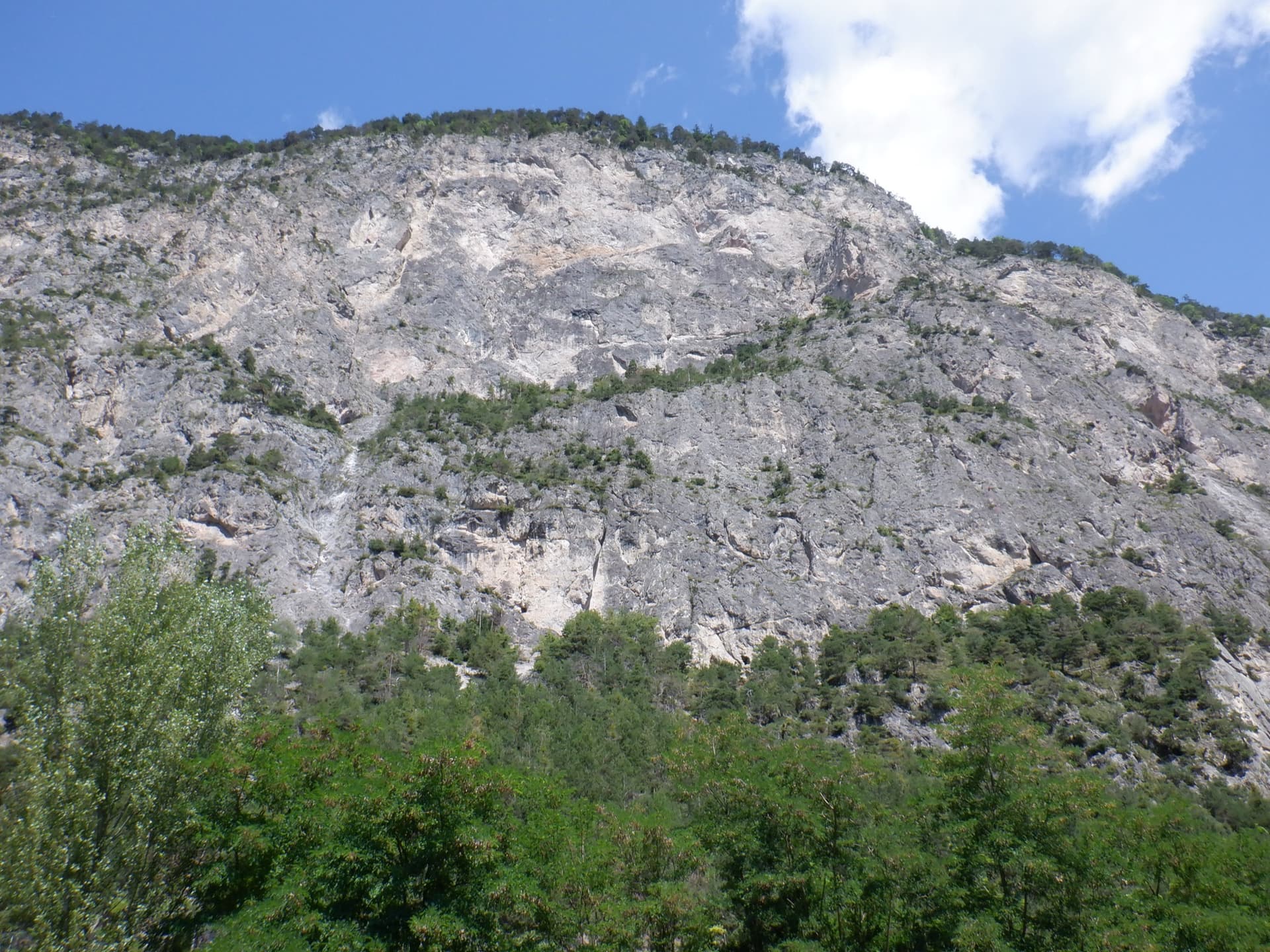
The south-west face of Mont Charvatton above Terrisse in the Champorcher valley; Tommy climbs this face.

Italy · Aosta Valley

Tommy

A very long slab route on excellent rough gneiss at the mouth of the Champorcher valley: fifteen pitches, most of them 5c, several close to 50 m. The one steep passage is a roof on pitch 3 that almost everyone aids on the bolts (6b+ free). A band of trees splits the route in two, and the upper half is the more attractive.

6a+15 pitches600 m

A climber on Utopía at El Cantal, below Baños de Panticosa.

Spain · Aragonese Pyrenees (Tena & Canfranc valleys)

Utopía

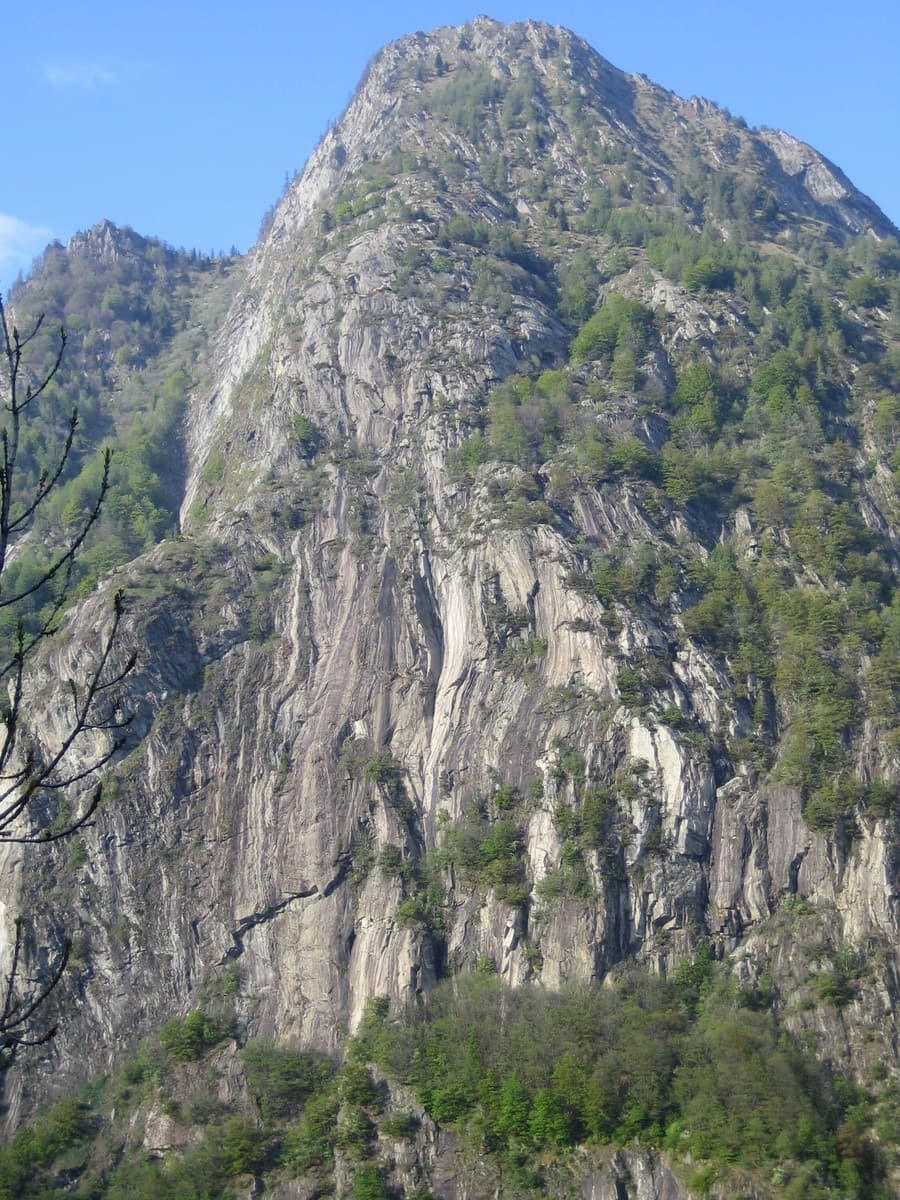
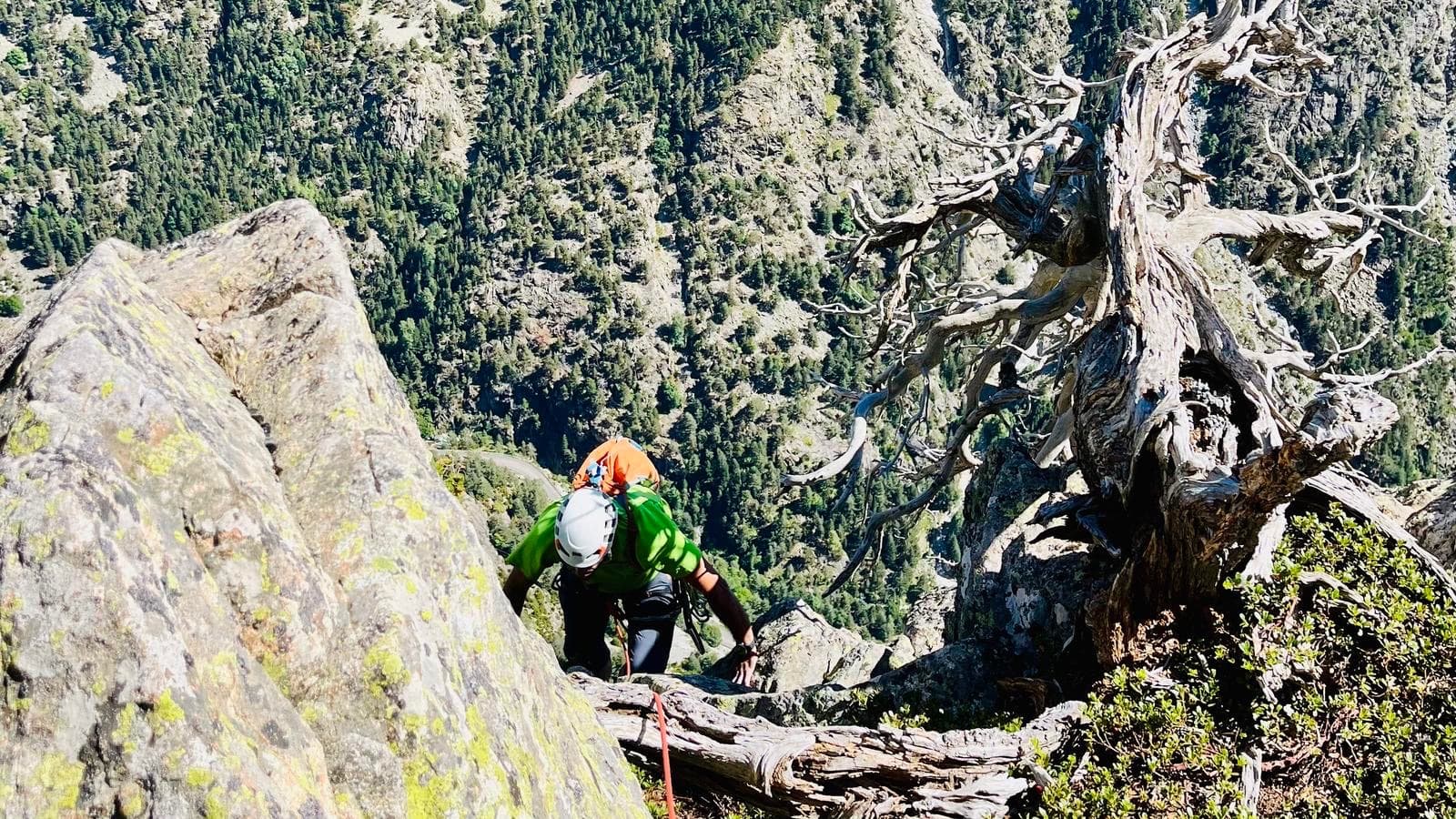
Fifteen pitches up a broken granite wall that nobody had climbed on before 2023, probably the longest bolted route at Panticosa. Corners, steps and slabs at around 5b, cut by ledges and terraces, with isolated moves of 6a and a 6a+ corner on the last pitch that are not obligatory. Sun from first thing. The length is the attraction; repeat parties find the climbing pleasant but discontinuous.

6a+15 pitches550 m

The Geierwand above Haiming seen from the car park; Alhambra climbs the full height of the wall, crossing the vegetated ledge at mid-height

Austria · Inntal (Haiming Geierwand)

Alhambra

The longest route on the Geierwand and its most popular easy outing: rough slabs low down, a walk across the big ledge, then steeper, pocketed and more exposed climbing above. The crux is a short traverse to the belay on pitch 10. The last two pitches are scrambling over loose ground.

6a+12 pitches430 m

The Säuling (right) and the ridge of the Pilgerschrofen seen from Unterpinswang, to the west

Germany · Ammergauer Alpen

Guat g'flickt in Reutte

The longest route on the Säuling: sixteen pitches up the west face to the summit cross, above Neuschwanstein and the lakes of the Allgäu. The lower part links pillars, traverses and some broken ground at UIAA 3 to 6+; the headwall is steep and compact, with a short aid passage and fine corners. Generously bolted, so a weaker second still has a good day.

6a+16 pitches360 m

Compiled from published sources, last verified October 2026. Bolts, anchors and access change: check a current topo and read the disclaimer.