Multipitch Atlas

Mar de Núvols

Paret de Zaratustra · Vilanova de Meià (Roca dels Arcs) · Spain

Read the cautionsBail with caveatsBolting confidence: medium

The best of the easier lines on the Paret de Zaratustra: steep climbing on big horizontal holds, a very vertical wall on the long second pitch and an overhanging 6a finish. Less polished than Txubascos Baskos next door, but with longer gaps between some bolts.

Photo-topo of the Txubascos side of the Paret de Zaratustra, drawn for the newer Mar de Café (red); Txubascos Baskos and Mar de Núvols are among the other coloured lines to its leftPhoto: Simon Apretna · CC BY-SA 3.0

Topo

Photo-topo of the Txubascos side of the Paret de Zaratustra, drawn for the newer Mar de Café (red); Txubascos Baskos and Mar de Núvols are among the other coloured lines to its leftPhoto: Simon Apretna · CC BY-SA 3.0
Hardest pitch
6a
Pitches
4
Length
110 m
Approach
15 min
Aspect
S
South-facing
Rope
2×60 m
Read before you go

Bolted and rated P1, but two independent reports describe long gaps between bolts in places, so it is less of a clip-up than its neighbours.

The route

Overview

Mar de Núvols climbs the wall just right of Txubascos Baskos in four pitches and ends at almost the same point. It is a notch harder and steeper, graded 6a with 5c obligatory, and is often recommended as a short route to finish a day or a trip. The rock is first class and less worn than its neighbour. Protection is by bolts throughout, but more than one report notes that they are well spaced in places; the crux on the last pitch is well enough bolted to pull through.

The climbing

Pitch by pitch

Pitches of Mar de Núvols
PitchGradeLengthNotes
P15b+25 mUp the left side of the panel of wall. The hardest move is the one arriving at the belay, which has abseil rings.
P25c40 mStarts through overhangs protected by two bolts set rather far left, then a very vertical wall on excellent holds. The bolts are fairly spaced, so it helps to have something in hand. There are two belays a few metres apart at the top.
P35a25 mAim for the grey-white wall directly above the belay without drifting left. Easy at first, then a smooth slab that needs thought to reach the belay.
P46a25 mThe hardest pitch: overhanging moves over about 3 m, which one party aided on the quickdraws.

Getting there

Approach

To the parking

From Vilanova de Meià take the L-913 north towards Terradets. The climbing is in the gorge about 5 km above the village. From Tremp, drive south to the Terradets dam, cross it towards Llimiana and follow the LV-9121 and then the L-913 over the pass; the first car park is about 20 km from the dam. For the Paret de Zaratustra use the large dirt car park beside the road below the wall, lower down the gorge than the Roca dels Arcs lay-bys.

On foot · about 15 min

About 15 minutes. Park at the big dirt car park beside the road below the wall, which looks like a small quarry. Facing it, take the path that starts on the right and climb along the foot of the cliff, past the first sector (Enigma). The route starts a few metres right of, and slightly higher than, Txubascos Baskos (whose name is painted on the rock); an arrow marks it but is hard to see. The first bolt is hidden, with the rest of the line visible above. Take the left-hand line: just to the right is another line on old 8 mm bolts.

Map of the walk-in

  • Crag

Loading map

The point marks the crag, not the exact start of the route.

Coordinates · crag

42.01704, 1.03970

Point from camptocamp waypoint 156090 (Paret de Zaratustra)

For your phone or watch

Download GPX

Contains the route point. Opens in most mapping apps and GPS watches.

Points are compiled from published sources, with the precision stated above. They were not surveyed on the ground: check them against a current topo.

Getting down

Descent

By abseil: belay 4 to belay 2 (30 m), then belay 2 to the ground (60 m), landing about 20 m below the start, near the foot of Parachutti di Colori. Camptocamp describes it simply as two abseils with 60 m ropes.

Retreat

Bailing off the route

Bail with caveats

Abseiling the route is the normal descent and the belays have rings. Belay 1 is 25 m up and belay 2 is one 60 m abseil from the ground. The caveat is a full-length second abseil and one report of a rope jammed in the anchor maillons.

Retreat from
Any belay.
Point of no return
None.
Carry
Two 60 m ropes.
Basis
Stated in the sourcesAbseil lengths are given by Romàntic Guerrer and the 2014 blog; ringed belay 1 is mentioned in the 2014 blog.

Safety

Hazards

  • Spaced bolts on parts of the route, pitch 2 in particular.
  • Wrong start: a parallel line on 8 mm bolts begins at the same place, and the route Disciplina also starts here.
  • A party in 2015 jammed their rope on the first abseil after threading both round maillons, and had to climb back up to free it. Thread the ropes as the anchor intends and test the pull before the last person descends.
  • The second abseil is a full 60 m: knot the ends.

Sun and weather

Conditions

Camptocamp gives a south aspect; a July 2014 party had shade until about midday. Outings are logged in May, October and November. In May 2015 a party was caught in fierce heat at the top.

Usual season · Mar to May, Oct to Nov

Sun on the wall · S-facing

Working out the sunlit hours for this month.

  • January: not yet worked out
  • February: not yet worked out
  • March (usual season): not yet worked out
  • April (usual season): not yet worked out
  • May (usual season): not yet worked out
  • June: not yet worked out
  • July: not yet worked out
  • August: not yet worked out
  • September: not yet worked out
  • October (usual season): not yet worked out
  • November (usual season): not yet worked out
  • December: not yet worked out

Sun on the wallDaylight, wall in shade● Usual season

Estimated from the wall's aspect only. Ignores surrounding terrain, gullies and the wall's exact shape. Clock times are local to the wall (Central European time), for the 15th of each month.

Climate figures for Vilanova de Meià (Roca dels Arcs) are not available yet

What to carry

Gear

10 quickdraws and two 60 m ropes. A 2014 report says small cams can be used to back up the longer gaps if you want them; they are not listed by camptocamp.

Checklist

Quickdraws
10
Rope
2×60 m
Helmet
One each
Abseil device and prusik
The descent or the retreat involves abseiling

Derived from the route data; check it against a current topo

From climbers

Reader reports

Reader reports are not being collected yet. Until they are, check a current topo and the local club or guidebook publisher for recent changes to Mar de Núvols.

Worth knowing

Tips

  • Combine it with Txubascos Baskos or with Parachutti di Colori (two long 6a pitches, re-bolted in 2010), which can finish up the top of this route.
  • The newer two-pitch Mar de Café starts just to the right and joins this route.

Open questions

Where sources disagree

  • Protection: 'well protected and restored' (Romàntic Guerrer, 2010) against 'bolts quite far apart in some sections, can be reinforced with friends' (Si s'bé més s'aprèn, 2014) and 'points fairly spaced on pitch 2' (camptocamp outing, 2017). Camptocamp rates it P1 and lists only quickdraws.
  • Pitch grades: 5b+, 5c, 5a, 6a on camptocamp; a 2014 party recorded 5+, 5+, 5+, 6a.
  • Aspect: south on camptocamp, but shaded until midday in July.

Provenance

Sources

Same area

More in Vilanova de Meià (Roca dels Arcs)

All routes in Vilanova de Meià (Roca dels Arcs)
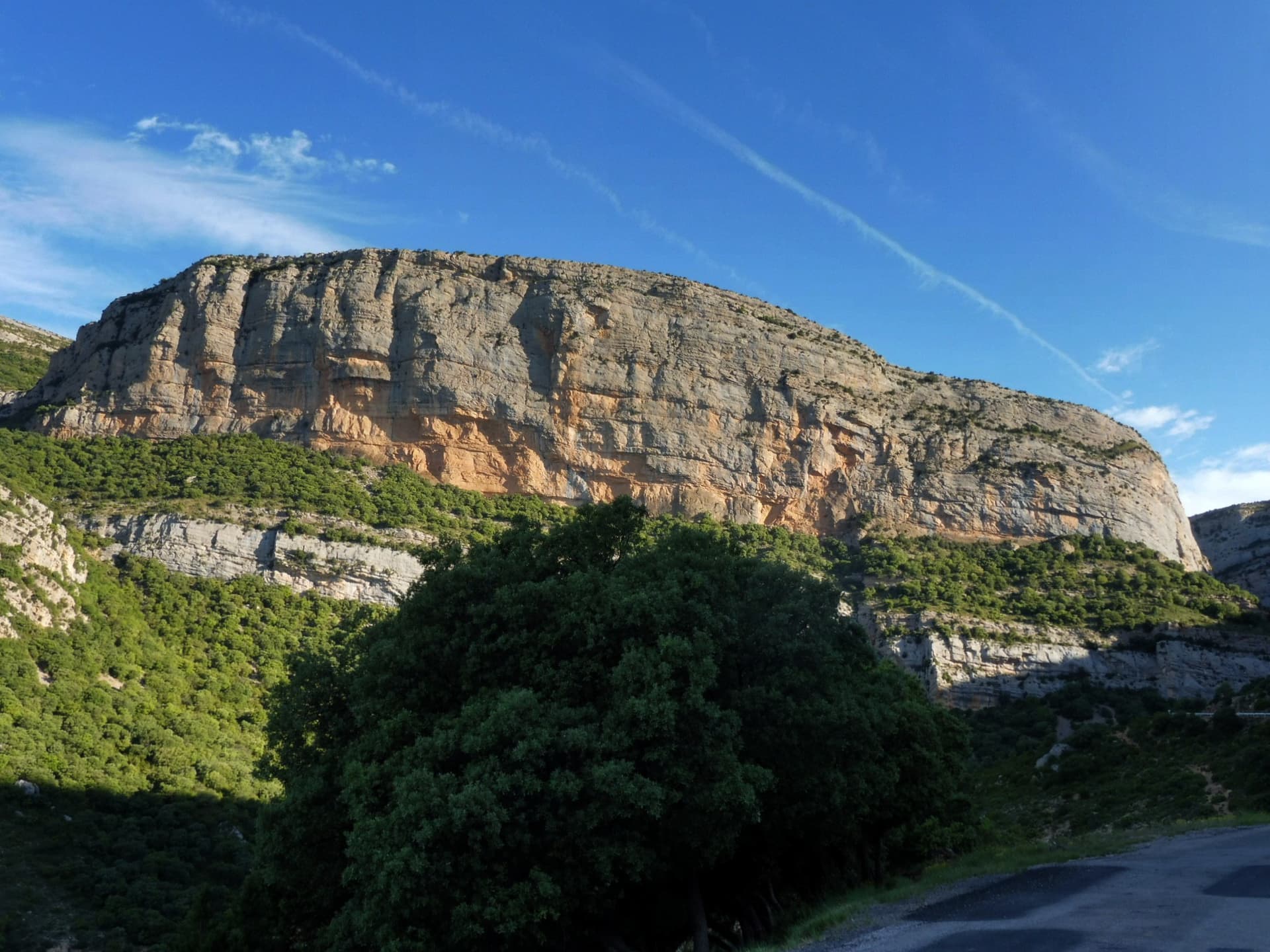
The south-east face of the Roca dels Arcs above the road from Vilanova de Meià, in the Montsec de Rúbies.

Spain · Vilanova de Meià (Roca dels Arcs)

El Somni de Quimfer

Four long, steep pitches on the left side of the Roca dels Arcs, sustained at 6a on good holds and not yet polished above the first pitch. The third pitch is the event: a reachy bulge to start, 30 m of gently overhanging strata, and a hard boulder move off a ledge to finish that most people grade 6c. That last move can be avoided by belaying on the neighbouring route.

6b+4 pitches160 m
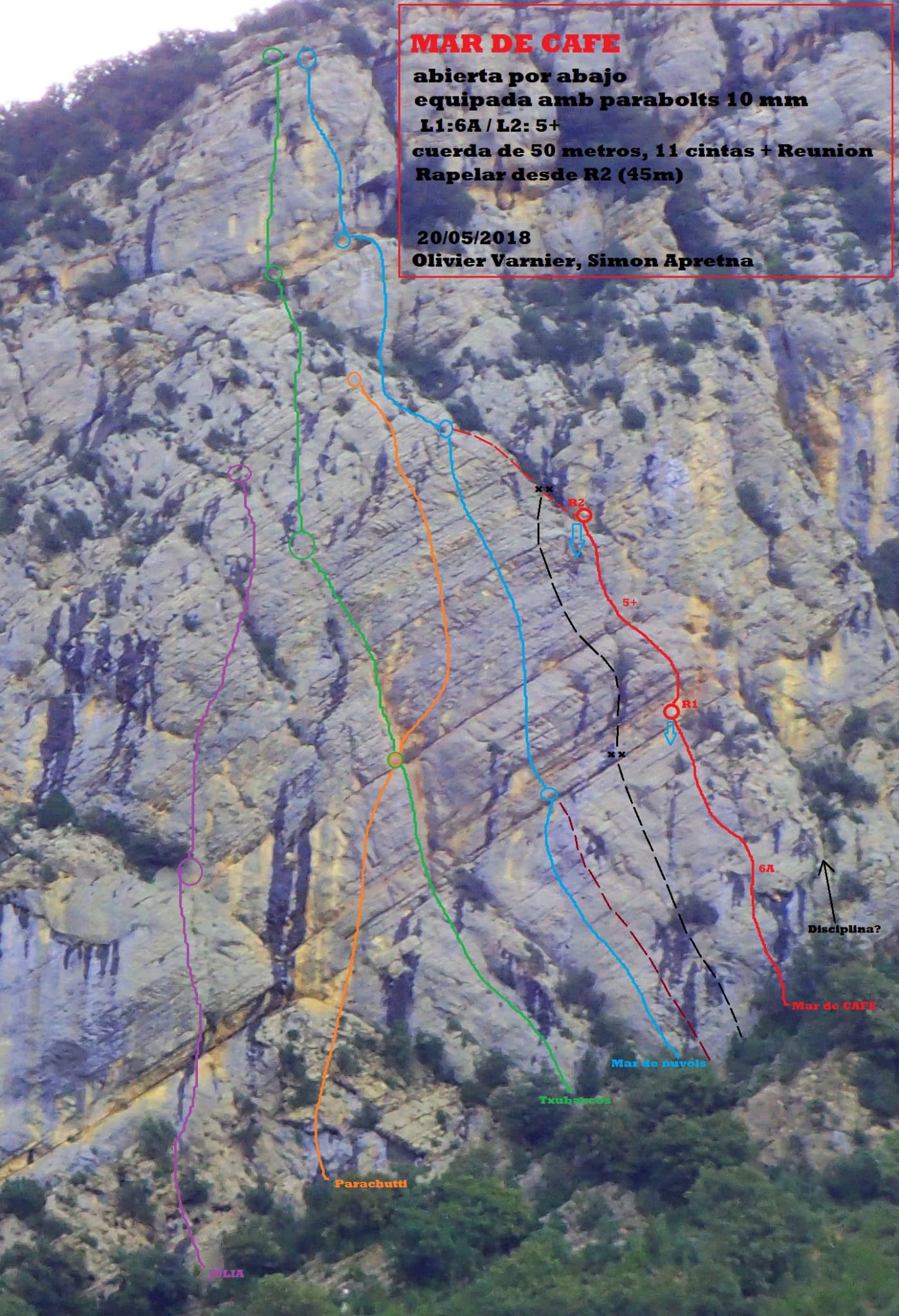
Photo-topo of the Txubascos side of the Paret de Zaratustra, drawn for the newer Mar de Café (red); Txubascos Baskos and Mar de Núvols are among the other coloured lines to its left

Spain · Vilanova de Meià (Roca dels Arcs)

Txubascos Baskos

The easy classic of Vilanova de Meià, on the small wall opposite the Roca dels Arcs: four short pitches on the horizontal strata and rounded knobs typical of the area. Popular and now very polished, above all on the first pitch, where the old grade of IV+ feels stiff.

5c4 pitches100 m

The two sectors of the Roca Alta above Vilanova de Meià

Spain · Vilanova de Meià (Roca dels Arcs)

Pornostar

Four varied pitches under and around the big roofs of the Roca Alta, the quieter wall above and west of the Roca dels Arcs. A start out of a tree, an overhang on big holds, a fine steep wall and a bouldery 6b+ finish, all of which can be eased by pulling on the close bolts.

6b+4 pitches150 m

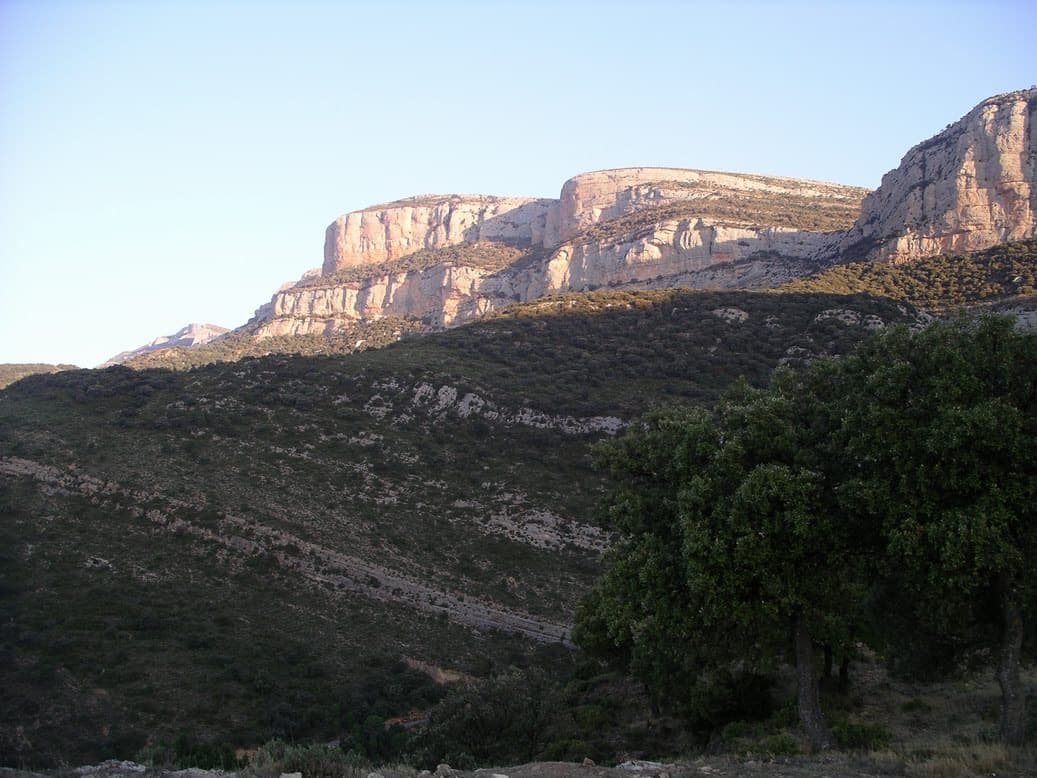
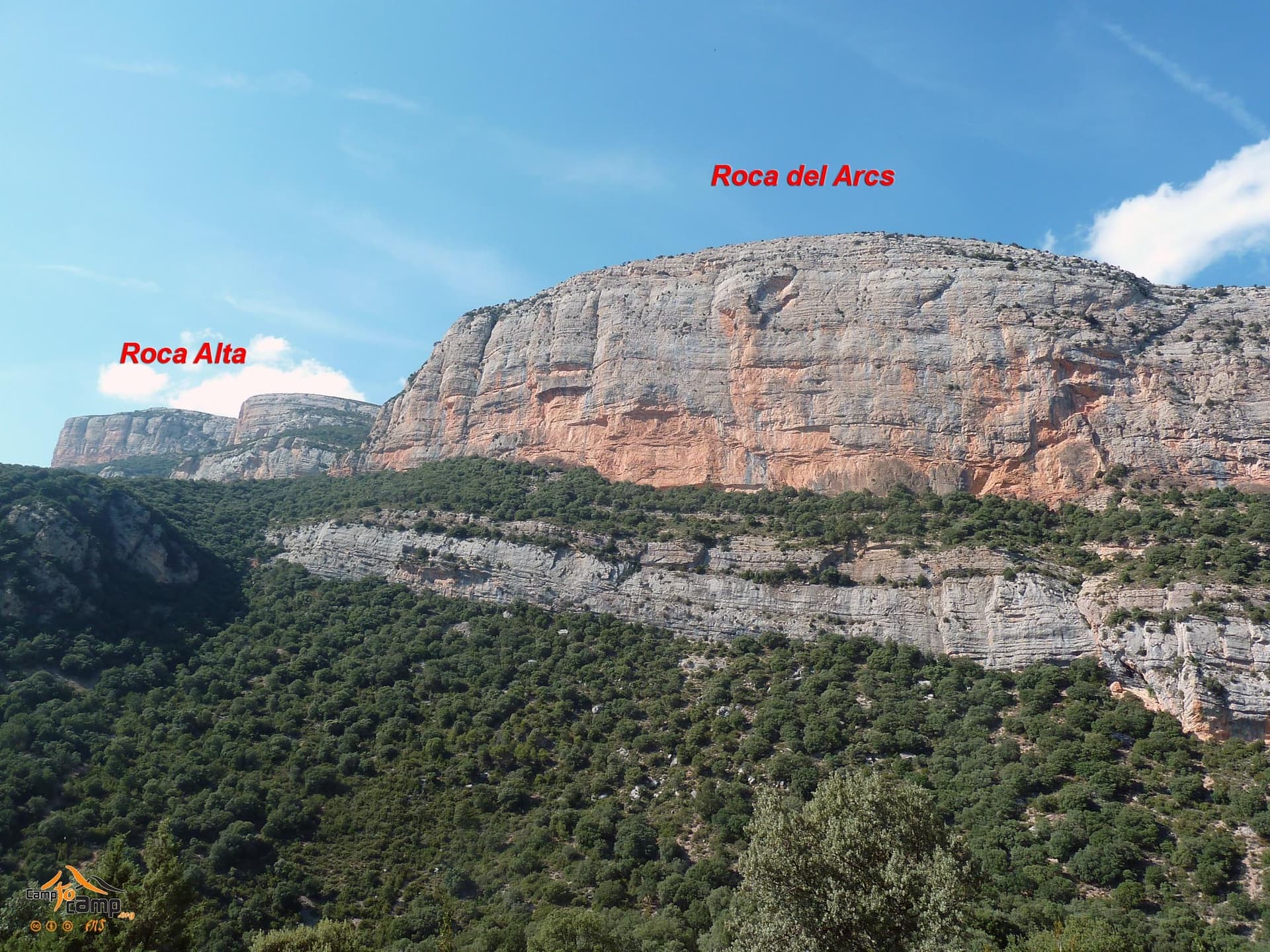
The Roca dels Arcs, with the Roca Alta behind on the left, seen from across the gorge above Vilanova de Meià

Spain · Vilanova de Meià (Roca dels Arcs)

Tierra de Nadie

Six steep, physical pitches on the right-hand side of the Roca dels Arcs, with a hard pull or two on every one: bouldery starts, big overhangs on jugs and little difference in effort between the 6a and the 6b pitches. Sport-bolted, which is unusual on this wall. Grades feel tight.

6b+6 pitches170 m

Around 6a · about 4 pitches

Similar elsewhere

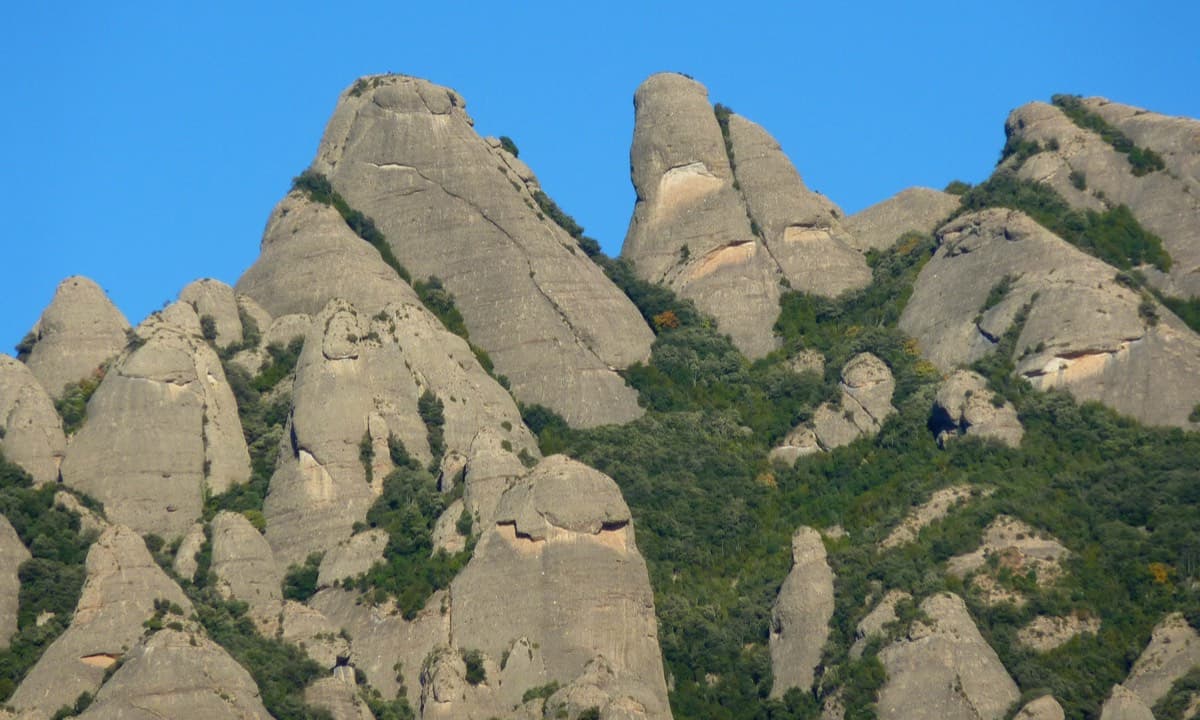
Gorra Frígia and Magdalena Superior seen from the south-west, Montserrat

Spain · Montserrat

98 Octanos

An exposed, airy line with unusually good holes and jugs for Montserrat, shaded in the afternoon. The 6a pitch is a sustained vertical 20 m. Going straight up instead of following the line is closer to 6b+.

6a4 pitches140 m

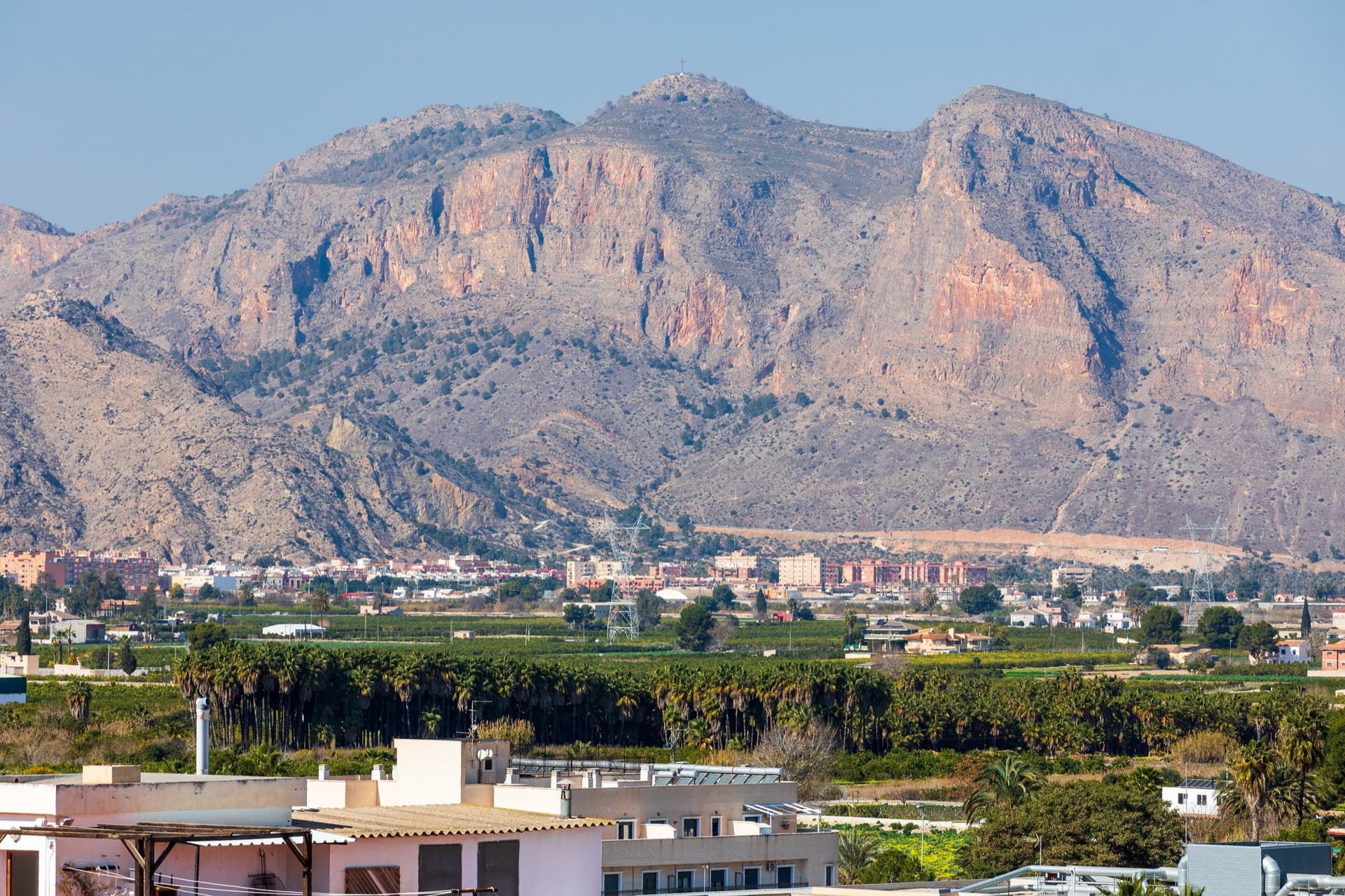
The south-east flank of the Sierra de Orihuela below the Cruz de la Muela, seen across the Vega Baja from Bigastro; Pared Negra is one of the walls on this flank (the exact wall is not marked).

Spain · Vega Baja (Orihuela & Callosa)

Código Vertical

A popular modern four-pitch classic on Pared Negra's compact grey limestone, around UIAA 6/6+ (about French 6a). Best on cool, sunny winter days.

6a4 pitches150 m

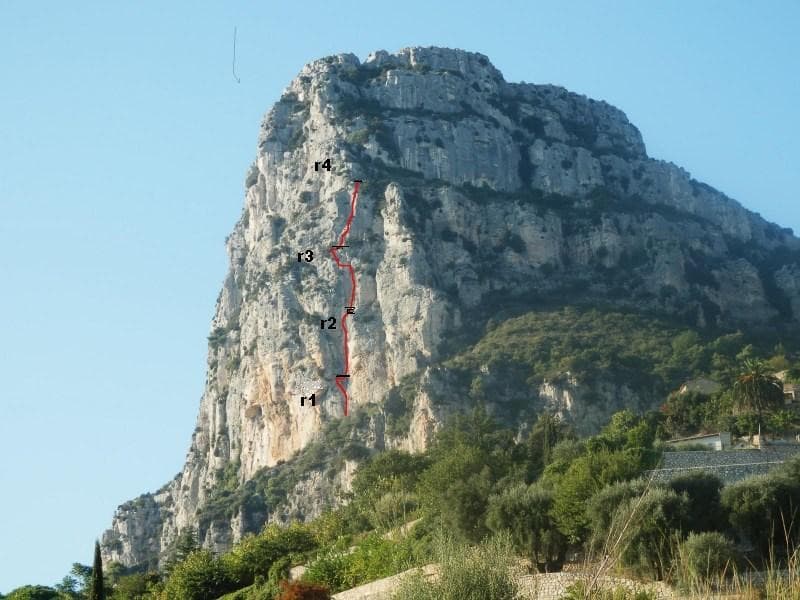
L'étrier drawn on the south-west face of the Baou de Saint-Jeannet, with its four belays

France · Baou de Saint-Jeannet

L'étrier

The most accessible bolted multipitch on the Baou: four homogeneous pitches of French 5+ with one move of 6a, up a crack, corners and sculpted stratified walls, with an airy traverse on pitch 3. Short enough for half a day. Local grades are stiff, the first pitch is polished and the easy sections are run-out.

6a4 pitches120 m

Read the cautions

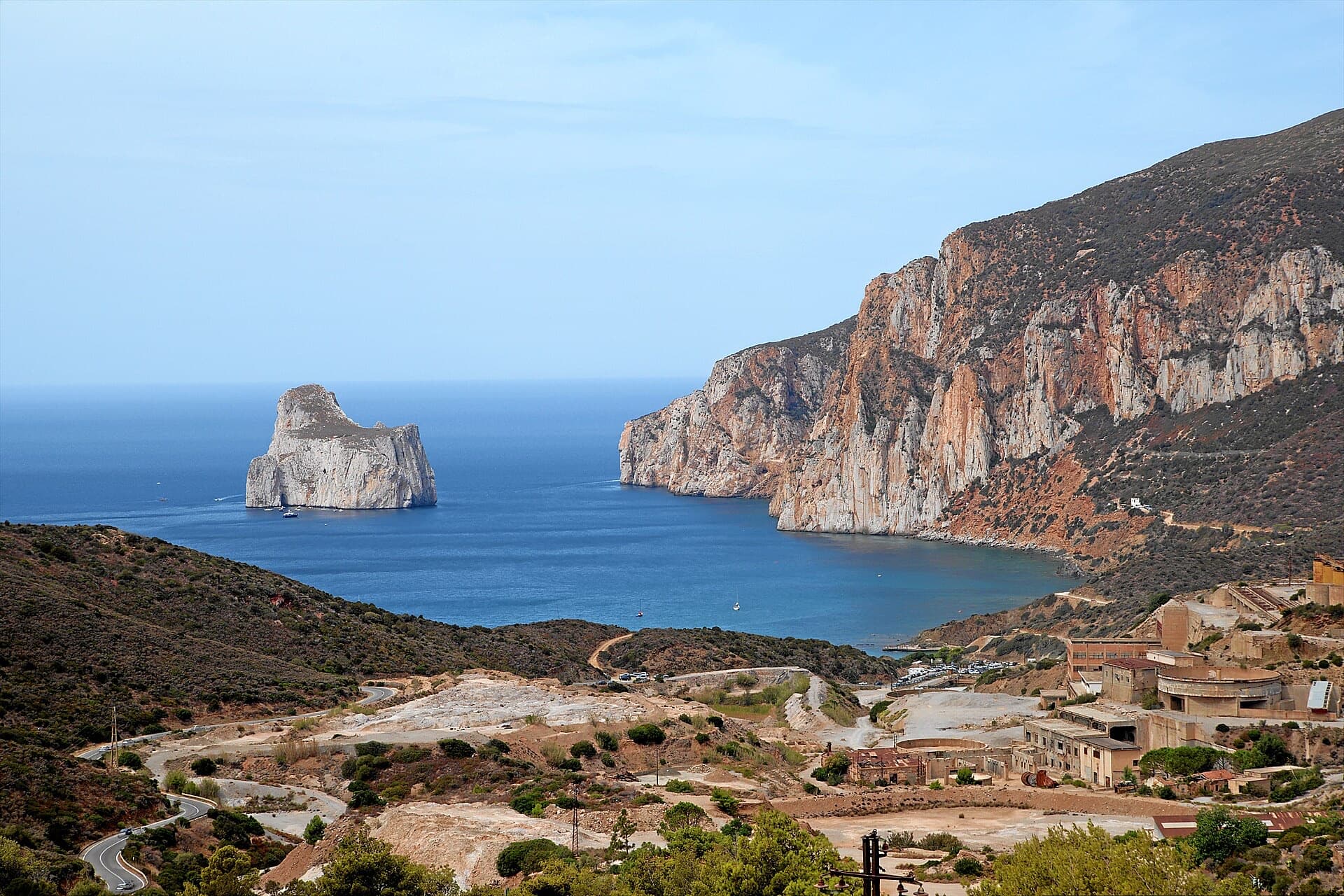
The orange limestone cliffs of Masua (right) above the old mine workings, with the Pan di Zucchero sea stack offshore.

Italy · Sardinia

L'Italia Liberata

A short but superb sea-cliff route on beautifully sculpted limestone in an incredible setting near Pan di Zucchero. Corners and an airy pillar lead to a steep, rounded 6a wall. Camptocamp rates it 'great'.

6a4 pitches120 m

Compiled from published sources and last verified October 2026. Bolts, anchors and access change. Climbing is dangerous and you are responsible for your own decisions: check a current topo and read the disclaimer.